The Nigerian Government has declared that Nigeria’s future economic competitiveness, public service delivery and national prosperity depend largely on how effectively the country leverages digital technology.
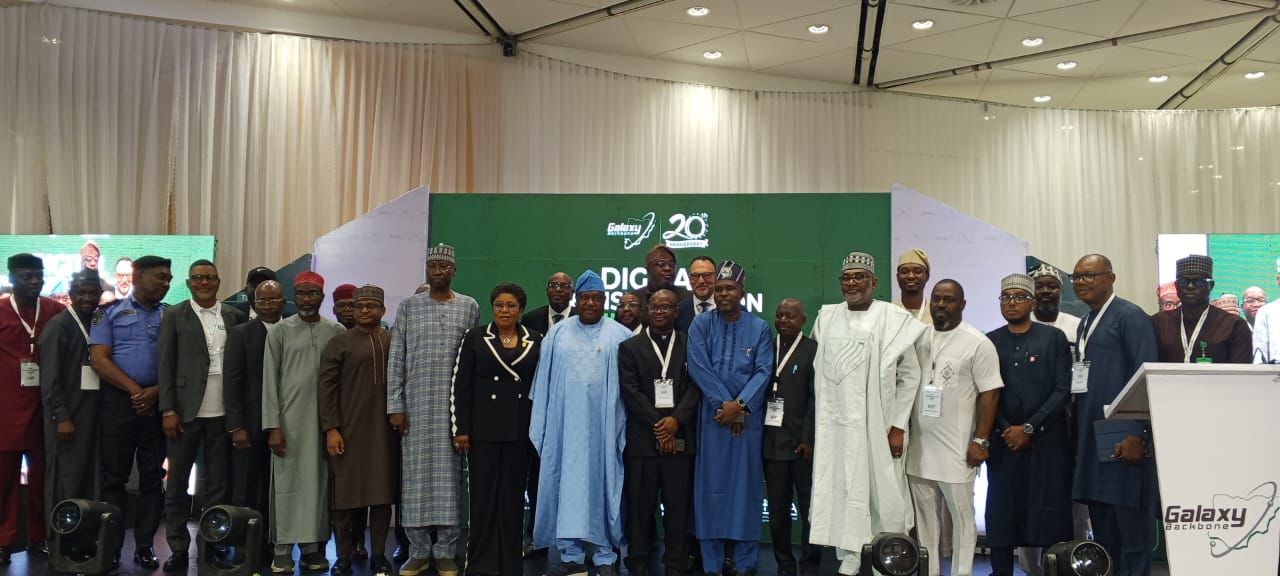
The Secretary to the Government of the Federation (SGF), Senator George Akume, made the declaration during his opening address at the inaugural Digital Transformation Summit organised by Galaxy Backbone in Abuja.
Akume, who also serves as Chairman of the Board of Directors of Galaxy Backbone, said technology has evolved from being a mere enabler to a critical driver of national growth under President Bola Ahmed Tinubu’s Renewed Hope Agenda.
According to him, the future of governance, economic competitiveness, public service delivery and national prosperity will increasingly be shaped by digital technologies.
“Technology is not merely an enabler; it is a catalyst for national development, transparency, inclusion and growth. The future of national prosperity will increasingly depend on how effectively we leverage technology to improve the lives of our people,” he said.
The SGF stressed that powering Nigeria’s digital future requires robust infrastructure, innovation, collaboration and institutions capable of delivering services at scale.
READ ALSO:Mobile Technology Key to Unlocking Africa’s Economic Potential – GSMA
He commended Galaxy Backbone for providing the digital infrastructure, cloud services, cybersecurity capabilities, connectivity backbone and shared platforms that support government operations across the country.
Akume also urged state governments, ICT agencies and public institutions to strengthen collaboration with Galaxy Backbone and its private-sector partners to accelerate digital transformation at all levels of government.
“The transformation we seek cannot be achieved by the Federal Government alone. States and local governments remain at the frontline of governance and service delivery.
“I therefore encourage state governments, ICT agencies and public institutions to engage actively with Galaxy Backbone and its ecosystem of private-sector partners. The digital infrastructure exists, the expertise exists and the partnerships exist. What is required is greater collaboration, stronger adoption and a shared commitment to accelerating digital transformation at every level of government,” he said.
In his remarks, the Managing Director and Chief Executive Officer of Galaxy Backbone, Professor Ibrahim Adeyanju, described digital transformation as a critical economic, governance and nation-building imperative.
He noted that emerging technologies such as artificial intelligence, cloud computing, data-driven innovation and digital platforms are reshaping economies and public institutions worldwide, making digital leadership synonymous with economic leadership.
“Across the globe, nations are investing heavily in digital infrastructure because they recognise a simple truth: those who lead digitally will lead economically,” Adeyanju said.
“With one of Africa’s largest populations, a vibrant entrepreneurial ecosystem and a young, innovative population, Nigeria’s digital future is not merely an aspiration but a necessity. The theme of this summit, ‘Powering Nigeria’s Digital Transformation’, is therefore both timely and urgent.
“Digital transformation is no longer just a technology agenda. It is an economic agenda, a governance agenda, a competitiveness agenda and, ultimately, a nation-building agenda.”
Adeyanju highlighted Galaxy Backbone’s achievements over the past two decades, including the deployment of critical digital infrastructure, secure cloud services, cybersecurity systems and platforms supporting digital public service delivery across government institutions.
He said the next phase of Nigeria’s digital transformation would require stronger partnerships among government agencies, private-sector organisations, development partners, academia, innovators and citizens.
The Galaxy Backbone chief also emphasised the importance of digital sovereignty, describing it as the ability of nations to build, secure, manage and leverage digital assets in ways that advance national development and protect strategic interests.
Also speaking, the Head of the Civil Service of the Federation, Mrs Didi Esther Walson-Jack, outlined the Federal Government’s progress in modernising the civil service through digitalisation.
She said digital transformation has become a practical reform programme aimed at improving efficiency, strengthening accountability, preserving institutional memory and enhancing service delivery.
According to her, all 38 federal ministries and extra-ministerial departments successfully digitalised their work processes before the end of December 2025, achieving a major milestone under the Federal Civil Service Transformation Agenda.
“This achievement demonstrates that the civil service can reform, our officers can adapt, and when leadership is clear and committed, the system can respond effectively,” she said.
Walson-Jack credited Galaxy Backbone’s digital infrastructure, including its iGovernment Cloud platform, GovMail service, secure connectivity solutions and high-speed internet services, for supporting the transformation agenda.
She also advocated a whole-of-government approach to digital transformation, noting that interconnected systems, shared data platforms and collaborative service delivery models are essential for improving efficiency and supporting national development.
The summit, which coincided with Galaxy Backbone’s 20th anniversary celebration, brought together policymakers, civil servants, technology experts, private-sector stakeholders and development partners to discuss strategies for building a more connected, efficient and innovative Nigeria.