The Minister of Women Affairs and Social Development, Hajiya Imaan Sulaiman-Ibrahim, has reaffirmed Nigeria’s commitment to accelerating the implementation of the Women, Peace and Security (WPS) Agenda through the domestication of its Third National Action Plan (NAP), expanded grassroots ownership and stronger institutional collaboration across the federation.
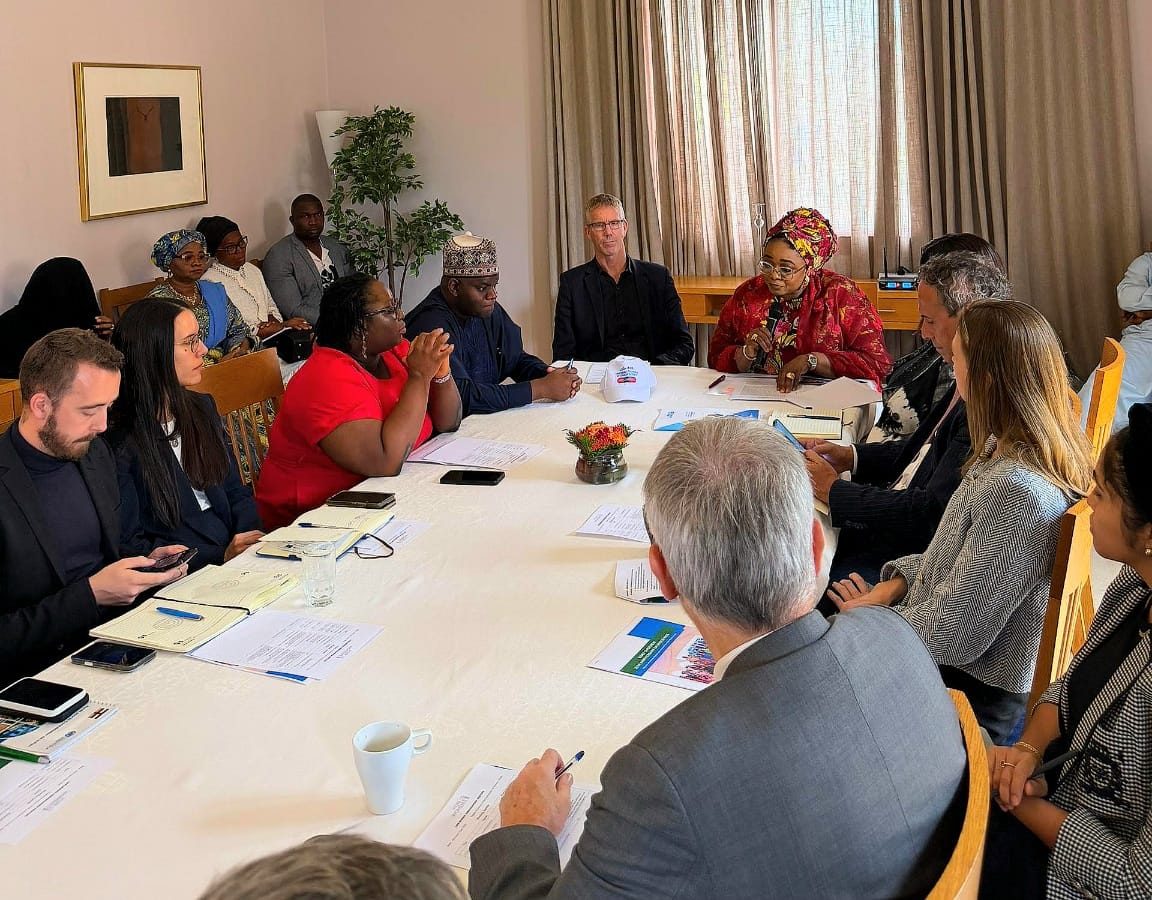
Addressing ambassadors, development partners and other stakeholders at the Club of Ambassadors for Gender Equality and Women Empowerment (GEWE) meeting held in Abuja, the Minister said Nigeria’s Third National Action Plan on United Nations Security Council Resolution 1325, launched in December 2025, provides a modern framework for responding to emerging security threats while accelerating localised implementation and targeted funding nationwide.
She stated that the plan aligns with the Renewed Hope Agenda of President Bola Ahmed Tinubu and supports efforts to strengthen human security, social equity and women’s economic inclusion as critical drivers of national development.
According to the Minister, the Ministry’s localisation strategy is anchored on the Renewed Hope Social Impact Intervention (RHSII)-774, a nine-pillared framework designed to advance women’s development across all 774 Local Government Areas through grassroots delivery structures.
To strengthen subnational implementation, Sulaiman-Ibrahim said the Ministry is deepening collaboration with the Nigeria Governors’ Forum to ensure wider adoption and adequate funding of State Action Plans, noting that seventeen states have already domesticated the WPS framework.
Underscoring the importance of women’s participation in peacebuilding and security governance, she said: “Peace agreements are 35% more likely to last at least fifteen years when women are substantively involved.”
The Minister noted that sustained engagement with traditional rulers has led to the deliberate inclusion of more women in traditional cabinets and local decision-making structures across several states.
She further disclosed that the Ministry is developing a comprehensive database of Female Traditional Title Holders ahead of a national engagement aimed at strengthening their participation in governance and community-based peacebuilding initiatives.
Highlighting progress within the security sector, Sulaiman-Ibrahim said significant institutional reforms have resulted in the establishment of women-led Gender Directorates across major security institutions, improved civil-military relations and increased accountability.
She said female enlistment in security services has continued to expand, with more women taking up operational and combat roles across the country’s security architecture.
The Minister described the formal adoption of institutional Gender Policies across military and paramilitary agencies as a major milestone, saying it marked a transition from “ad hoc inclusion to institutionalised equity” and affirmed that gender mainstreaming had become “a hard operational imperative for national security”.
To advance implementation of the Third NAP, she announced that a government-led National Roundtable on the Dissemination and implementation of Nigeria’s Third National Action Plan on Women, Peace and Security will be convened in Abuja in July 2026.
The Minister also appealed to members of the diplomatic community to support the Nigerian candidate contesting for a seat on the United Nations Committee on the Elimination of Discrimination against Women at the elections scheduled for June 26, 2026, in New York.
According to her, securing the seat would amplify Africa’s voice in international human rights jurisprudence while reinforcing domestic accountability and strengthening the linkage between global gender standards and national implementation efforts.
The Minister also called for greater engagement of key security stakeholders in future discussions on the implementation of the WPS agenda.
“The cochairperson should request the NSA because he has to be part of this conversation. I think when it comes to the issue of security, he gives advice at the highest level, so he has to also, you know, help us to take ownership of the UNHSCR 1325, particularly the third NAP so that we’re implementing collectively.” She advised.
Sulaiman-Ibrahim further sought continued collaboration with the Minister of Industry, Trade and Investment, Dr Jumoke Oduwole, stressing the socio-economic dimensions of security challenges.
“We are counting on your partnership. Counter insurgency, counter terrorism is social developments, and they come with economic impacts on communities, on the family, and on the woman, and we are counting on you continually for your continued partnership,” she said.
The GEWE Like-Minded Ambassadors meeting themed “Resolution 1325: Progress, Challenges, Lessons Learnt and the Way Forward after 25 years of implementation in Nigeria” was co-chaired by Gautier Mignot and Svein Bæra, ambassadors of the EU and Norway to Nigeria.
It provided a platform to brief the ambassadors on the progress, challenges and lessons learnt on women, peace and security since the adoption of UNSCR 1325 and its domestication in Nigeria.