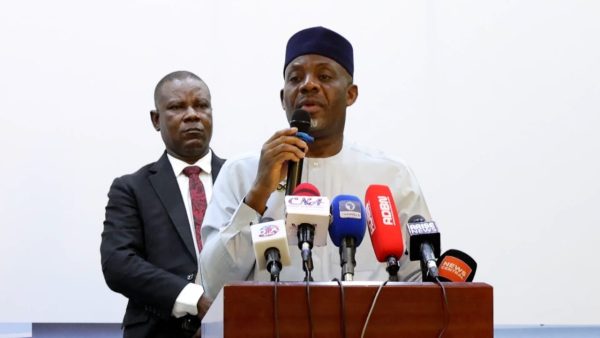
The Minister of Education, Dr Maruf Tunji Alausa, has tasked Vice-Chancellors of Nigerian public universities to urgently diversify their institutions’ funding sources and strengthen their Advancement Offices to mobilise resources beyond government allocations.
Dr Alausa gave the charge at the National Advancement Forum 2026, where he disclosed that only four of the 68 federal universities were currently making meaningful use of alternative funding opportunities, including research grants, endowments, alumni giving, philanthropy and industry partnerships.
He described the situation as unacceptable and urged vice-chancellors to make resource mobilisation a core responsibility of university leadership.

“Government funding is not enough. Universities live, function and excel on blended funding. Vice-Chancellors must move beyond managing allocated funds to actively building relationships capable of attracting additional resources for institutional development,” the minister said.
He noted that in advanced university systems, Vice-Chancellors actively network with prominent individuals, alumni, businesses, philanthropists and research funders to secure resources for institutional development.
Dr Alausa urged Nigerian university leaders to adopt the approach and leverage their institutions’ intellectual capital to attract funding for laboratories, scholarships, research chairs, innovation programmes and other strategic priorities.
The minister stressed that the call for greater resource mobilisation did not amount to a withdrawal of government support, noting that the administration of President Bola Ahmed Tinubu had demonstrated commitment to education through significant budgetary allocations, tertiary infrastructure investments and other interventions.
He explained that the Nigerian Government currently funds personnel costs in full, while universities retain 75 per cent of their internally generated revenue and continue to benefit from direct and special interventions by the Tertiary Education Trust Fund (TETFund).
To strengthen institutional resource mobilisation, Dr Alausa directed all university Advancement Offices to report directly to the Office of the Vice-Chancellor rather than the Registrar.
He further directed that Directors of Advancement should have a minimum internal tenure of five years, renewable where appropriate, to enable them to build lasting relationships with donors, alumni, industry and other funding partners.
“Advancement Office operation is a professional job,” he said, describing advancement officers as professional fundraisers who require institutional support and stability.
The minister also urged universities to develop functional alumni databases and deploy technology to maintain lifelong relationships with graduates in Nigeria and abroad.
Dr Alausa recalled that some research and endowment funds had previously been moved into the Treasury Single Account (TSA), creating challenges around access and affecting confidence in their management.
He said President Tinubu subsequently directed the development of a framework allowing research and endowment accounts to be moved out of the TSA to commercial banks of choice, providing greater flexibility in managing the funds.
He said the Ministry of Education, working with the Nigerian Higher Education Foundation (NHF), would develop a comprehensive national framework for sustainable financing of tertiary institutions.
The framework will cover endowment governance, research grants, Advancement Office structures, alumni giving, industry partnerships, philanthropy, revenue management and transparency.
Dr Alausa said all public universities would progressively be onboarded, with institutions expected to build endowments, strengthen alumni engagement and research funding, and develop productive relationships with industry and philanthropists.
He emphasised that accountability and transparency must remain central to university advancement, stressing that donors and other funding partners would only sustain support for institutions they could trust.