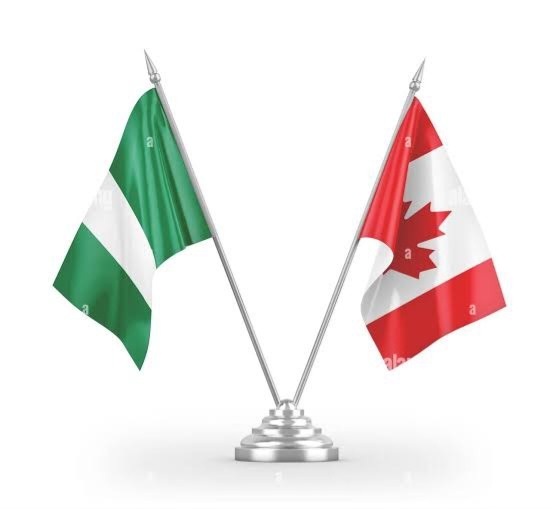
The Nigerian Government has reiterated its commitment to deepening cooperation with the Government of Canada on migration management, air transport and other areas of mutual interest.
Both countries also deliberated extensively on persistent delays in the processing of Canadian visa applications by Nigerian citizens, as well as emerging opportunities under the expanding Nigeria-Canada Air Transport Agreement (ATA).
Speaking during a meeting at the Ministry of Interior’s headquarters in Abuja, the Permanent Secretary of the Ministry, Dr Magdalene Ajani, who represented the Minister, said this while receiving the Chargé d’Affaires of the Canadian High Commission, David Sproule, and his delegation on a courtesy visit.
READ ALSO: Nigeria, Mali Strengthen Bilateral Relations, Pledge Co-operation
Dr Ajani noted that prolonged visa processing times had affected Nigerians, including students, adding that some Nigerian students had, on occasion, been unable to travel to Canada to commence their academic programmes due to delays in the issuance of study permits, even after their applications had been approved.
She stressed the importance of addressing the concerns through sustained dialogue and stronger institutional cooperation between the two countries.
The meeting also discussed the expansion of the Air Transport Agreement between Nigeria and Canada, which is expected to facilitate the introduction of direct flights between both countries, eliminating the need for passengers to connect through Europe or the United States.
Both sides expressed optimism that the expanded agreement would boost commercial ties and improve convenience for travellers.
The meeting further addressed migration management, particularly the development of a Standard Operating Procedure (SOP) between Nigerian authorities and the Canada Border Services Agency (CBSA) for the removal of persons without legal status in Canada.
The Permanent Secretary assured the Canadian delegation that Nigeria would designate relevant officials to engage with their Canadian counterparts and facilitate the establishment of a joint working group to advance the process.
In his response, Sproule acknowledged the concerns over visa processing delays, describing the issue as an important pressure point in the bilateral relationship.
He assured the Nigerian side that the concerns would be conveyed to the relevant Canadian immigration authorities, with a view to improving processing times and ensuring that Nigeria receives appropriate attention within the visa-processing system.
Both sides agreed on the need to establish a small technical working group to drive the discussions and maintain regular engagement among relevant Nigerian and Canadian agencies.
Sproule expressed appreciation for the openness of the Nigerian side and welcomed the Ministry’s commitment to strengthening institutional cooperation between the two countries.
The Permanent Secretary thanked the Canadian delegation for the visit and reaffirmed the Nigerian Government’s commitment to strengthening bilateral cooperation with Canada on immigration, travel facilitation and border management.
She also urged that the concerns of Nigerian visa applicants be given due and expeditious consideration.