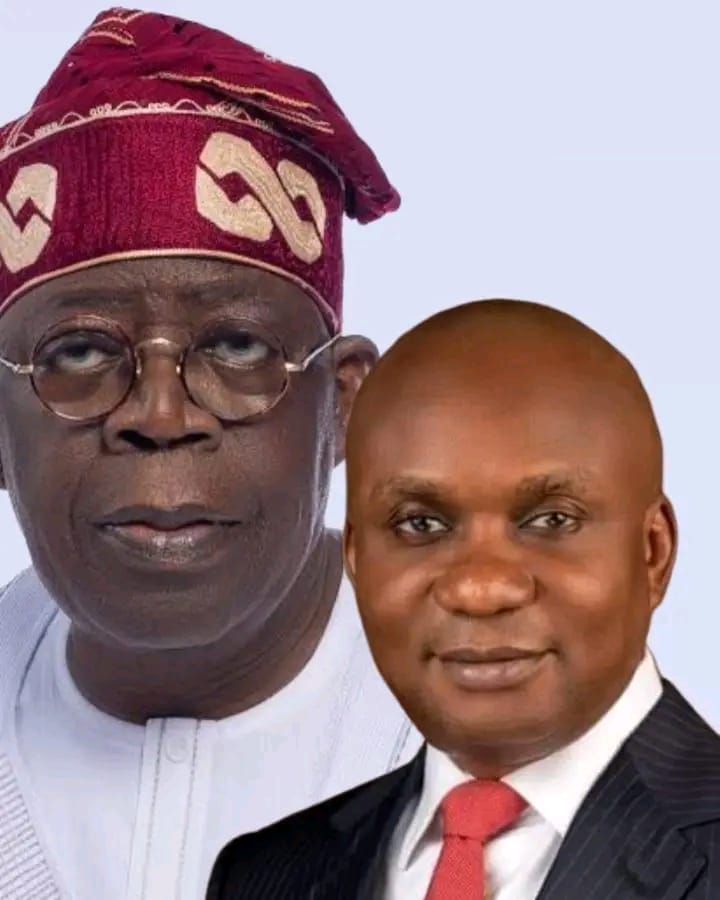
A former Speaker of the Abia State House of Assembly, Chinedum Orji says President Bola Tinubu’s fiscal reforms are repositioning Nigeria’s economy towards a broader revenue base while reducing dependence on crude oil earnings.
Orji made the assertion in an opinion article titled From Crude to Cash: How Tinubu’s Fiscal Reset Is Redefining Nigeria’s Revenue Economy, in which he analysed the administration’s economic measures, including fuel subsidy reforms, digital tax administration and efforts to strengthen non-oil revenue sources.
He argued that Nigeria’s public finance system had, for years, depended heavily on crude oil income, making government revenue vulnerable to fluctuations in global oil prices.
According to Orji, “the administration’s fiscal reset is focused on rebuilding public finance through improved tax collection, digital systems and a wider revenue base capable of supporting economic stability beyond oil.’
“Rather than wait for another oil boom to bail out the treasury, his administration chose to rebuild the plumbing of public finance: tax administration, digital collection, and a non-oil base wide enough to stand on even when barrels wobble,” Orji wrote.
He described the removal of the petrol subsidy in May 2023 as a major step in the reform process, stating that “it contributed to an increase in Federation revenue from ₦16.8 trillion in 2023 to ₦31.9 trillion in 2024, based on figures cited in his article.’
The former Speaker also said allocations to state and local governments rose from ₦6.16 trillion in 2023 to ₦15.26 trillion in 2024, providing subnational governments with increased resources for infrastructure and public services.
Orji said “the government had complemented the fiscal measures with reforms aimed at modernising tax administration through digital platforms, improved data management and stronger compliance efforts.’
He noted that the expanded tax drive covers key sectors of the economy, including telecommunications, financial services, manufacturing, trade and the digital economy, bringing fintech companies, e-commerce platforms and other emerging businesses increasingly into the formal tax system.
“No economy grows sustainably when only oil companies and big banks pay taxes while millions of profitable businesses stay off the books,” he stated.
Orji said improvements in fiscal indicators, including a narrowing deficit, stronger external reserves and the clearance of foreign exchange backlogs, were indications of growing investor confidence.
However, he acknowledged that the reforms had created immediate challenges for households, particularly through higher transportation, food and energy costs.
“The social contract of these reforms is still being negotiated. Households felt the pain first: higher transport costs, higher food prices and higher power bills. The promise is that the gains will be recycled into infrastructure, education and health,” he wrote.
The former Speaker said the sustainability of the reforms would depend on effective implementation, transparency and public trust, adding that citizens must see tangible improvements in public services.
“Nigeria is still an oil country. But for the first time in a long time, it is budgeting like it might not always be,” Orji added.