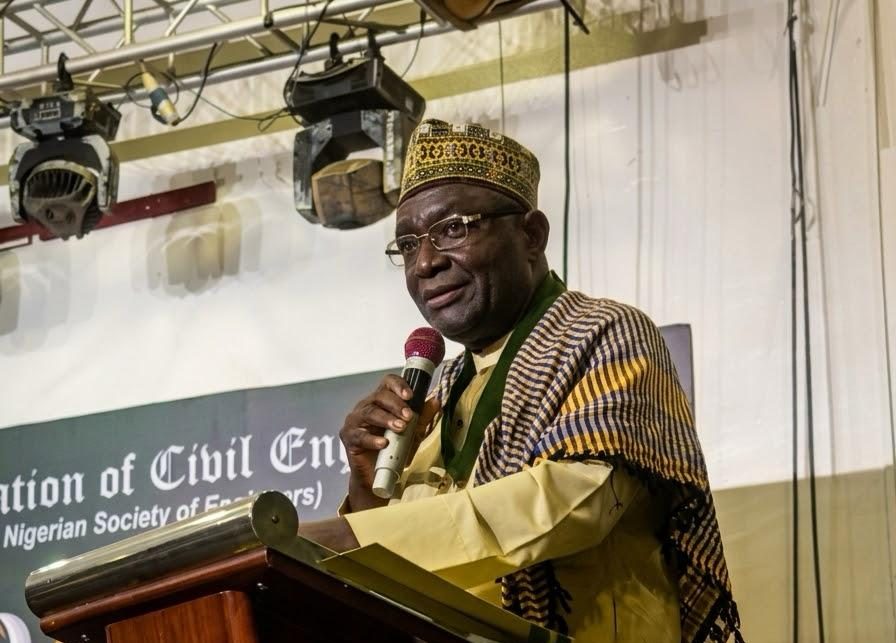
Lagos State Governor Babajide Sanwo-Olu has urged the Nigerian Institution of Civil Engineers (NICE) to submit practical recommendations to strengthen infrastructure delivery and improve public safety in the state.
The governor made the call while declaring open the institution’s International Civil Engineering Conference and 24th Annual General Meeting in Lagos.
Sanwo-Olu said the recommendations would enable relevant government agencies to explore areas of collaboration with the institution to develop sustainable and resilient infrastructure capable of meeting the needs of the state’s growing population.
He described the conference theme, “Civil Engineering: Sustainable and Resilient Infrastructure for Economic Growth,” as particularly relevant to Lagos, where rapid urbanisation and environmental pressures require infrastructure that can withstand increasing demand and serve residents safely over time.
The governor cited heavy rainfall recorded in June, which exposed pressure on drainage infrastructure across several parts of the state, as well as building collapses that resulted in casualties.
He said the incidents underscored the importance of sound engineering, proper maintenance, effective regulation and professional responsibility in infrastructure development.
READ ALSO: We have started rebuilding Lagos -Governor Sanwoolu
Sanwo-Olu noted that infrastructure remained a major priority under his administration’s THEMES Plus agenda, adding that the state’s 2026 budget provided about ₦2.3 trillion for capital expenditure to support economic activities and improve residents’ quality of life.
He urged civil engineers to uphold professional standards by approving only properly verified work, insisting on tested materials and qualified personnel, and reporting illegal construction and structural defects to the appropriate authorities.
“Civil engineers have a vital responsibility in ensuring that buildings and infrastructure are designed and executed to the required standards. Professional responsibility is ultimately a responsibility to human life,” he stressed.
The governor was represented at the event by his Special Adviser on Infrastructure, Olufemi Daramola.
The National President of the Nigerian Society of Engineers, Ali Alimasuya, described infrastructure as the foundation of economic productivity and a critical driver of national development.
Alimasuya said Nigeria’s ambitions for economic diversification, industrial expansion, urban renewal, food security and improved living standards depended on the quality, availability and resilience of its infrastructure.
“These realities must not become excuses for compromised standards, abandoned projects or infrastructure that failed before its intended service life. This is where the ingenuity, professionalism and innovative capacity of civil engineers become indispensable,” he maintained.
The National Chairman of the Nigerian Institution of Highway and Transportation Engineers, Abiola Mudashiru, called for a shift from prioritising infrastructure construction to emphasising long-term maintenance and asset management in a keynote address.
Mudashiru said the success of infrastructure should not be measured by commissioning ceremonies but by its ability to remain functional, safe and productive over decades of service.
“Roads without maintenance plans, bridges without regular inspections and drainage systems without desilting programmes could become liabilities and expose communities to avoidable risks. Every naira invested in preventive maintenance protects public assets, strengthens safety and preserves public trust. As a nation, we cannot defer maintenance because, in the long run, it creates a burden for us and future generations,” he warned.
The National Chairman also urged engineers to incorporate climate risks, maintenance funding and asset management into infrastructure planning from the outset.
More than 1,000 participants from various sectors attended the event, including civil engineers, industry leaders, academics, traditional rulers and students.