The Lagos State government, through the Ministry of Agriculture and Food Systems, has emphasised the need to forge partnership with relevant stakeholders to ensure provision of food with basic nutrients for the young population to enhance steady and natural growth.
The State also reaffirmed its resolve to standards, quality and safety requirements of all consumers’ products in the state and across the country.
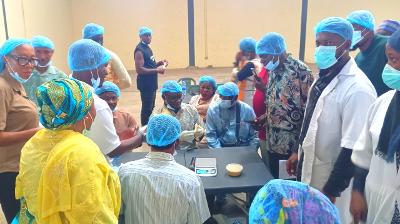
The call was made in Lagos during a 3-day training workshop on Fortified Rice Production organised for rice millers and regulatory agencies across the six geopolitical zones of Nigeria.
Rice fortification is the process of adding essential vitamins and minerals to regular polished rice to address micronutrient deficiencies in populations that rely on rice as a primary staple.
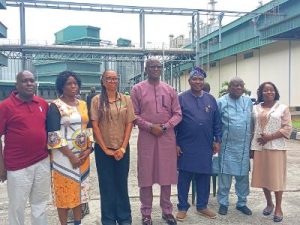
Speaking at Lagos Rice Mill Imota, the venue of the opening ceremony of the training, the Special Adviser to Governor Sanwo-Olu on Agriculture and Food Systems, Dr Oluwarotimi Fashola, said that the essence of the capacity building is to create a path towards achieving large-scale fortified rice production while strengthening the technical expertise.
Fashola said that it is important to feed the growing population with meals that contain nutritional value to enable their natural growth, stressing that consumption of fortified rice is one of the ways this can be achieved.
He stressed that collective responsibility with relevant stakeholders, such as millers, regulatory agencies and others, would enhance the goals of achieving consistent production of fortified rice with the highest standards.
READ ALSO: Lagos state government distributes free inputs to fish farmers
“Rice fortification has to do with reaching the populace with the basic minerals and vitamins that are essential for their wellbeing, particularly children and young people, from toddlers to teenagers, and the growing population, which Nigeria generally has a lot of. So, in terms of reach, it is something that is just coming up, and we need to promote and encourage its consumption and increase awareness of it. We are fortifying rice with folic acid, iron and B vitamins, among others. These are essential nutrients that you do not get in sufficient quantities from most meals,” Fashola said.
Milling Machines
The fortified rice facility at the Lagos rice mill was installed in December 2025, and the Special Adviser stated that Lagos State remains the only state with such a facility in Southern Nigeria.
“We have about 25 millers from all over the country, and most of them still do not have a blending plant, and I think it is about just two that have a blending plant. So, this training is like an advocacy for them because what the Federal Minister of Health wants is that all millers should have a plant and should be able to push the rice fortification to the market. So it is convenient for them to come here to see the plants, understand how the machine works, and see the product, the unfortified, the fortified, and the kernels,” he stressed.
Boarding Schools
Dr Fashola also confirmed that the first set of fortified rice to be produced in Lagos will cater for the secondary schools with boarding facilities in the state.
According to him, “Most of what we will be producing will go to our secondary schools that have boarding infrastructure, because these teenage groups are growing, and fortified rice with nutritional value will help in brain formation.”
Health Benefits
In his remark, the Project Manager, Rice Fortification in Nigeria, Mr. Seun Elere, identified the health benefits of consuming fortified rice. He said that rice fortification was genuinely built to restore nutrients that were lost during conventional processing of common rice, and additional essential micronutrients could help to combat anaemia.
“The initiative is a deliberate government intervention to address nutritional and health challenges in the country.” he stressed
Compliance Level
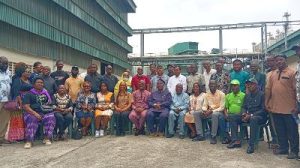
Some of the stakeholders at the event, including the National Agency for Food and Drug Administration and Control, NAFDAC, and the Standard Organisation of Nigeria, SON, said that standards play a pivotal role in the aspect of fortification and the establishment of food products in Nigeria, saying that it becomes expedient to comply with Nigeria’s code of practice and ensure proper regulation that aligns with international best practices.
They were optimistic that the training would translate into better operational practices, strict compliance, robust quality control, safer and more nutritious rice for consumers.
The primary method of the fortification process begins where broken rice grains are ground into flour, mixed with a dry vitamin and mineral blend, and shaped through an extruder into rice-like grains. These “fortified rice kernels” are then mixed with normal white rice at a typical ratio of 1:50 to 1:100.