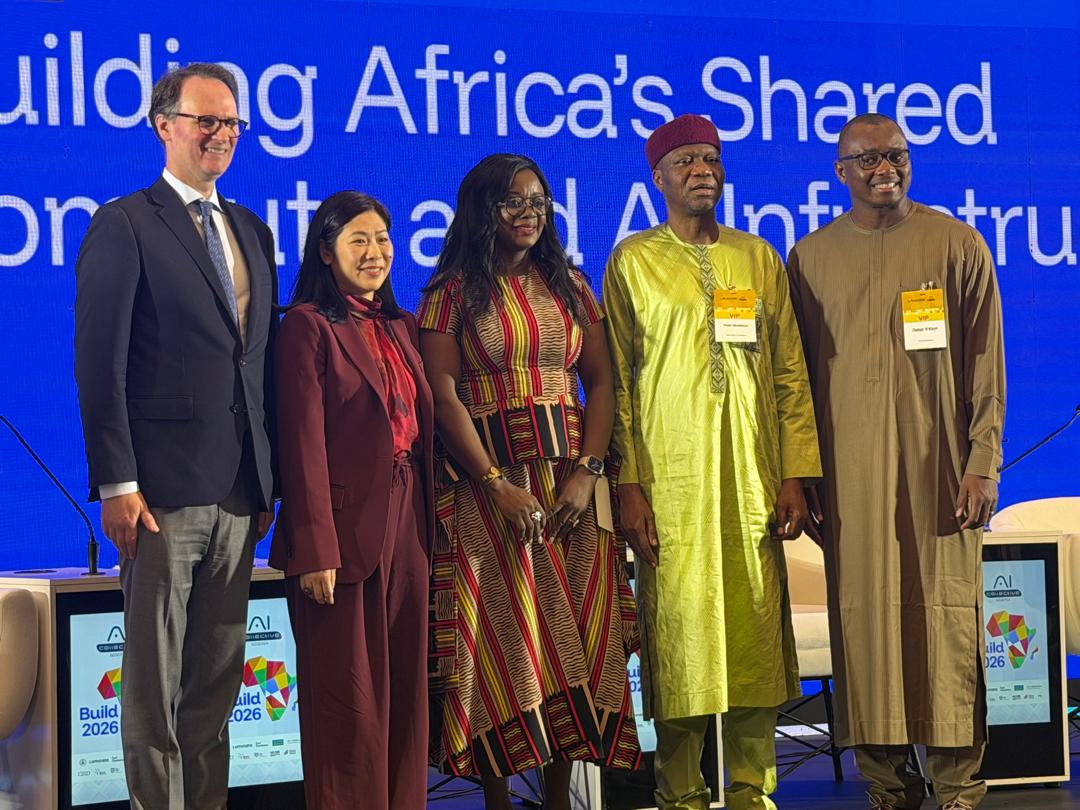
Luminate and the MacArthur Foundation have called for greater African participation in shaping the global artificial intelligence (AI) order, emphasising equitable ownership, local capacity and public interest technology to ensure the continent is not confined to supplying data, critical minerals and labour while others control the infrastructure and capture the economic value.
The call featured prominently at the BUILD 2026 Conference in Abuja, where Luminate Chief Executive Officer Melanie Hui delivered a keynote address titled “Africa in the Global AI Order: Towards Equitable Ownership and Shared Prosperity”, followed by a fireside conversation with MacArthur Foundation President John Palfrey.
Hui argued that Africa’s participation in the AI economy must extend beyond consumption to meaningful influence over the infrastructure, institutions, partnerships and decisions shaping its digital future.
“My African friends tell me they will not be confined to the role of consumer, supplier of raw data, source of critical minerals or provider of low-paid labour in somebody else’s AI economy,” she said.
Citing research commissioned by Luminate from the Global Centre on AI Governance, Hui said Nigeria’s dependence on foreign cloud infrastructure was estimated to cost the country approximately $850 million annually.
“A country does not own its digital future when a data centre merely sits within its borders,” she said, questioning who controls digital infrastructure, determines access, processes data and captures the resulting economic value.
She cautioned against treating data merely as an economic resource, stressing that it reflects people’s identities, behaviours, relationships and lives. She called for data governance rooted in dignity, consent, safety and the public good.
Hui also highlighted the under-representation of African languages in mainstream digital systems, noting that the continent is home to approximately one-third of the world’s languages.
“Safeguards are the allies of progress. Inclusion is the engine of meaningful scale. Sovereignty means being stronger together,” she said.
She identified regulatory action against technology companies, recognition of e-hailing drivers’ unionisation and legal challenges to technology-related abuses as examples of efforts to hold powerful actors accountable. She urged philanthropy to invest in the wider ecosystems of researchers, advocates, litigators, journalists, technology builders, unions and community organisers needed to advance technology justice.
In the fireside conversation, moderated by Professor Olayinka David-West, Dean and Professor of Information Systems at Lagos Business School, Pan-Atlantic University, Palfrey questioned the concentration of AI decision-making among a small number of technology companies and individuals, urging broader participation in determining how the technology develops and affects society.
“Are we going to allow a very small number of people based in Silicon Valley in California in the U.S. to make all of the decisions that are going to govern how this incredible technology plays out, or are we going to seize back that power for a much broader set of people?” he asked.
Palfrey discussed the Humanity AI initiative, launched by the MacArthur Foundation and 10 other foundations, emphasising collaboration and the need to put humanity at the centre of AI development.

He also highlighted Nigeria’s data, population and young people as important considerations in shaping the country’s AI future, while stressing investment in digital skills and locally driven innovation.
The discussion examined the importance of accessible local datasets, responsible AI deployment, infrastructure financing and measurable improvements in people’s lives.
Hui and Palfrey stressed that AI development should respond to real human needs, with attention to outcomes in healthcare, education, disability inclusion, gender equity and economic opportunity.
Their contributions underscore the central question confronting Africa’s place in the global AI order: how to ensure that the continent participates meaningfully in shaping the technology, rather than remaining on the margins of decisions that affect its future.