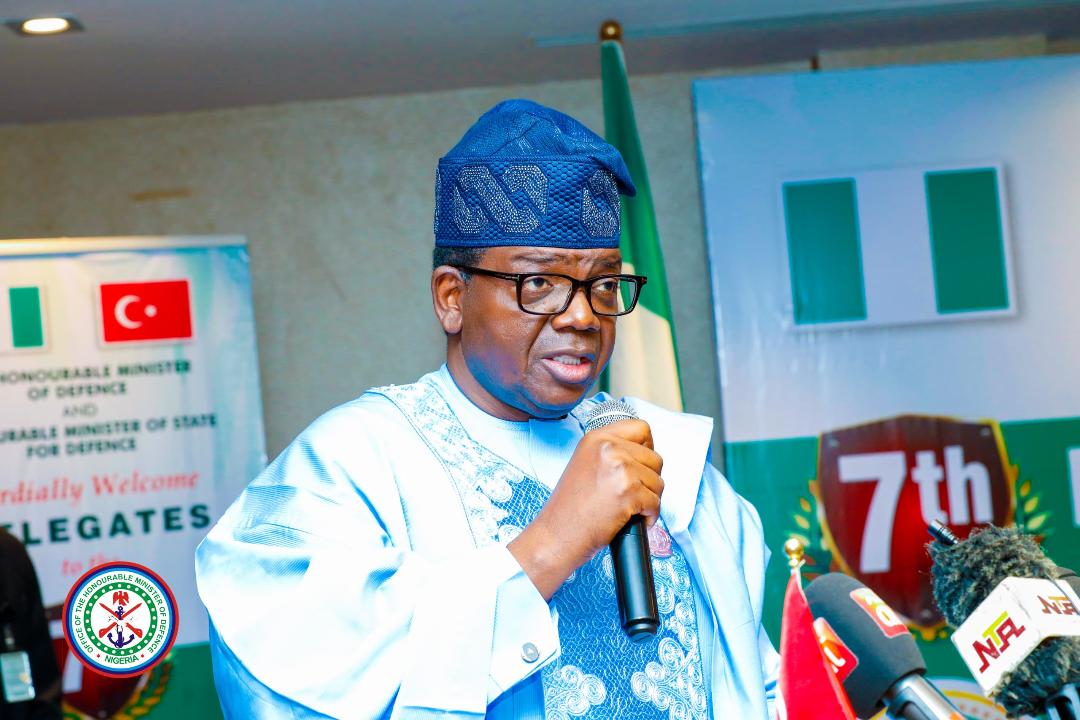
The Minister of Defence, General Christopher Musa (rtd), has called for a decisive shift from equipment procurement to local production, technology transfer, joint manufacturing and sustainable defence-industrial partnerships.
Speaking at the 7th Nigeria–Türkiye Defence Industry Business Forum in Abuja, General Musa said the longstanding bilateral relationship had evolved beyond traditional military engagements to encompass equipment acquisition, training, technical assistance and defence industry cooperation, but now required a more ambitious industrial dimension.
He urged Nigerian and Turkish stakeholders to progressively move beyond a predominantly buyer-seller relationship towards partnerships built around joint production, local manufacturing, technology transfer, research and development, maintenance, repair and overhaul, skills development and sustainable industrial cooperation.
General Musa said Nigeria’s objective is to build a strong, self-reliant and globally competitive defence industrial base capable not only of meeting immediate military requirements but also of positioning the country as a competitive defence manufacturing hub in Africa.

The Defence Minister pointed to the DICON Act 2023 as an important legal and institutional foundation for advancing the agenda, particularly through greater private-sector participation, strategic investment, technology partnerships and collaboration with reputable international defence manufacturers.
READ ALSO: Nigeria, Türkiye Agree to Enhance Cooperation
He said the industrial ambition carries implications beyond defence procurement, with potential to create quality employment, strengthen domestic supply chains, develop highly skilled Nigerian professionals and stimulate innovation while contributing to national security and economic growth.
The push assumes greater significance against the backdrop of increasingly technology-driven conflicts, with General Musa identifying unmanned systems, artificial intelligence, advanced communications, cyber capabilities, precision systems, surveillance technologies and space-based assets among the capabilities reshaping contemporary warfare.

Nigeria, he stressed, must develop the capacity to understand, adapt, manufacture, maintain and continuously improve such technologies rather than remain principally an end-user.
That objective, he said, requires sustained partnerships linking government, the Armed Forces, industry, research institutions and academia, supported by investment in innovation and human capital.
He identified Türkiye’s transformation into a major and increasingly self-reliant defence industrial power as a valuable reference for Nigeria, particularly its sustained investment in research and development, innovation, private-sector participation and coordination between government, military institutions and industry.
Nigeria, he said, therefore sees Türkiye not merely as a source of defence equipment but as a strategic partner in its defence industrialisation journey.
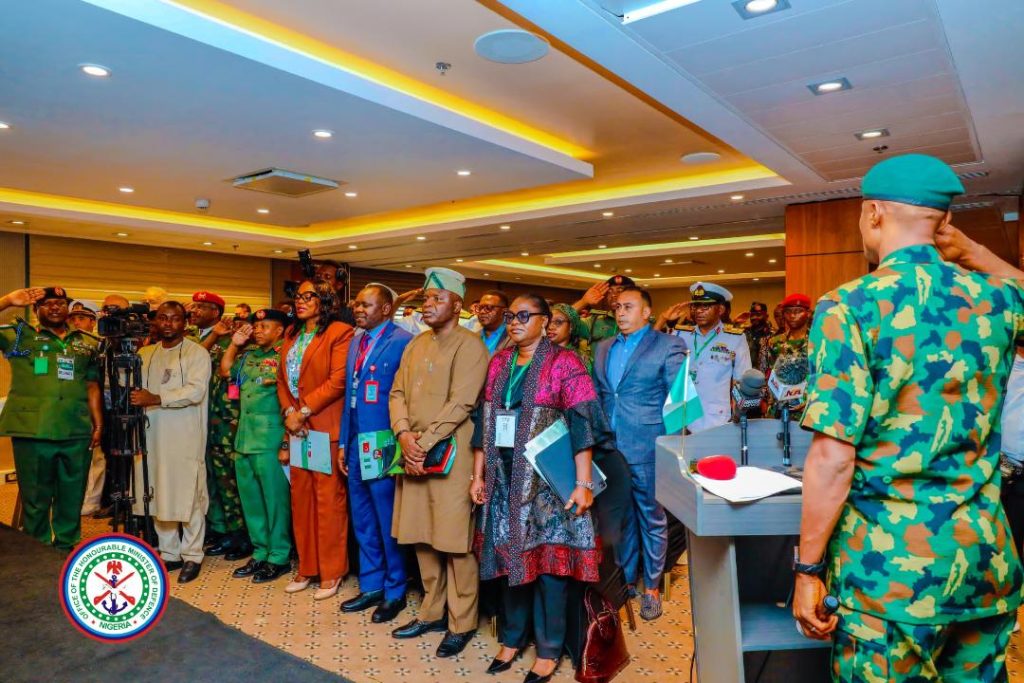
The Head of the Türkiye Defence Delegation, Mr Gokman Ucar, said Ankara’s presence was driven principally by strategic relations with Nigeria and Africa rather than immediate commercial interests.
Ucar said the forum could open a new chapter in bilateral relations by bringing Nigerian and Turkish companies together around defence industrialisation, joint production, technology transfer and localisation.
He said the discussions would also examine Nigeria’s regulatory and investment framework before companies engage in business-to-business meetings based on their respective capabilities and areas of interest.
The Turkish representative emphasised that open coordination, cooperation and collaboration should produce mutually beneficial outcomes, describing a win-win relationship as essential to sustaining long-term bilateral ties.
Defence Industries Corporation of Nigeria, DICON Director General, Major General Babatunde Alaya, also reinforced the industrial focus, arguing that recent global security developments have demonstrated that defence strength increasingly depends on a nation’s capacity to produce, sustain, repair, adapt and innovate.