

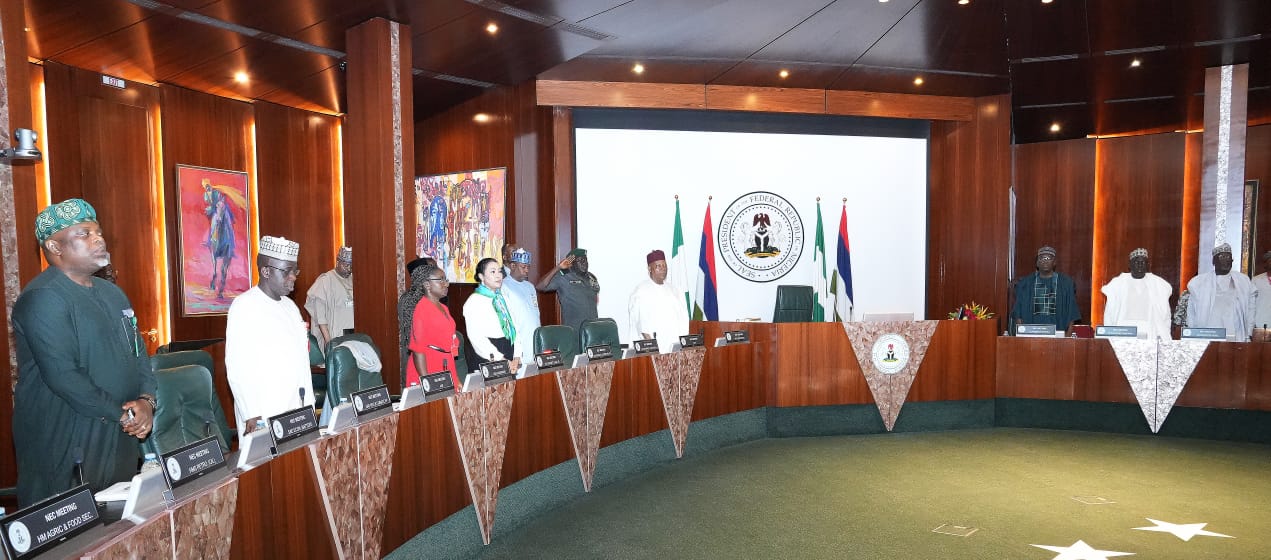
The National Economic Council (NEC) has approved the sum of N83.2 billion for the mitigation of flooding across the country.
Approval for the Anticipatory Action Task Force (AATF) intervention funds was granted on Thursday at the 158th meeting of the National Economic Council (NEC), following a presentation by the Minister of State for Budget and Economic Planning, Atiku Bagudu, on the need to proactively address flooding across Nigeria, particularly during the rainy season.
In addition, the Council noted the importance of the AATF in addressing disasters and emergencies across the country, underscoring the fact that NEC cannot continue to be seen as always taking reactionary measures with regards to emergency and disaster management.
Addressing members of the Council, Vice President Kashim Shettima, who chairs the Council, called on states to work with the Nigerian Government in resolving the logistical and compliance barriers that prevent farm produce from reaching international markets.
The Vice President said “the President Bola Tinubu administration’s reform agenda must now produce visible results across the federation.”
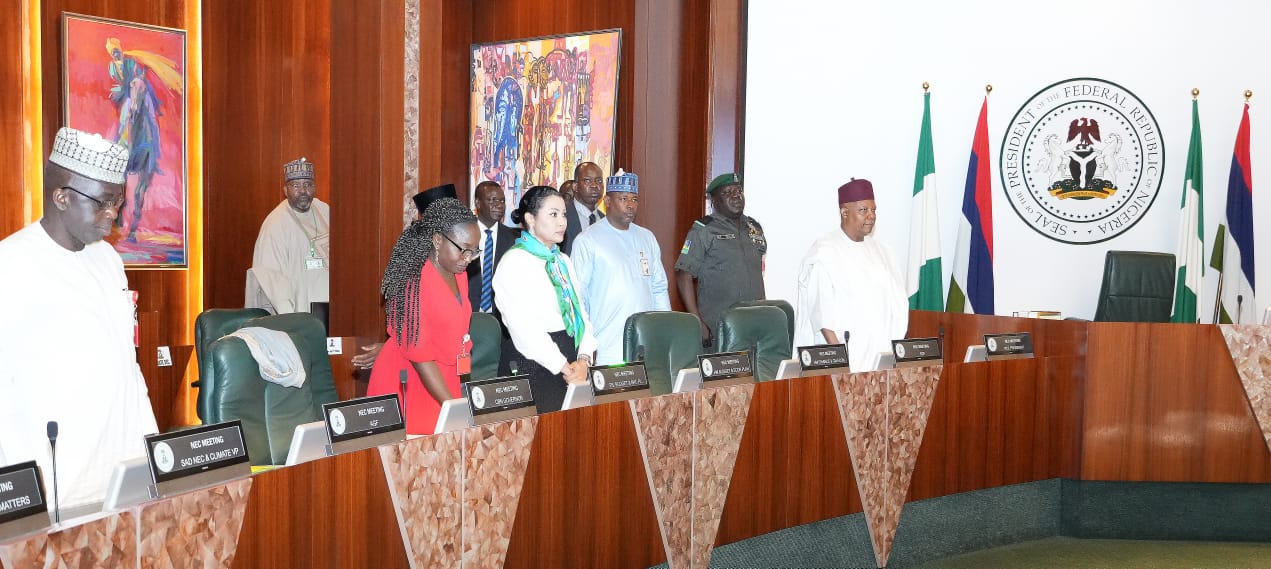
VP Shettima noted that the Council’s work must be judged by what changes in the lives of ordinary Nigerians, especially farmers, manufacturers, vulnerable citizens, unemployed young people and children who will inherit the country.
He stated: “When this Council last met, I called our economy a workshop; a place of measurement and correction. A place where plans are turned into systems and systems into institutions, before any of it becomes prosperity.
“A workshop is judged by one thing. Not by the plans pinned to its walls, but by what comes off the bench. We return to that bench today. Not to admire the image, but to ask the question that honours it. Is the work taking shape?”
VP Shettima said Nigeria remains a federation moving from stabilization to production, from aspiration to implementation, and from isolated interventions to coordinated national growth.
He further said “the agenda before the Council was not a new conversation, but a continuation of the national assignment with greater pressure for action and results.”
Social Protection
VP Shettima pointed out that the social protection agenda before the Council was an opportunity to convert national conscience into a durable system that protects citizens and strengthens human capital.
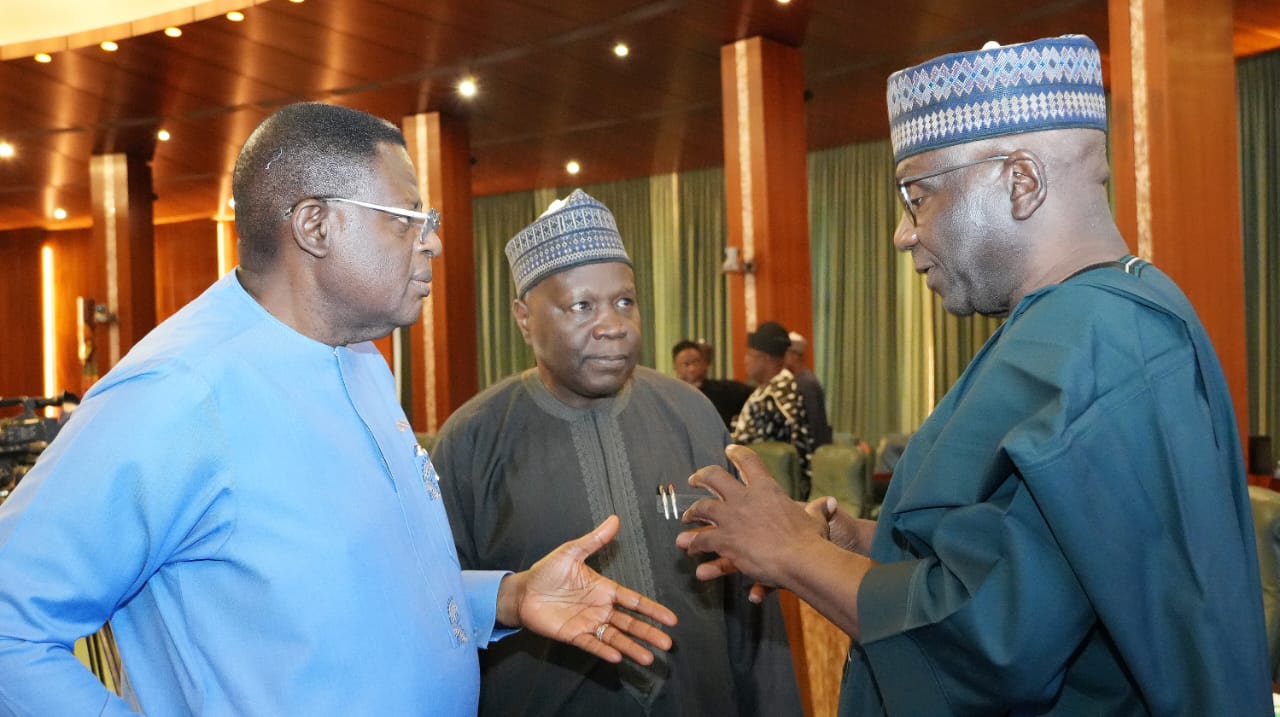
On exports and production, VP Shettima said; “Nigeria must stop relying on the export of raw materials while importing finished prosperity from other countries.”
He maintained that the country’s economic transformation depends on a complete value chain linking farms to factories, factories to standards, standards to ports, and ports to markets.
The NEC Chairman also promised that the Council would confront bottlenecks that weaken Nigeria’s agricultural exports, especially the challenges affecting movement of goods through the ports and the standards required by international markets.
Port Processes
He stated that improving port processes and meeting export compliance requirements are central to rewarding farmers, strengthening manufacturers and expanding Nigeria’s participation in global trade.
“A nation that cannot move its goods has imprisoned its own farmers. Meeting international standards is not submission to foreign demand. It is the price of the markets that will reward our labour,” the Vice President added.

 has approved the sum of N83.2 billion for the mitigation of flooding across the country)