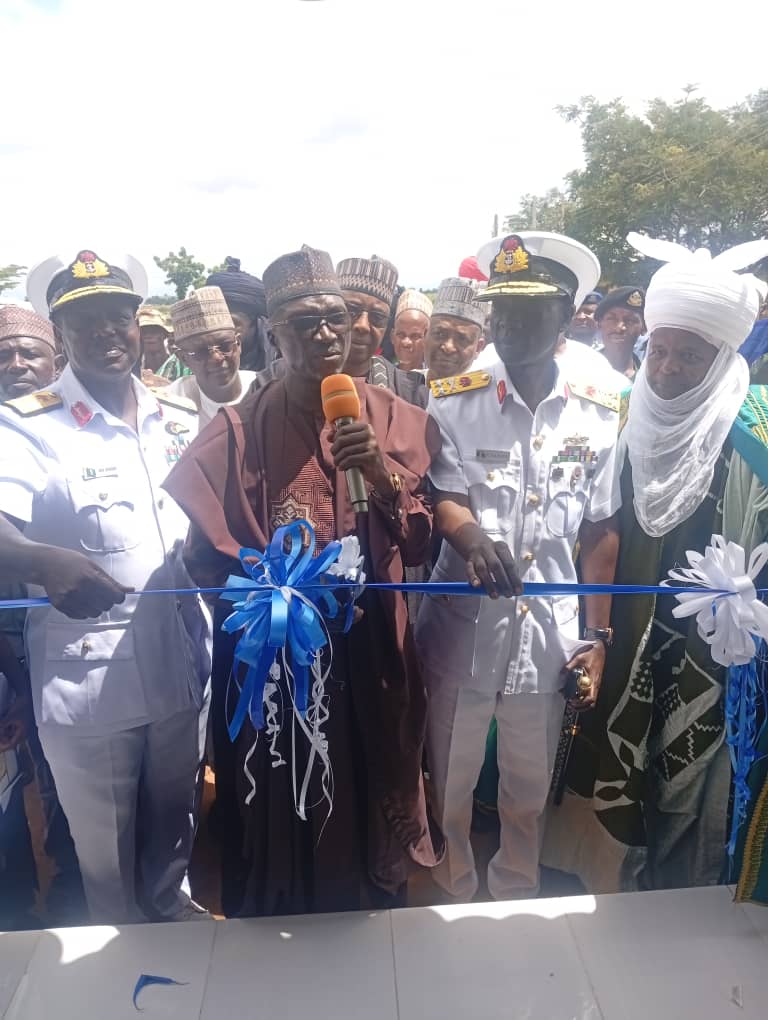
The long-standing water crisis in the Pindiga community of Akko Local Government Area of Gombe State has now received a major intervention following the commissioning of a multi-million-naira integrated potable water scheme and modern sanitation facilities by the Nigerian Navy.
For years, residents of the area endured the hardship of living without reliable access to clean drinking water, such that the severity of the shortage at the Cottage Hospital affected healthcare workers and patients.
Residents are thanking the Navy for the intervention through the project, executed under the Chief of the Naval Staff Special Intervention Quick Impact Project (SIQIP) scheme.
It was facilitated in honour of Rear Admiral U.U. Faruk, an indigene of Pindiga, after consultations identified potable water as the community’s most pressing need.
For generations, the community and surrounding settlements struggled with poor-quality groundwater because of extensive limestone deposits beneath the area.
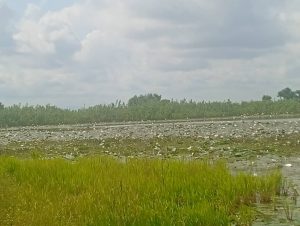
The geological conditions have contributed to serious public health concerns, including dental fluorosis and other water-related challenges.
READ ALSO: Nigerian Navy commissions School facilities in Bayelsa
Speaking at the commissioning, Rear Admiral Faruk said the entire Pindiga belt, north of Jauron Dawsu Dawa, suffered a lack of fresh water because of the area’s subterranean limestone formations.
Hydro-geological surveys eventually identified a viable aquifer about one kilometre away at Jauron Dawa, where engineers drilled to a depth of 180 metres to access groundwater considered suitable for consumption.
Consequently, the scheme now includes a five-horsepower solar-powered submersible pump, a pipeline network crossing a river channel, a reservoir at Jauron Dawa and a 60,000-litre overhead storage tank at the Cottage Hospital.
Water is now supplied directly to hospital wards, public taps, the mortuary and the central community mosque, extending the benefits beyond the health facility.
The intervention also includes two modern toilet blocks with 11 units, five for men and six for women, fitted with running water and modern sanitary facilities, in a bid to curb open defecation within the hospital premises.
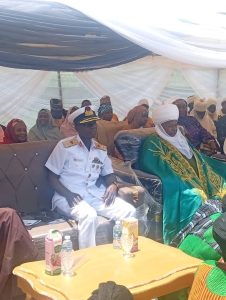
Representing the Chief of the Naval Staff, Vice Admiral Idi Abbas, the Director of Plans at Naval Headquarters, Rear Admiral Adamu Yahaya, said the project reflected the Navy’s belief that national security and socio-economic development were closely connected.
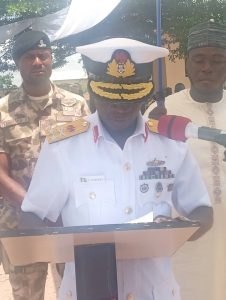
He said access to clean water was fundamental to public health, education, household welfare and commerce, describing the project as a demonstration of the military’s commitment to civil-military cooperation and community development.
Governor Inuwa Yahaya, represented by the Commissioner for Special Duties and Intergovernmental Affairs, Shehu Yerima Abdullahi, praised Rear Admiral Faruk as a hero and a source of pride to the people of the state.
The Emir of Pindiga, Alhaji Muhammad Ahmed Seyoji, expressed gratitude to Rear Admiral Faruk, saying the community’s prolonged water crisis had exposed residents, particularly children, to disease.
He prayed for blessings for the naval officer and mercy for his late parents.
For hospital worker Fatima Muhammed, the project represents more than new infrastructure.
She recalled that staff had previously been forced to use unsafe pond water, even during childbirth, while the persistent shortage discouraged healthcare workers posted to the community from remaining there.
With clean water now flowing into the hospital, Ms Muhammed said the anxiety and hardship that had accompanied basic healthcare in Pindiga had finally begun to give way to hope.