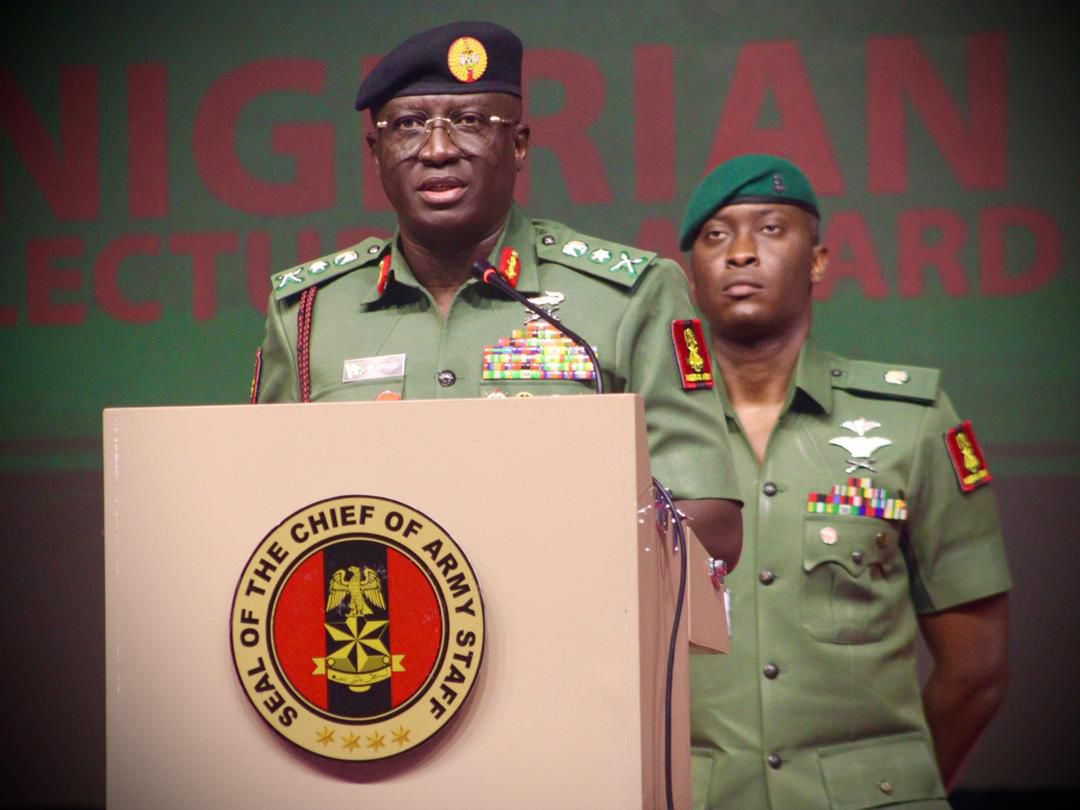
The Nigerian Army has identified innovation, strategic partnerships, emerging technologies, and people-centered operations as critical pillars for confronting Nigeria’s evolving security threats, signaling a continued shift towards a more adaptive and future-ready force.
This was contained in a statement issued by the Acting Director, Army Public Relations, Colonel Appolonia Anele, in which the Chief of Army Staff, Lieutenant General Waidi Shaibu, outlined the strategic direction during the Nigerian Army Day Celebration (NADCEL) 2026 Lecture held at the Obi Wali International Conference Centre in Port Harcourt, Rivers State, South-South Nigeria.

Lieutenant General Shaibu reaffirmed the Service’s commitment to protecting Nigeria’s sovereignty, territorial integrity, and citizens against emerging security challenges, describing the annual lecture as a strategic platform for examining the changing character of national security and refining institutional responses to both current and future threats.
ALSO READ: Security Challenges: Nigerian Army Unveils Four-Pillar Strategy
He observed that Nigeria’s security environment has grown increasingly complex, driven by insurgency, terrorism, banditry, cyber warfare, transnational organised crime and resource-based conflicts.
He explained that instability across the Lake Chad Basin, the Sahel and the Gulf of Guinea, alongside the expanding influence of artificial intelligence and cyber capabilities, continues to redefine the modern battlespace.
Speaking on the lecture theme, “Protecting the People and the Dynamics of Nigeria’s National Security: Way Forward for the Nigerian Army,” the COAS described the discourse as both timely and strategically significant to the Army’s ongoing transformation.
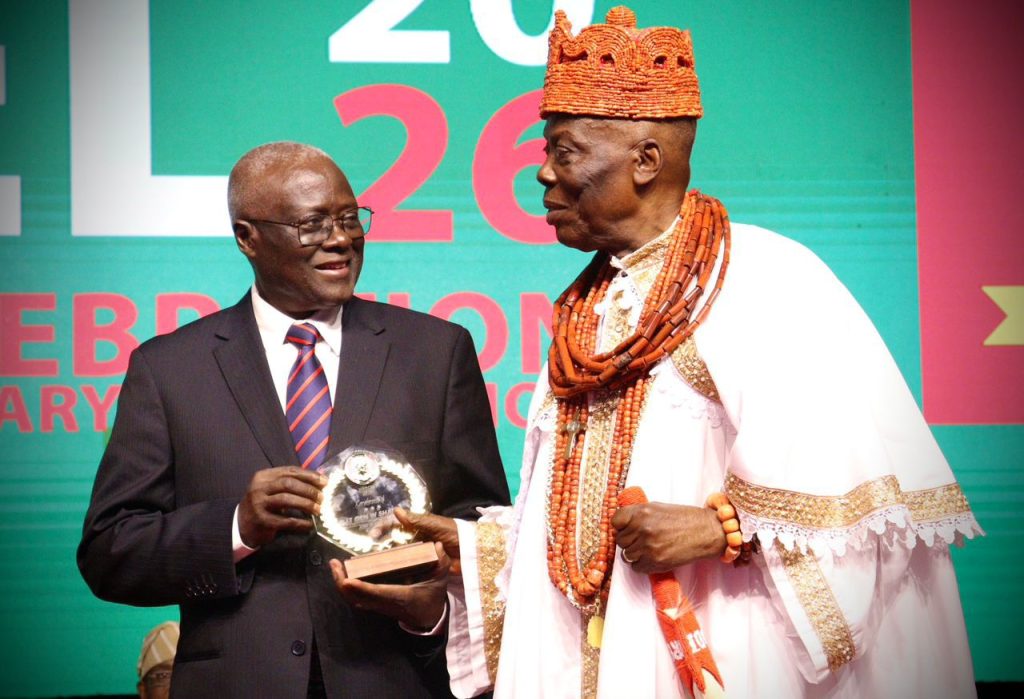
He commended the Guest Speaker, General Martin Luther Agwai (Rtd), as well as the discussants and moderators, for offering insights capable of strengthening Nigeria’s national security architecture.

The Army Chief further stated that the Nigerian Army is enhancing its operational effectiveness through intelligence-led operations, joint and multi-agency collaboration, improved civil-military relations, integration of emerging technologies and a deliberate blend of kinetic and non-kinetic approaches across operational theatres.
He reaffirmed that the Service remains committed to a people-centred operational philosophy anchored on respect for human rights, strict adherence to Rules of Engagement and the protection of civilians, while sustaining decisive operations against threats to national security.
Lieutenant General Shaibu maintained that enduring national security will depend on continuous innovation, professionalism, strategic partnerships, technological advancement and the institutionalisation of the Soldier First Culture as a force multiplier for operational excellence.
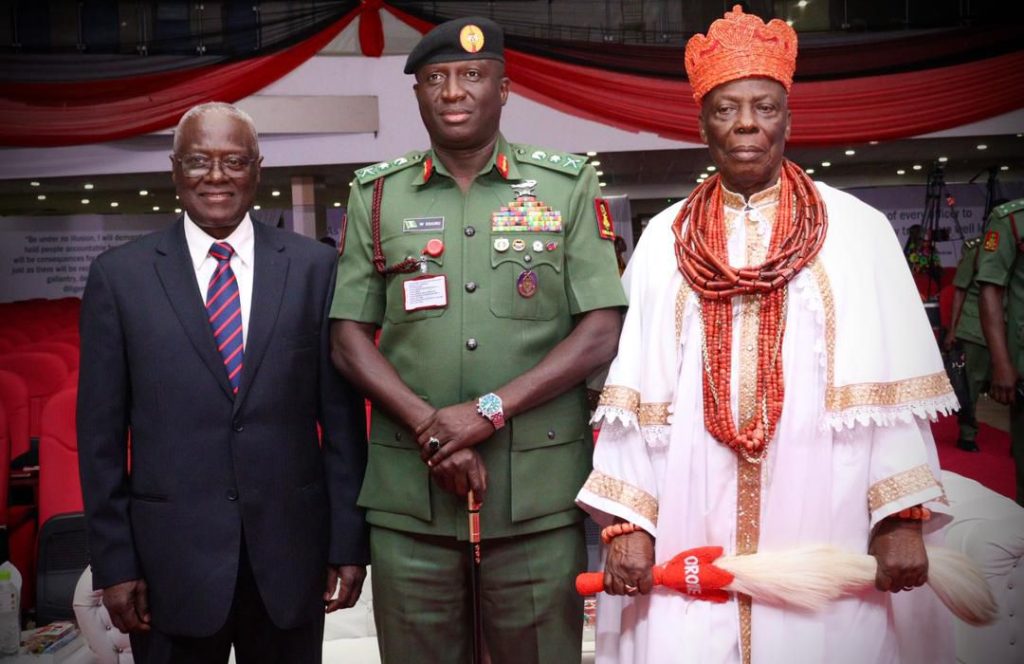
He also commended officers and soldiers for their sacrifices and expressed appreciation to President Bola Ahmed Tinubu, sister services, security agencies, development partners and Nigerians for their continued support to the Armed Forces.
The Acting Director, Army Public Relations, Colonel Appolonia Anele noted that the Special Guest of Honour, His Royal Majesty Major General Felix Mujakperuo (Rtd), described the Nigerian Army as a cornerstone of national stability, adding that its ongoing modernisation positions the Service to better anticipate, prevent and respond to emerging security threats through intelligence-driven and technology-enabled operations.