

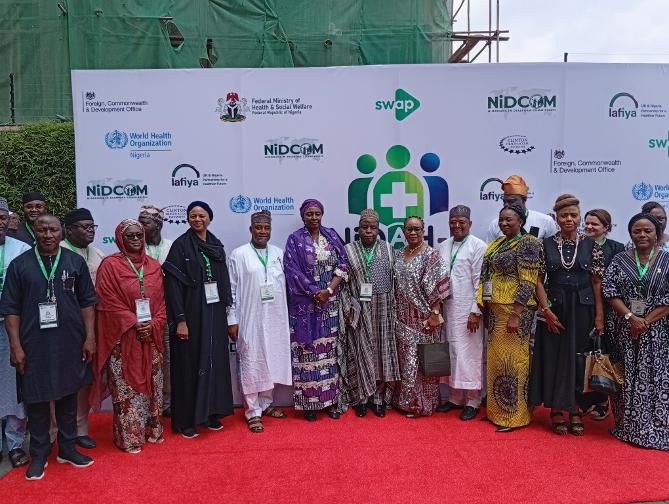
The Nigerian Government has unveiled the Nigerians in Diaspora Advance Health Programme (NiDAH-P) and its digital platform to harness the expertise of healthcare professionals in the diaspora.
The aim is to strengthen Nigeria’s health system through knowledge exchange, specialist support and institutional collaboration.
The initiative, launched in Abuja, is designed to transform the migration of Nigerian health workers into an opportunity for improving healthcare delivery by fostering partnerships between diaspora professionals and health institutions across the country.
Speaking at the launch on behalf of the Coordinating Minister of Health and Social Welfare, Prof. Muhammad Ali Pate, the ministry’s Permanent Secretary, Daju Kachollom, said the programme aligned with the Nigeria Health Sector Renewal Investment Initiative and the Sector-Wide Approach (SWAp). The initiative promotes collaboration among government, development partners, professional bodies and the private sector.
Pate said; “the government was redefining the migration of health professionals as a strategic resource for national development rather than a loss to the country.”
“Nigerian health professionals in the diaspora have consistently supported the country through specialist medical missions, residency training, research collaborations, mentorship and institutional partnerships,” he said.
According to him, NiDAH-P provides a structured national framework to coordinate, sustain and evaluate these contributions to maximise their impact on Nigeria’s healthcare system.
The Minister announced that the Federal Ministry of Health and Social Welfare, in partnership with the Nigerians in Diaspora Commission (NiDCOM), would commence the Diaspora Health Impact Initiative on July 25th during the 2026 National Diaspora Day celebration.
The initiative, Pate explained, would strengthen specialist medical services, residency training and continuing professional development across the country.
“We are changing the narrative from brain drain to brain gain by creating opportunities for Nigerian professionals abroad to contribute their expertise to healthcare delivery at home,” he added.
Pate called on federal tertiary hospitals, regulatory agencies, development partners and healthcare professionals in the diaspora to actively participate in the programme, noting that its success would depend on sustained institutional commitment.
Representing the Chairman and Chief Executive Officer of NiDCOM, Abike Dabiri-Erewa, Yakubu Bassi described the programme as a landmark initiative that would convert the migration of Nigerian health professionals into a strategic asset for national development.
“NiDAH-P is a deliberate strategy to transform brain drain into brain gain and brain circulation, particularly within Nigeria’s health sector,” Dabiri-Erewa said.
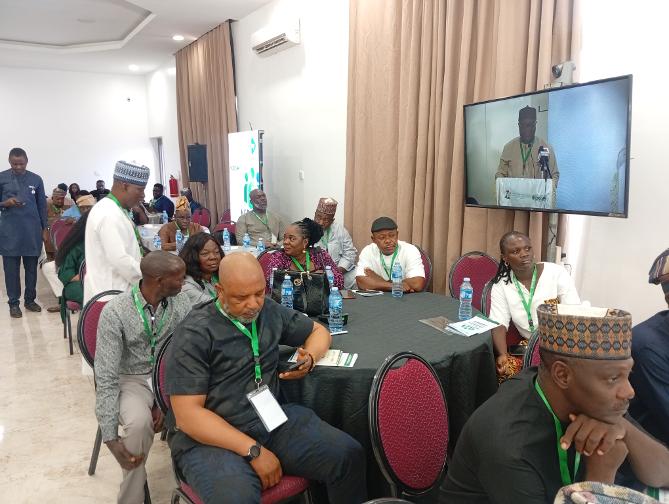
She noted that the initiative was the result of more than a decade of collaboration between NiDCOM and the Federal Ministry of Health and Social Welfare and invited Nigerians to participate in the 2026 National Diaspora Day activities scheduled for July 24 and 25.
Also speaking, Chairman of the Committee of Chief Medical Directors of Federal Tertiary Hospitals, Prof. Sahad Ahmed pledged the support of federal tertiary hospitals for the initiative.
Ahmed said existing collaborations with Nigerian specialists abroad had already demonstrated the value of diaspora engagement, citing the successful establishment of a sustainable open-heart surgery programme at the Federal Medical Centre, Abuja.
“The success of the open-heart surgery programme at the Federal Medical Centre, Abuja, clearly demonstrates what this initiative can achieve when replicated across more health institutions in Nigeria,” he said.
Ahmed assured the Federal Ministry of Health and Social Welfare of the commitment of chief medical directors to ensuring the programme succeeds.
Speaking on behalf of the World Health Organisation (WHO) Country Representative in Nigeria, Dr. Pavel Ursu, Mary Brento described the initiative as an innovative platform for converting health workforce migration into a sustainable system for knowledge transfer, mentorship and specialist healthcare support.
“This programme presents an innovative mechanism to harness the tremendous expertise of Nigerian health professionals abroad and transform the narrative from brain drain to brain circulation and brain gain,” Ursu said.
He reaffirmed WHO’s commitment to supporting the initiative through technical assistance, monitoring and evaluation.
“The true value of this initiative will be reflected in stronger local institutions, enhanced workforce capacity, effective knowledge transfer and the next generation of health professionals who benefit from mentorship,” Ursu added.

 and its digital platform to harness the)