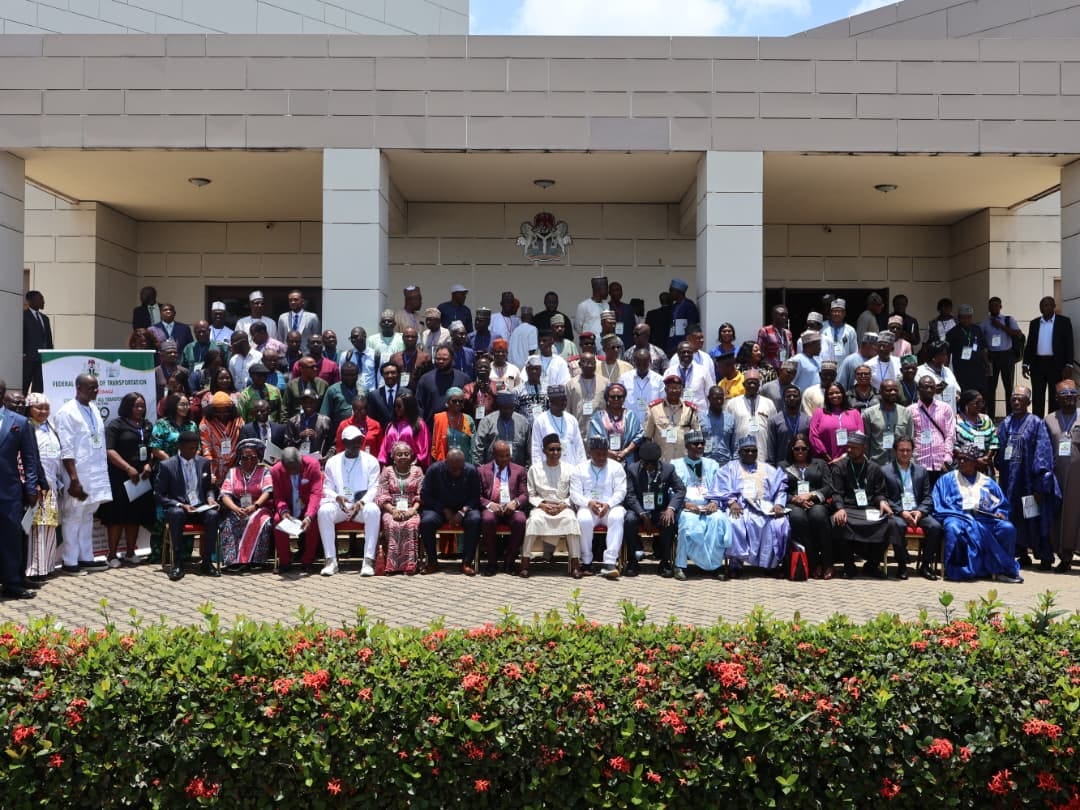
The Nigerian Government has renewed its drive to develop an integrated transportation system connecting road, rail, water and other modes as stakeholders converge in Abuja for the 19th National Council on Transportation.
The four-day council, which opened on Monday at the National Judicial Institute, Abuja, is themed, “Developing Effective Transportation System for Nigeria: The Role of Integrated Transportation.”
Declaring the council open, the Permanent Secretary, Federal Ministry of Transportation and Chairman of the council’s technical session, Mr Olufunso Adebiyi, said the dominance of road transportation had placed enormous pressure on Nigeria’s road infrastructure, stressing the need to develop alternative and interconnected modes.
Adebiyi said about 98 per cent of Nigerians depend on road transportation, making it imperative to strengthen rail and water transportation to reduce pressure on roads, improve safety and lower logistics costs.
He highlighted ongoing efforts to expand the railway network, noting that moving containers by rail from ports to inland destinations would reduce the number of heavy-duty vehicles on major highways, thereby reducing road deterioration and accidents.
According to him, the government is also improving port infrastructure and operations to make cargo movement faster, safer and more efficient.
The Permanent Secretary disclosed plans to establish standardised bus terminals across the country, beginning with six terminals equipped with waiting areas, security posts, vehicle inspection and maintenance points, restrooms and other amenities.
He also said the government was developing a Smart National Transport Data Bank to provide reliable data on drivers, vehicles, licences, number plates, transport workers and passengers, thereby strengthening road safety, regulation and accountability.
Adebiyi said the Nigerian Government was determined to give Nigerians greater freedom to choose their preferred mode of transportation rather than depend almost entirely on road travel.
He added that the government was pursuing the expansion of rail and light-rail systems while working towards greater connectivity among road, rail and water transportation.
The Permanent Secretary announced that the National Land Transport Policy, approved by the Federal Executive Council, would be unveiled during the council’s proceedings.
In his remarks, the newly appointed Head of the Civil Service of the Federation, Mr Abel Olumuyiwa Enitan, said an integrated transport system was essential to Nigeria’s ambition of building a one-trillion-dollar economy by 2030.
Enitan said a modern multimodal transport network would improve mobility, reduce logistics costs, strengthen trade, attract investment and enhance the competitiveness of Nigerian businesses.
He, however, stressed that infrastructure alone would not deliver the desired transformation, calling for stronger institutions, effective regulation, reliable data, innovation and a skilled workforce.
In his keynote presentation, Dr Emmanuel John Oche of the Transport Growth Initiative, Abuja, advocated a shift from Nigeria’s traditional road-centred approach to transportation development.
Oche said Nigeria must prioritise sustainable public transportation, active mobility and efficient freight systems, stressing that genuine integration required coordinated systems, institutions, technology, information and operations.
Earlier, the Director of Transport Planning and Coordination and Council Secretary, Mrs Jane Orjinta, said the council provided an important platform for governments, regulators, operators and other stakeholders to assess progress, identify challenges and develop coordinated solutions.
She urged states to develop clear transport master plans and adopt transparent public-private partnership frameworks capable of attracting sustained investment.
The 19th National Council on Transportation brings together government officials, transport agencies, professional bodies, operators, academics and development partners to deliberate on the future of Nigeria’s transportation sector.
The council is expected to produce actionable recommendations to improve connectivity, safety, affordability, sustainability and efficiency across the country.