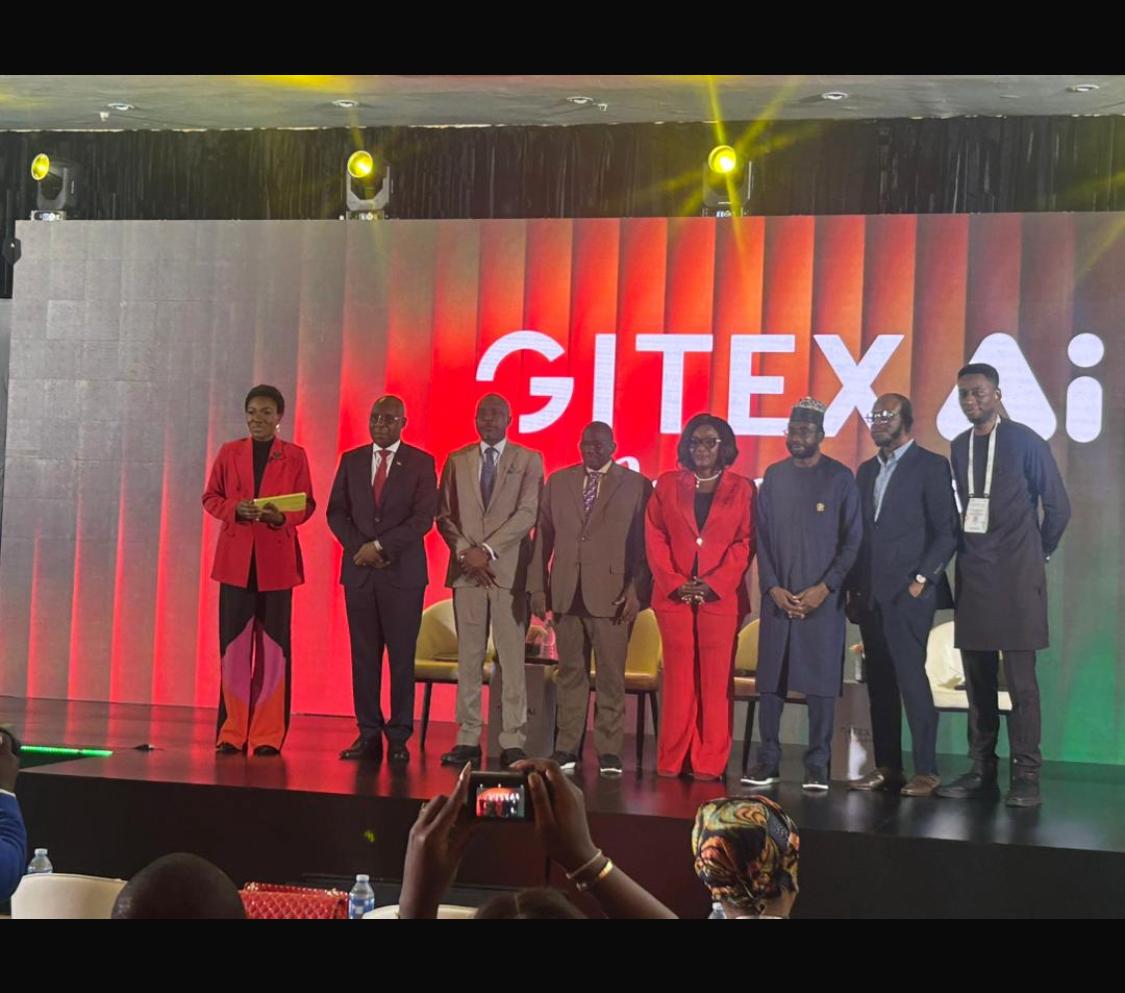
The Nigerian government has intensified its push to build a digitally sovereign economy with stakeholders calling for greater investment in artificial intelligence, digital infrastructure, data governance and homegrown innovation.
This effort was highlighted at the GITEX Nigeria 2026 Government Leadership & AI Summit in Abuja.
The summit, themed “Beyond Connectivity: The Bridge to Sovereign AI and Innovation,” brought together senior government officials and industry leaders to examine Nigeria’s readiness to develop and control critical technologies as artificial intelligence becomes increasingly central to economic growth, national security and public administration.
Secretary to the Government of the Federation (SGF), George Akume, said the theme was timely, stressing that Nigeria must move beyond being a consumer of technology to becoming a builder, producer and exporter of digital solutions and artificial intelligence.
The SGF who was represented by the Permanent Secretary of Political and Economic Affairs Office, Mrs. Bekearedebo Warrens said the Federal Government’s digital transformation agenda was being implemented through a series of reforms designed to establish the foundations of a competitive digital economy.

He highlighted digital identity, connectivity, talent development, cloud infrastructure and data centres as some of the major areas where the administration of President Bola Ahmed Tinubu is pursuing reforms.
The SGF said, “These reforms captures the very essence of where Nigeria is headed, not merely as a consumer of technology, but as a builder, producer and exporter of digital solutions and artificial intelligence.”
READ ALSO: Nigeria Unveils Sovereign Cloud Regulatory Frameworks
Akume said, the government’s reforms in digital identity are aimed at strengthening Nigeria’s data sovereignty and establishing a more robust foundation for digital public infrastructure.
He said the recently referenced reforms to the National Identity Management Commission (NIMC) framework would strengthen the country’s ability to manage and secure its digital identity infrastructure.
Akume also highlighted Project Bridge, through which the government plans to deploy about 90,000 kilometres of fibre-optic infrastructure across the country to connect states, local government areas and wards.
He said the connectivity programme was being complemented by telecommunications infrastructure aimed at extending broadband access to millions of Nigerians in underserved communities.
The SGF further pointed to the 3 Million Technical Talent (3MTT) programme as a key component of the government’s human-capital strategy.
He said the programme had recorded about 1.87 million registrations across all 774 local government areas, with more than 125,000 Nigerians trained, particularly in areas such as cloud computing, artificial intelligence, cybersecurity and software engineering.
Akume said the objective was to develop a workforce capable of creating digital products rather than simply consuming technologies developed elsewhere.
On cloud infrastructure, he said the newly unveiled National Digital Cloud Policy was targeting $750 million in private investment in Nigeria’s cloud and data infrastructure over the next 24 months.
He added that the policy, alongside Project Bridge and 3MTT, was intended to connect infrastructure, skills, government demand and private-sector investment to create a stronger domestic technology ecosystem.
The SGF called on government institutions, investors, developers, innovators and the private sector to use GITEX Nigeria as a platform for practical partnerships rather than rhetoric.
He added that Nigeria already had significant elements of the infrastructure, expertise and partnerships required to build a sovereign digital economy, but needed stronger collaboration and adoption.
Earlier, the Director-General of the National Information Technology Development Agency (NITDA), Kashifu Inuwa Abdullahi, said artificial intelligence should be treated as strategic infrastructure rather than merely another technological tool.
In his opening remarks, Inuwa argued that AI could enable governments to develop intelligence about their economies, citizens and national security, making control over the underlying technology increasingly important.
He said sovereignty in the AI era should encompass the entire technology stack, including connectivity, computing power, data centres, cloud infrastructure, data governance and AI models.
“As a nation, we have capacity to build and develop the technology that can help us to build the intelligence about our nation. We need to start thinking about the connectivity, the compute power, the data centres, the cloud capability.”