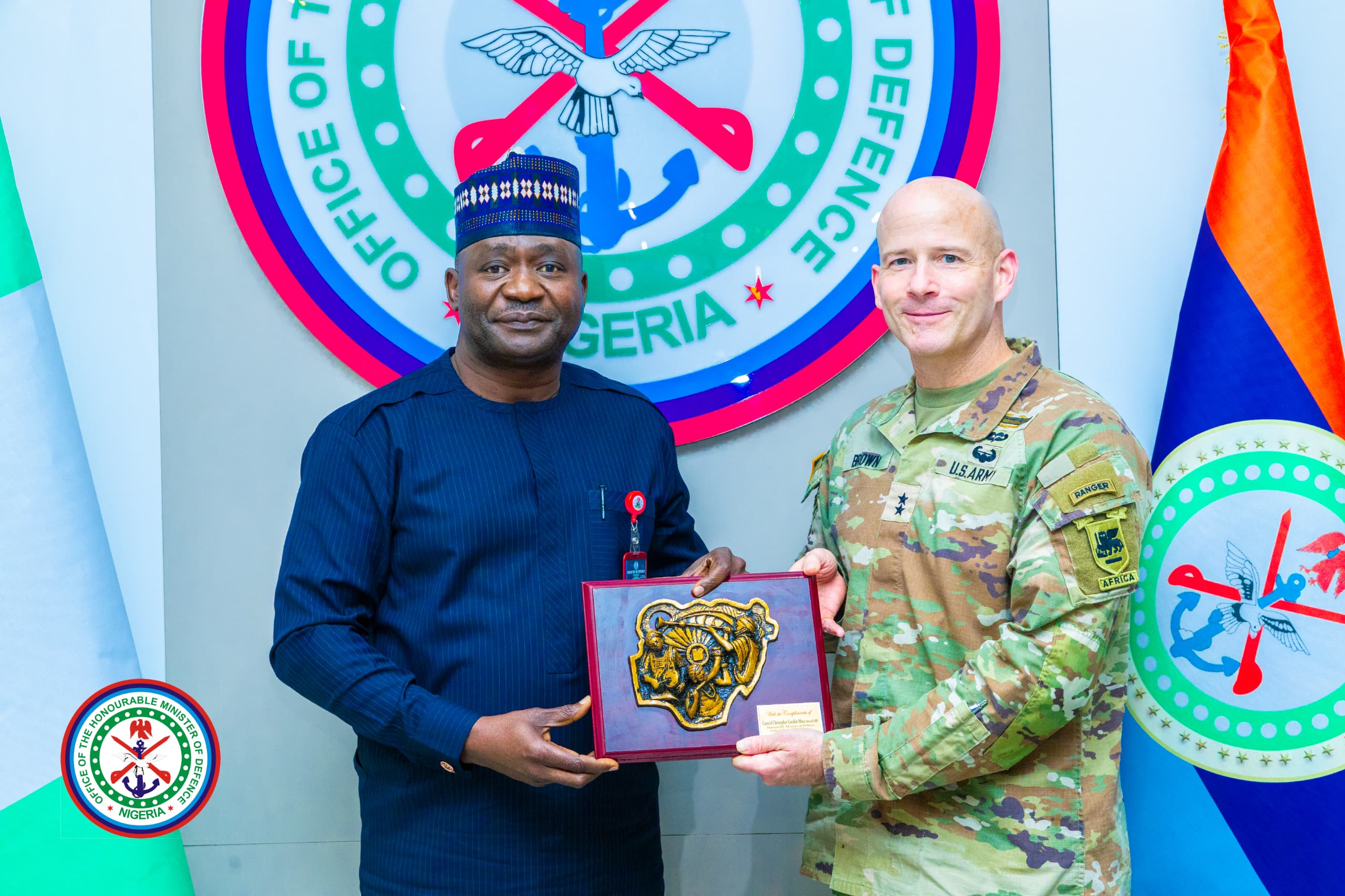
The Federal Government has reaffirmed Nigeria’s commitment to deepening military relations with the United States, identifying counter-terrorism cooperation, intelligence sharing, and specialised training as priority areas for stronger bilateral defence collaboration.
The Minister of Defence, General Christopher Musa (Rtd), made the statement on Wednesday in Abuja while receiving the Commander, U.S. Army Southern European Task Force, Africa (SETAF-AF), Major General Matthew Brown, on an official working visit to the Ministry of Defence.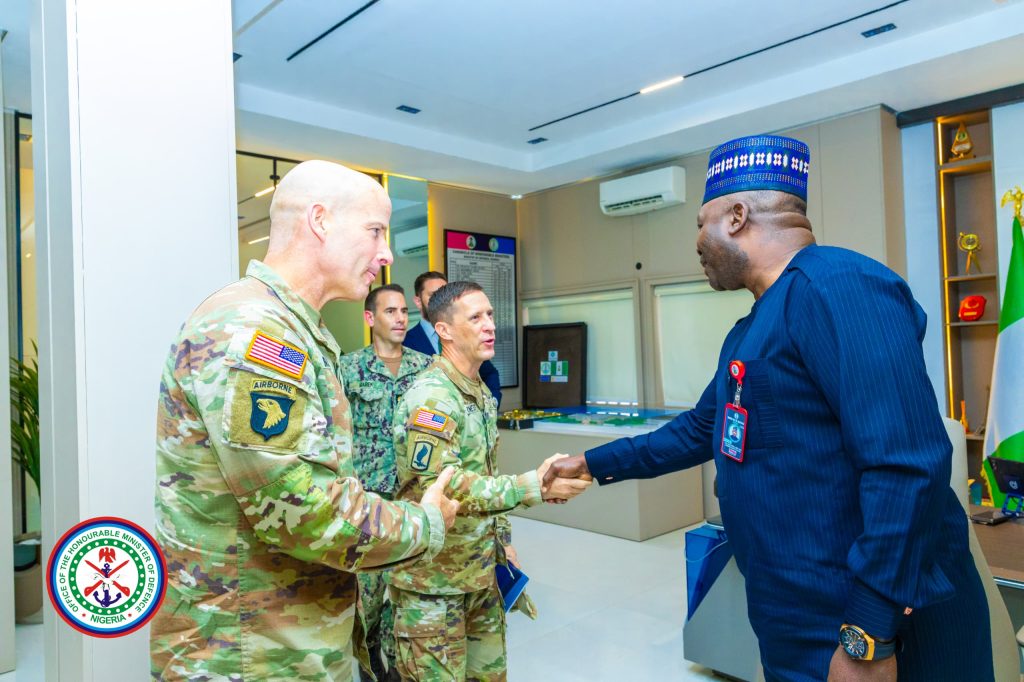
A statement by the Special Assistant (Media) to the Honourable Minister of Defence, Leah Katung-Babatunde, said the visit aimed to review ongoing joint security initiatives and develop a more results-oriented strategic framework for future defence collaboration.
General Musa expressed appreciation to the United States Government for its sustained partnership, noting that collaborative security operations in the North East, particularly around the Lake Chad Basin, had significantly boosted troop morale.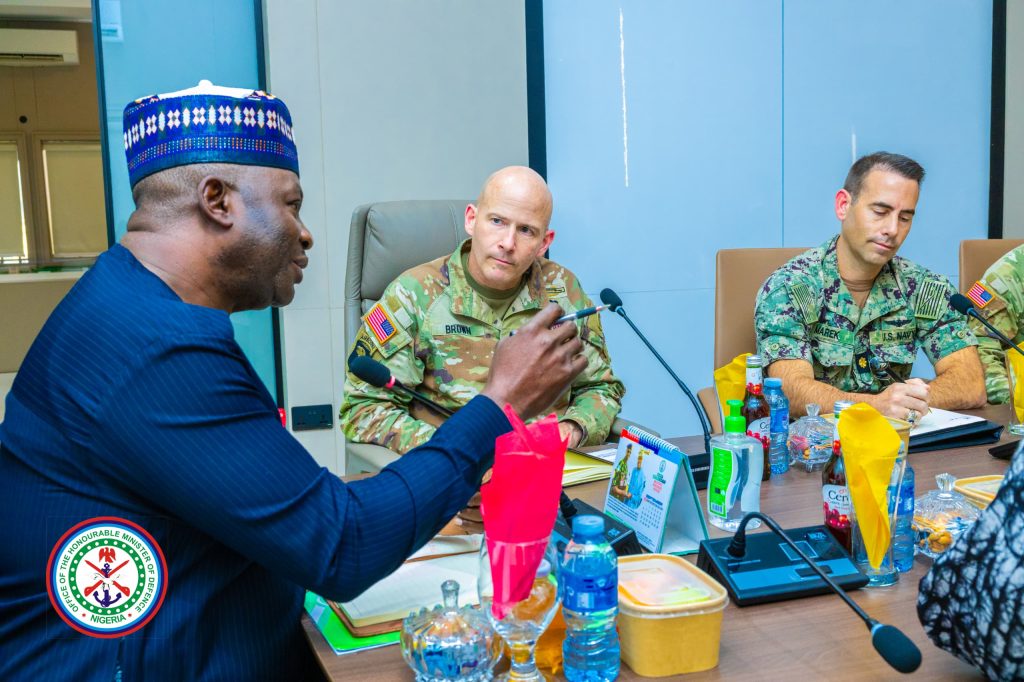
To build on the gains recorded through the partnership, the Minister identified specialised joint training for Special Forces, intelligence sharing and capacity building, enhanced border surveillance and security, Counter-Improvised Explosive Devices support and modernisation of defence infrastructure as priority areas for enhanced cooperation.
In his remarks, Major General Brown extended early Independence Day felicitations to Nigeria and expressed appreciation for the decades-long military-to-military relationship between the two countries.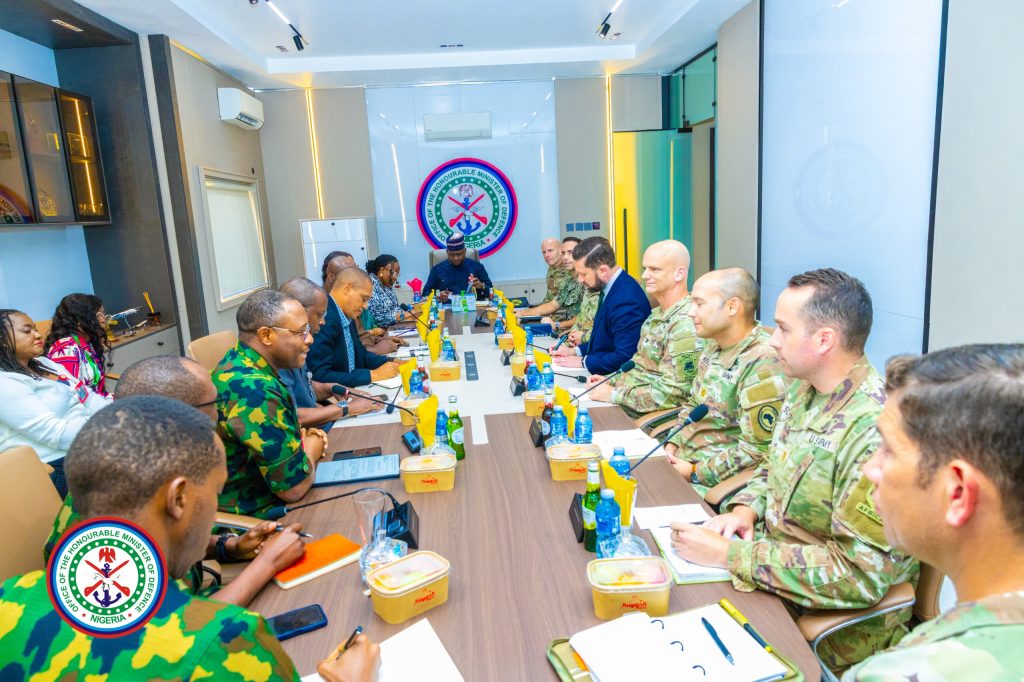
READ ALSO: Nigerian President Tasks Military Officers on National Security
He highlighted successful counter-terrorism engagements against ISIS-affiliated groups in Africa and commended the troops involved.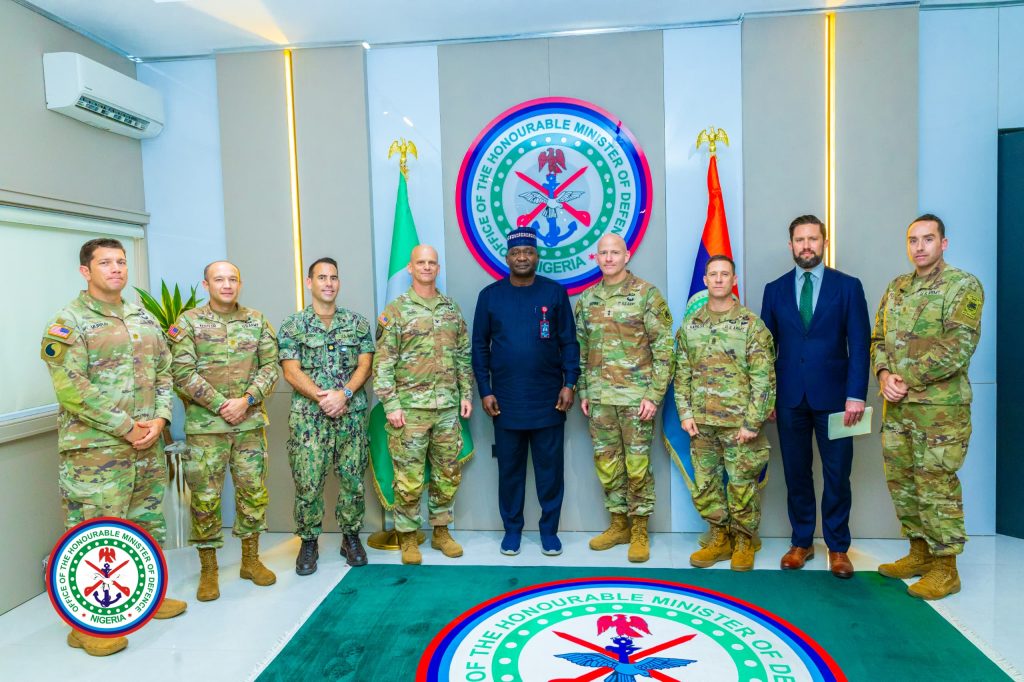
Major General Brown also clarified the nature of U.S. military engagements in Nigeria following the departure of soldiers who formed part of the Combined Special Task Force that operated in the Bauchi area, stressing that U.S. military activities in Nigeria were temporary and focused on institutional support and collaboration.
Describing the bilateral relationship as strategic and grounded in mutual trust, the U.S. commander said the primary purpose of his visit was to gain a direct understanding of Nigeria’s defence priorities to align broader U.S. support and strengthen ongoing bilateral intelligence sharing.