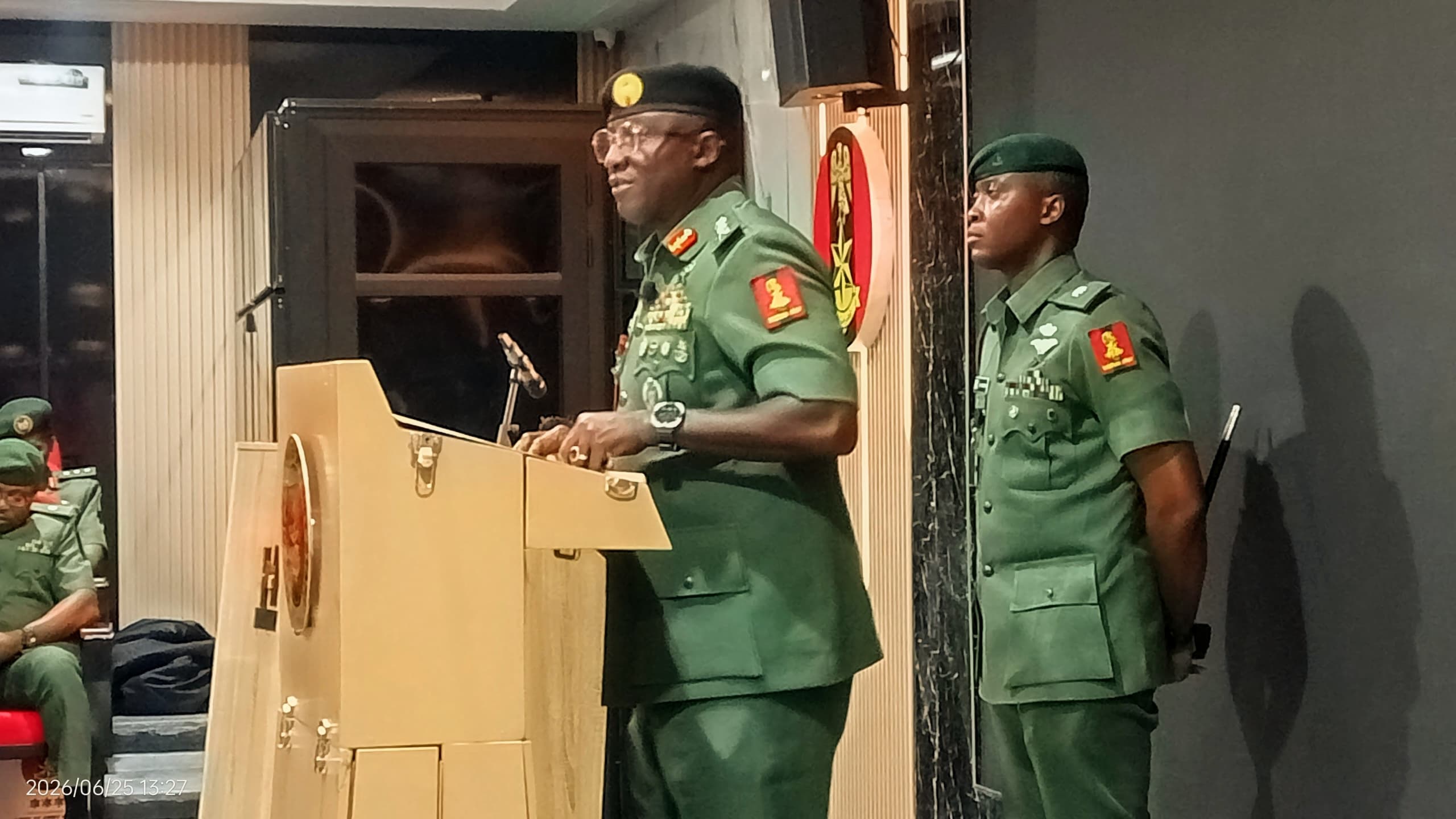
The Nigerian Army has commissioned a dedicated Wargaming Centre designed to test military strategies, simulate security crises, and generate operational solutions before troops are deployed.
The move signals a broader shift towards decision-driven warfare in an increasingly complex security environment.
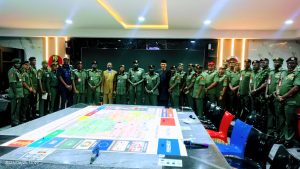
At the commissioning of the Army War College Nigeria (AWCN) Wargaming Centre within the college premises in Abuja, the Chief of Army Staff, Lieutenant General Waidi Shaibu, described the facility as a strategic investment in professional military education.
READ ALSO: Nigerian Army Embraces AI, Media Integration in Modern Military Operations
He said it will also boost operational readiness, and the intellectual preparedness of commanders tasked with confronting terrorism, insurgency, banditry, and other evolving threats.
According to the Army Chief, contemporary security challenges now demand leaders who can anticipate adversaries, challenge assumptions, analyse competing options, and make informed decisions under pressure.
He said the centre would provide a structured environment where commanders and staff officers can test operational concepts, explore possible outcomes, and identify vulnerabilities before committing troops and resources to real-world operations.
Lieutenant General Shaibu identified wargaming as a critical tool for understanding complex operational problems, visualising battlefields, anticipating enemy reactions and assessing second- and third-order effects that often shape campaign outcomes.
He noted that the process creates a safe environment where mistakes become lessons and lessons become preparedness.
One of the specific challenges the Army Chief wants the centre to examine is Nigeria’s persistent kidnapping crisis.
He tasked the institution with exploring innovative approaches to mass abductions, including how emerging security arrangements, inter-agency coordination, and policy interventions could improve response times and reduce the incentives driving ransom-related crimes.
Beyond conventional security threats, Lieutenant General Shaibu also highlighted growing concerns about foreign information manipulation, malign influence campaigns, and the exploitation of digital platforms to shape public opinion and affect national security outcomes.
He warned that public confidence remains a critical component of operational success and should not be undermined by coordinated disinformation efforts.
The Commandant of the Army War College Nigeria, Major General Umar Alkali, described the centre as a major shift from traditional classroom learning towards decision-focused military education.
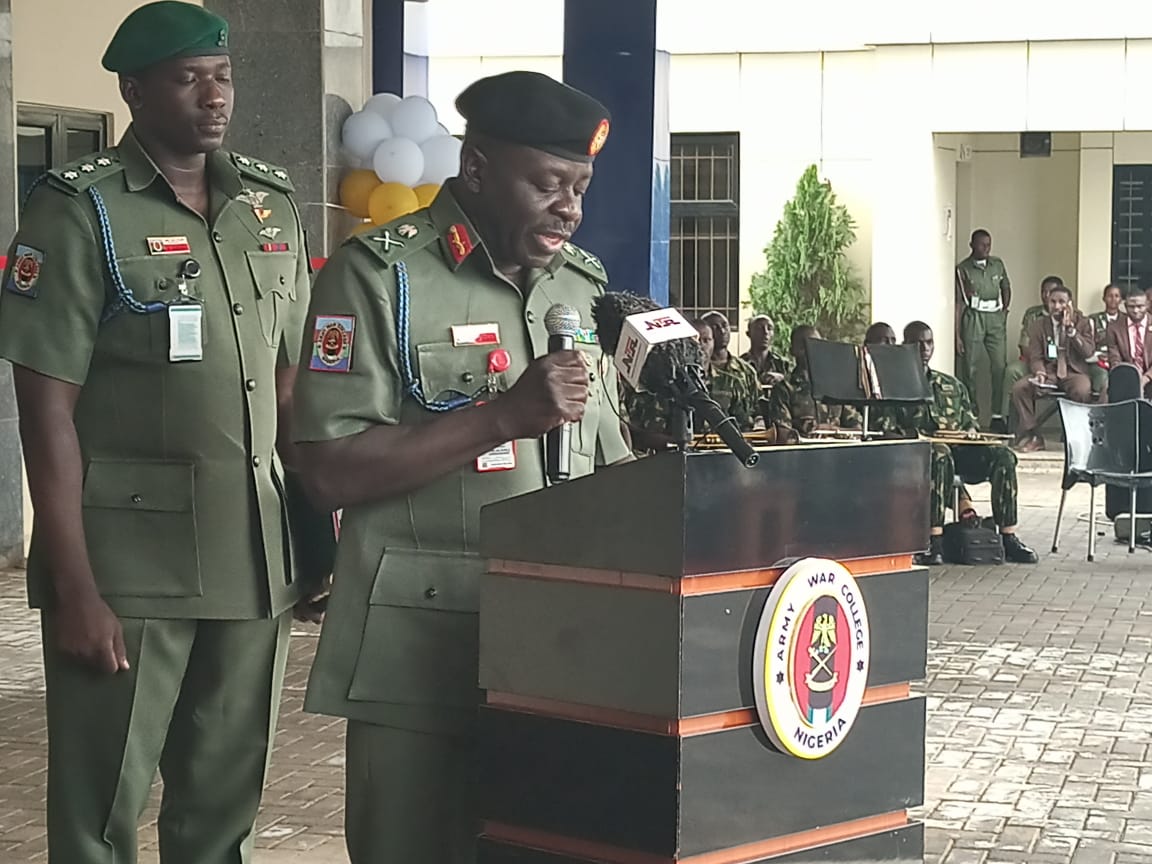
He explained that the facility would allow participants to test campaign plans, examine alternative strategies, and analyse operational challenges through structured simulations that replicate the uncertainty of contemporary conflict environments.
According to the Commandant, the centre will support not only Army War College participants but also wider doctrine development, operational analysis, concept testing, and strategic research across the Armed Forces of Nigeria.
He added that future activities would incorporate joint, inter-agency, and academic partnerships aimed at improving strategic thinking and national security planning.
An overview presented by the Director of War and Strategy, Brigadier General Eyitayo Shoda, revealed that the idea for the facility originated under former Chief of Army Staff, Lieutenant General Faruk Yahaya (Rtd), with successive Army leadership sustaining the project until its completion.
The presentation also highlighted significant investments in human capacity development, including specialised engagements with the United States Army War College and the United Kingdom Defence Academy.
Faculty members have since developed indigenous wargaming models tailored to Nigeria’s security realities, covering counterterrorism, counterinsurgency, joint operations, and operational planning scenarios.
The college further disclosed that it has expanded its Wargame Production Centre to support map production, large-format printing, and specialised educational resources required for contemporary military simulations and strategic exercises.
More than a new building, the Wargaming Centre represents an institutional effort to transform operational experience into structured analysis and future preparedness.
The facility is expected to serve as a platform where military planners, security agencies, and policymakers can examine difficult national security problems, test assumptions, and refine response options before those challenges emerge on the battlefield.
For the Nigerian Army, the message behind the commissioning was clear: future military advantage will depend not only on weapons and manpower but increasingly on the ability to think ahead, anticipate threats, and make better decisions before operations begin.