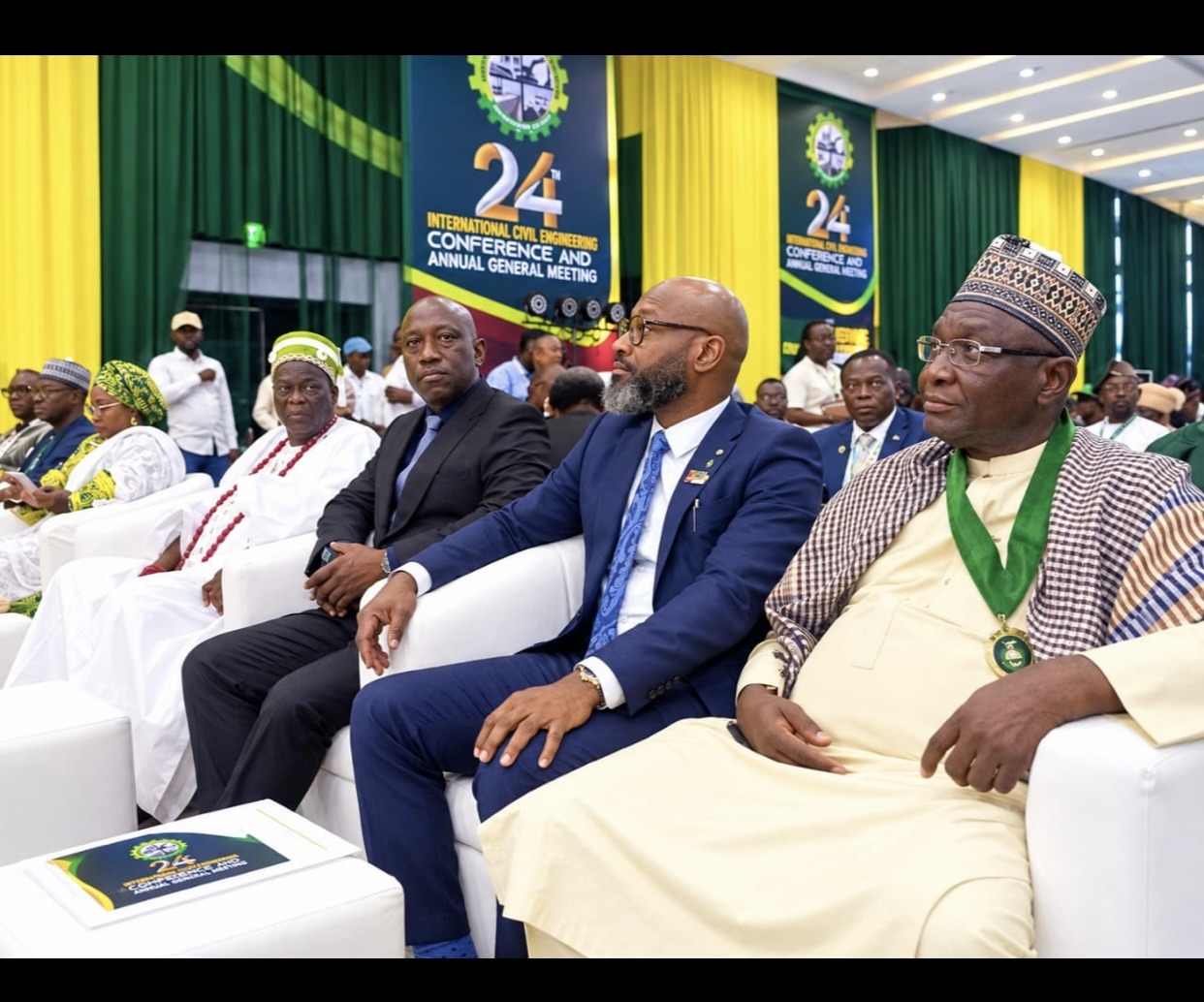
The National Chairman of the Nigerian Institution of Civil Engineers, NICE, Tokunbo Ajanaku, has emphasised the importance of sustainable and resilient infrastructure in driving Nigeria’s economic growth.
Tokunbo, who described durable infrastructure as essential to national development, said infrastructure must not only be built but also maintained to ensure functionality, sustainability and lasting economic benefits.
He made this statement in an interview with Voice of Nigeria on the sidelines of the ongoing International Civil Engineering Conference and 24th Annual General Meeting of the institution in Lagos, Southwest Nigeria.
Ajanaku said; “sustainable infrastructure enables replication of successful developmental projects across the country, multiplying their economic benefits.”
“If you build it and you can’t use it, it is useless. If it cannot grow your system. There cannot be any economic growth,” he said.

He said that infrastructure that is properly maintained and sustained provides opportunities to replicate development initiatives in other areas, thereby extending their benefits nationwide.
On efforts to address weak enforcement of standards in urban planning, the NICE Chairman said “the institution was strengthening advocacy, education and technical support to promote infrastructure resilience across Nigeria.”
Tokunbo stressed that “infrastructure must not only be built but also maintained to ensure functionality, sustainability and lasting economic benefits.”
He explained that the institution had members across Nigeria who could translate the institution’s recommendations into practical measures at project sites.
Tokunbo said that through sustained advocacy and professional education, civil engineers could contribute to improved construction practices and the delivery of more durable infrastructure.
Addressing concerns over persistent cases of building collapse, Ajanaku said progress had been made over the years, particularly in Lagos, despite the continuing challenges.
He argued that public attention often focused on incidents of building collapse without sufficient recognition of improvements in construction monitoring and control.
“Over the years, sustained progress has been made. You will see that the subject of collapse is gradually reducing,” Tokunbo said.
The NICE chairman attributed some of the current incidents to buildings constructed during periods when adequate monitoring and regulatory controls were lacking.
He disclosed that NICE and other professional institutions were working together to establish a framework for periodic building assessments to identify structural defects before they result in collapse.
According to him, such assessments would help detect potential structural failures early and improve public safety.
Tokunbo stressed the need for sustained monitoring and professional collaboration to ensure that buildings and other infrastructure remain safe and fit for purpose throughout their service lives.
The 24th International Civil Engineering Conference and Annual General Meeting has more than 1000 participants, including civil engineers, industry leaders, academics and students, to discus sustainable and resilient infrastructure development in Nigeria, Africa and beyond.