The National Security Adviser (NSA), Mallam Nuhu Ribadu, has said Nigeria’s new National Strategy for Combating Organised Crime will strengthen the country’s response to increasingly interconnected criminal threats through improved coordination, intelligence sharing and collaboration across government institutions and society.
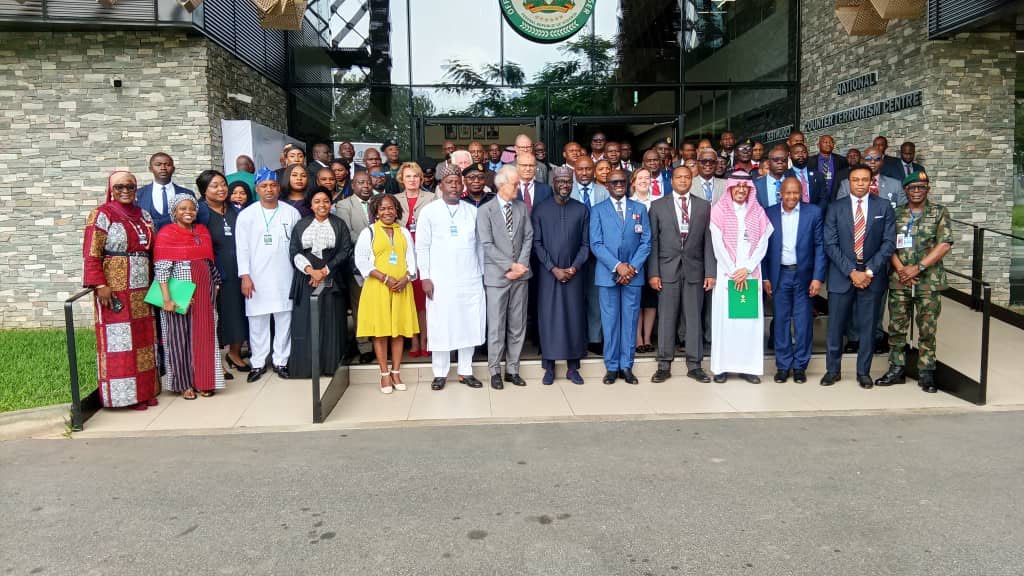
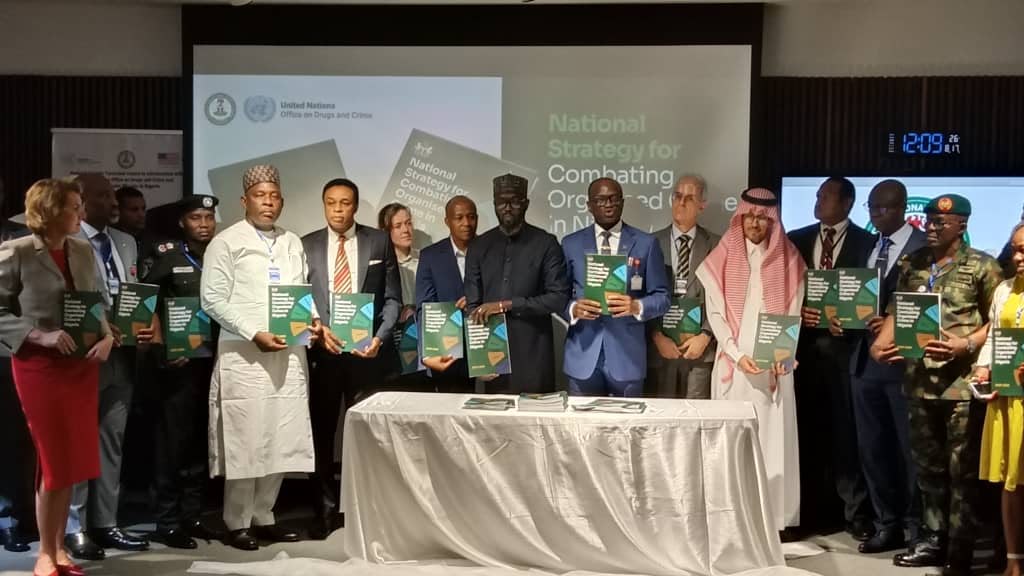
Ribadu stated this at the launch of the National Strategy for Combating Organised Crime in Nigeria 2027–2031, held at the National Counter Terrorism Centre (NCTC), Office of the National Security Adviser in Abuja, the nation’s capital.
Represented by the National Coordinator of the NCTC, Major General Adamu Garba Laka, the NSA said organised crime had evolved into interconnected networks involving terrorism, drug trafficking, human trafficking, illicit financial flows, cybercrime, maritime crime and corruption.
READ ALSO: Nigeria, US Strengthen Strategic Partnership on Security
He noted that the complexity of the threats required more than institutional strength, stressing the need for coherence, coordination and intelligence-driven collaboration across relevant sectors.
According to Ribadu, the strategy provides an integrated and evidence-based national framework built around a whole-of-government and whole-of-society approach, strengthened inter-agency cooperation and enhanced collaboration with international partners.
Representing the United Nations Office on Drugs and Crime (UNODC) Nigeria Country Office, Mr Cheikh Touré said the scale and nature of organised crime had made the new strategy necessary, citing growing links between criminal markets previously treated as separate threats.
Touré referenced figures presented by the National Bureau of Statistics indicating that Nigerian households experienced 51.9 million criminal incidents in a single year, including 2.24 million kidnapping incidents, with an estimated ₦2.2 trillion paid in ransom.
He said the figures represented more than statistics, noting that families, traders, businesses and young people were among those affected by organised crime and its economic consequences.
The UNODC representative said the strategy would help address institutional fragmentation by providing agencies with a shared intelligence picture and a common understanding of criminal networks operating across institutional boundaries.
He added that the strategy draws on the UNODC framework of prevent, pursue, protect and partner while adapting those principles to Nigeria’s security environment and vulnerabilities.
The Director of the U.S. Bureau of International Narcotics and Law Enforcement Affairs, My Tolliver Derrick, described the strategy as a significant milestone in the law enforcement partnership between Nigeria and the United States.
Derrick said the United States supported the development of the 2027–2031 strategy because organised crime, cybercrime and terrorist financing increasingly operate across national borders and require collective responses.
He cited recent international cases involving cyber-enabled exploitation and cross-border financial transactions linked to terrorist financing as examples of the growing convergence of criminal and security threats.
According to him, the strategy will strengthen Nigeria’s capacity through initiatives such as the proposed Organised Crime Fusion Centre at the National Counter Terrorism Centre, joint operational teams targeting priority criminal networks and enhanced financial intelligence capabilities for tracing and recovering criminal assets.
Derrick also highlighted deeper engagement with Interpol, ECOWAS, AFRIPOL and the Egmont Group as critical to disrupting transnational criminal networks.
He said every criminal network dismantled in Nigeria could reduce threats beyond the country’s borders, while stronger action against illicit financial flows and trafficking networks would contribute to broader international security.
The U.S. official commended Nigerian institutions involved in developing the strategy, saying the process reflected national ownership, institutional commitment and the political and technical resolve required for sustainable international partnerships.
The National Strategy for Combating Organised Crime in Nigeria is expected to provide a common framework for government institutions, security and justice agencies, civil society organisations, development partners and international organisations in addressing organised criminal networks and strengthening Nigeria’s national security response.