The Federal Government and state governments are seeking mortgage and land administration reforms to expand access to affordable housing amid a national housing deficit estimated at more than 14.5 million units.
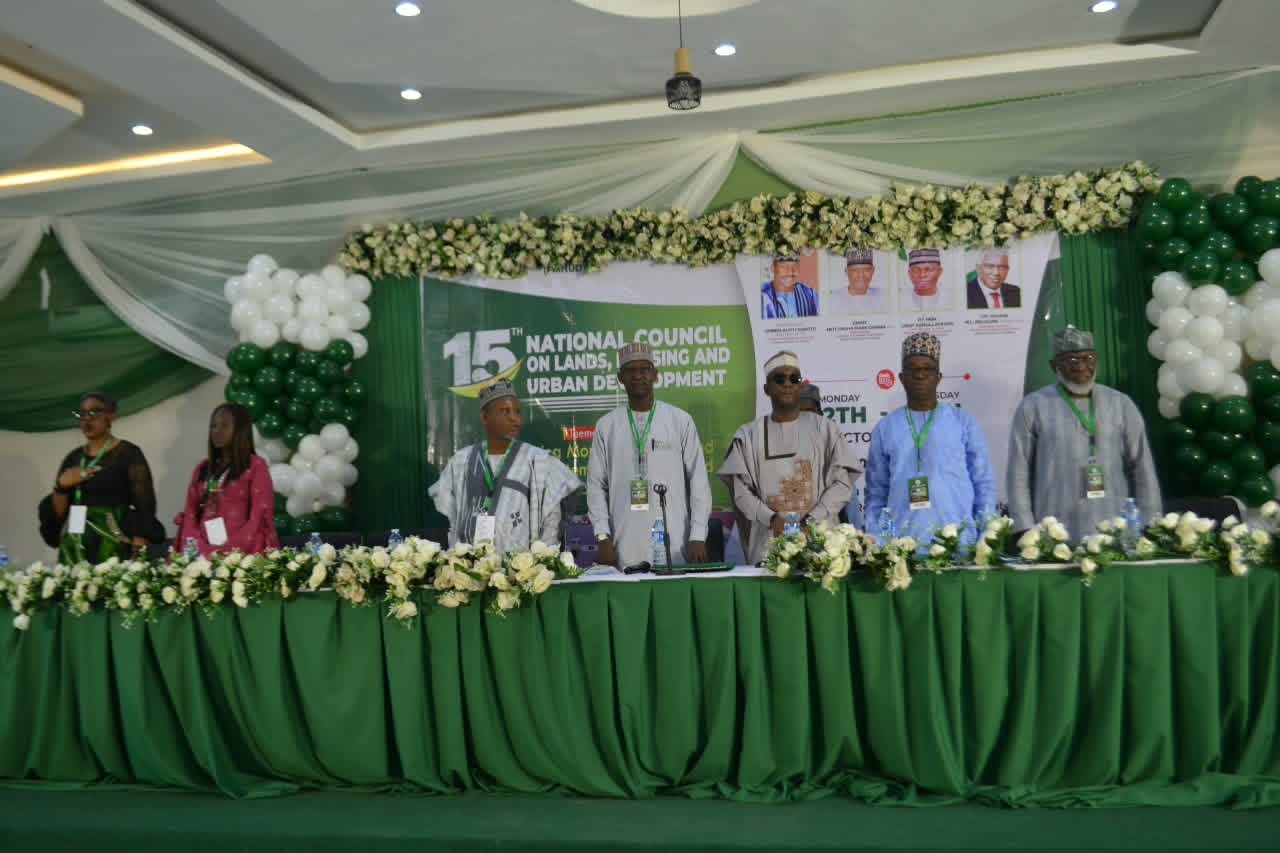
The call was made at the 15th meeting of the National Council on Land, Housing and Urban Development (NCLHUD), holding in Sokoto from October 12 to 16, 2026.
The meeting, themed, “Strengthening Mortgage, Land and Institutional Systems for Accelerated and Inclusive Housing Delivery,” brought together government officials, professional bodies and housing sector regulators to develop solutions to Nigeria’s housing challenges.
READ ALSO: Nigeria Advances Land Reforms To Boost Affordable Housing Access
In his introductory remarks, the Ministry’s Director of Planning, Research and Statistics, Mukhtar Umar, described the council as an important platform for examining challenges and developing policies to improve housing delivery nationwide.
He said the meeting would adopt a three-stage deliberation process to consider, harmonise and approve policy recommendations on critical housing and urban development issues.
Umar stressed that effective technical analysis and proper harmonisation of recommendations would determine the quality of the council’s final decisions.
In his opening remarks, the Sokoto State Commissioner for Lands, Housing, Survey and Country Planning, Barrister Nasiru Aliyu Dantsoho, said the meeting aimed to promote policies that would improve access to decent and affordable housing.
Dantsoho expressed concern over the housing deficit, estimated at more than 14.5 million units, and cited an estimated 50.6 million people living in unsafe housing conditions.
He called for mortgage interest rates to be reduced from their current double-digit levels to single digits to make homeownership more affordable.
The commissioner also proposed extending mortgage repayment periods from 25 to 35 years, arguing that lower interest rates and longer repayment terms would ease the burden on borrowers.
He urged authorities to expand mortgage financing beyond formal public- and private-sector workers to include people in the informal economy, particularly traders, farmers and other self-employed Nigerians.
Dantsoho further called on financial institutions, including the Federal Mortgage Bank of Nigeria (FMBN), to provide adequate funding and introduce flexible repayment plans that reflect borrowers’ different income patterns.
He emphasised the need to digitise land administration across the states to improve efficiency, strengthen transparency and facilitate access to land for housing development.
Meanwhile, the Permanent Secretary of the Sokoto State Ministry of Lands and Housing, Ahmad Tambuwal, outlined the state’s efforts to improve land administration and support housing development.
He said the state was digitising land records, reducing the time required to process Certificates of Occupancy and providing land for mass housing projects under the Federal Government’s Renewed Hope Housing Programme.
Tambuwal stressed that affordable housing required more than the construction of residential buildings.
“The delivery of adequate and affordable housing requires more than the construction of houses,” he said, highlighting the importance of efficient land administration, accessible mortgage finance, effective policies and stronger collaboration between government institutions and private-sector stakeholders.
The NCLHUD provides a platform for federal and state governments, professional organisations and other stakeholders to share experiences and harmonise housing policies.
Its deliberations focus on addressing institutional gaps, improving land administration, expanding access to housing finance and accelerating housing delivery across Nigeria.
Participants at the Sokoto meeting are expected to develop recommendations on land administration, mortgage financing, institutional coordination and sustainable urban development.
Reports from the technical sessions will be harmonised for consideration at subsequent stages of the council’s deliberations.