Morocco’s centrist Authenticity and Modernity Party (PAM), which won the most seats in the September parliamentary election, has agreed to form a coalition government with three other parties, securing a majority in parliament.
The four parties announced the agreement saying they collectively hold 207 seats in parliament, exceeding the 198 seats required for a majority.
The coalition includes moderate socialist parties and the nationalist Istiqlal Party.\
In a joint statement, the parties said the agreement would establish a strong government united by ideological proximity and a shared reform agenda.
They added that the next step would be to propose a cabinet lineup.
First Woman Appointed to Lead Government
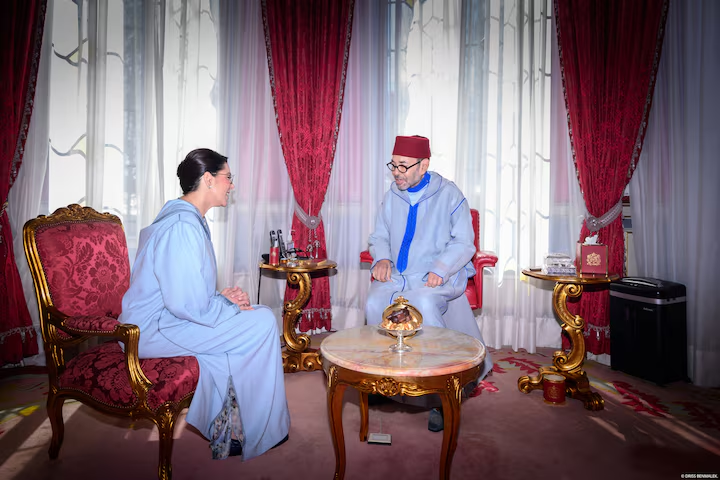
The agreement follows the appointment of PAM leader Fatima Ezzahra El Mansouri by King Mohammed VI to form a government after the party emerged first in the September 23 election.
El Mansouri’s appointment marks a historic milestone, making her Morocco’s first woman to head the government.
Founded in 2008 by an adviser to the king, PAM has positioned itself as a counterweight to the Islamist Justice and Development Party and has advocated social modernisation.
New Government Faces Economic and Social Pressures
The incoming administration will oversee the final stages of Morocco’s estimated $20 billion preparations for the 2030 FIFA World Cup, which the country will co-host with Portugal and Spain.
It will also face pressure to address public concerns over employment, education and healthcare, issues that contributed to youth-led protests in 2025.
The government must also contend with wider migration pressures, including the migration crisis involving Spain’s North African territory of Ceuta in July.
King Retains Sweeping Powers
Despite the change in government, a major shift in Morocco’s policy direction is not expected.
Morocco operates as a constitutional monarchy, with King Mohammed VI retaining extensive authority over foreign policy, defence and other strategic areas of governance.
The new coalition will therefore govern within a political system in which the monarchy continues to exercise significant influence over national affairs.