

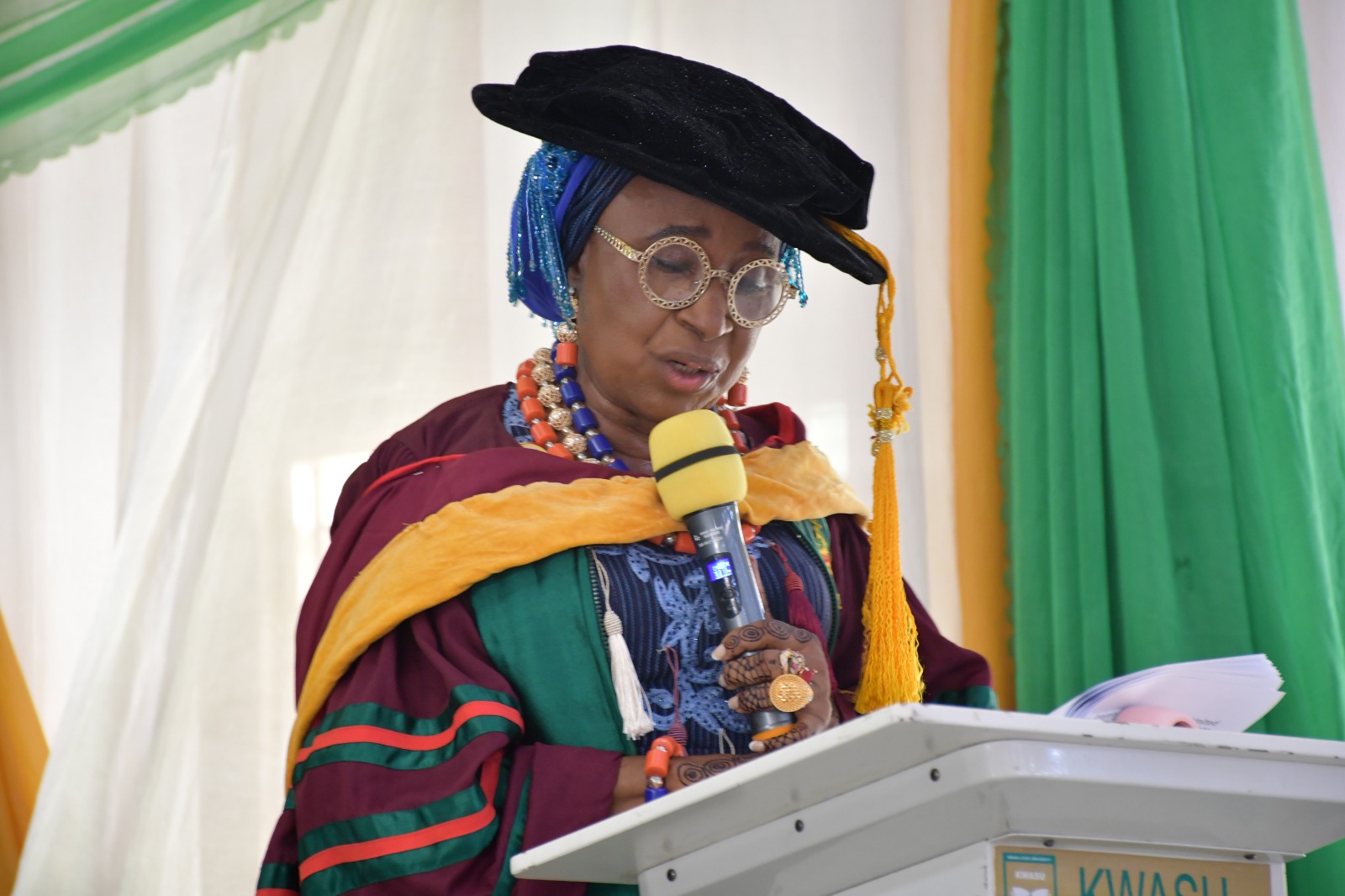
Professor Binta Abibola Sulyman of the Department of Fine Arts and Art Education, Kwara State University (KWASU), Malete, has called for a deliberate integration of traditional values with modern realities to preserve Nigeria’s indigenous cultural heritage and strengthen national cohesion.
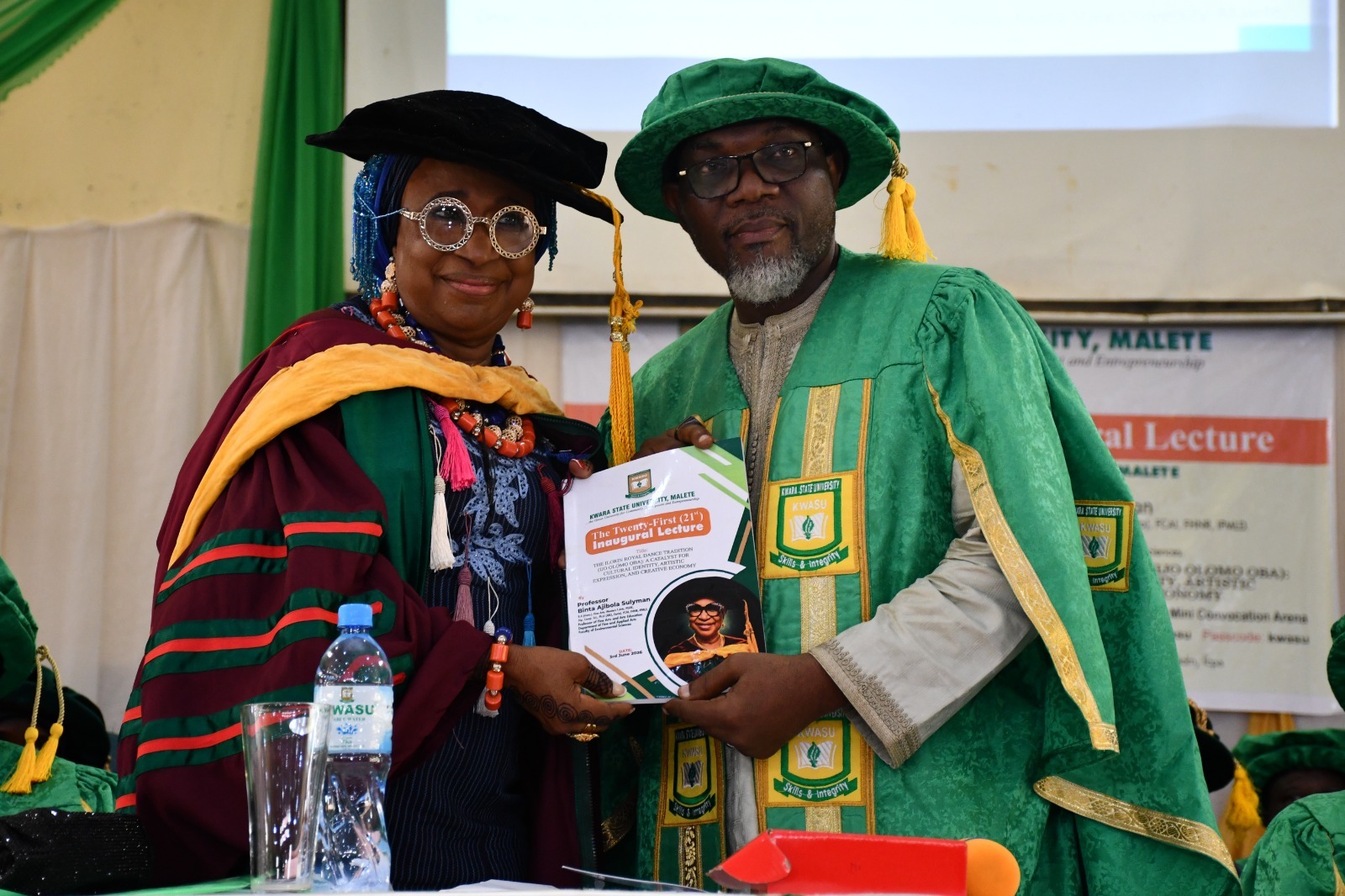
Professor Sulyman made the call during the university’s 21st Inaugural Lecture titled “The Ilorin Royal Dance Tradition (Ijo Ọlọ́mọ Ọba): A Catalyst for Cultural Identity, Artistic Expression, and Creative Economy.”
She said that “cultural heritage remains a vital instrument for promoting peace, identity and sustainable development across the country.”
She warned that many indigenous cultural practices face the threat of extinction due to declining youth participation, poor documentation, inadequate institutional support, and the growing influence of Western cultural forms.
According to the scholar, “preserving cultural traditions should not be viewed as resistance to modernisation but as an opportunity to adapt heritage practices to contemporary realities while retaining their historical and cultural significance.”
Professor Sulyman argued that such integration would make traditional arts more attractive and relevant to younger generations, thereby ensuring their continuity.
She stressed the need for greater inclusion of indigenous music, dance, and other performative arts in Nigeria’s educational system, describing schools as one of the most effective channels for transmitting cultural knowledge from one generation to another.
Professor Sulyman noted that exposing students to traditional artistic expressions would help strengthen their sense of identity, belonging, and appreciation of Nigeria’s diverse cultural heritage.
The scholar also linked indigenous arts to peacebuilding and social development, saying “cultural performances such as the Ilorin royal dance tradition foster social cohesion, encourage intergenerational dialogue, and reinforce values that promote peaceful coexistence.”
Professor Sulyman observed that cultural heritage possesses the capacity to bridge social divides, promote mutual understanding among diverse groups, and serve as a unifying force in a multi-ethnic society such as Nigeria.
Beyond its social value, she said indigenous cultural expressions could contribute significantly to the country’s growing creative economy through tourism, cultural festivals, artistic productions, and heritage-based enterprises.
Professor Sulyman therefore called for a coordinated approach involving educational institutions, cultural organisations, communities, and government agencies to safeguard traditional artistic practices.
The Professor expressed optimism that with sustained preservation efforts and institutional backing, Ijo Ọlọ́mọ Ọba would not only survive but also attain wider national and international recognition as an important component of Nigeria’s cultural heritage.
Her remarks came amid increasing concerns among cultural stakeholders over the gradual erosion of indigenous traditions in many parts of the country, as experts continue to advocate stronger policies to protect Nigeria’s rich cultural diversity while leveraging it for national development.
Victoria Ibanga

, Malete, has called for..)