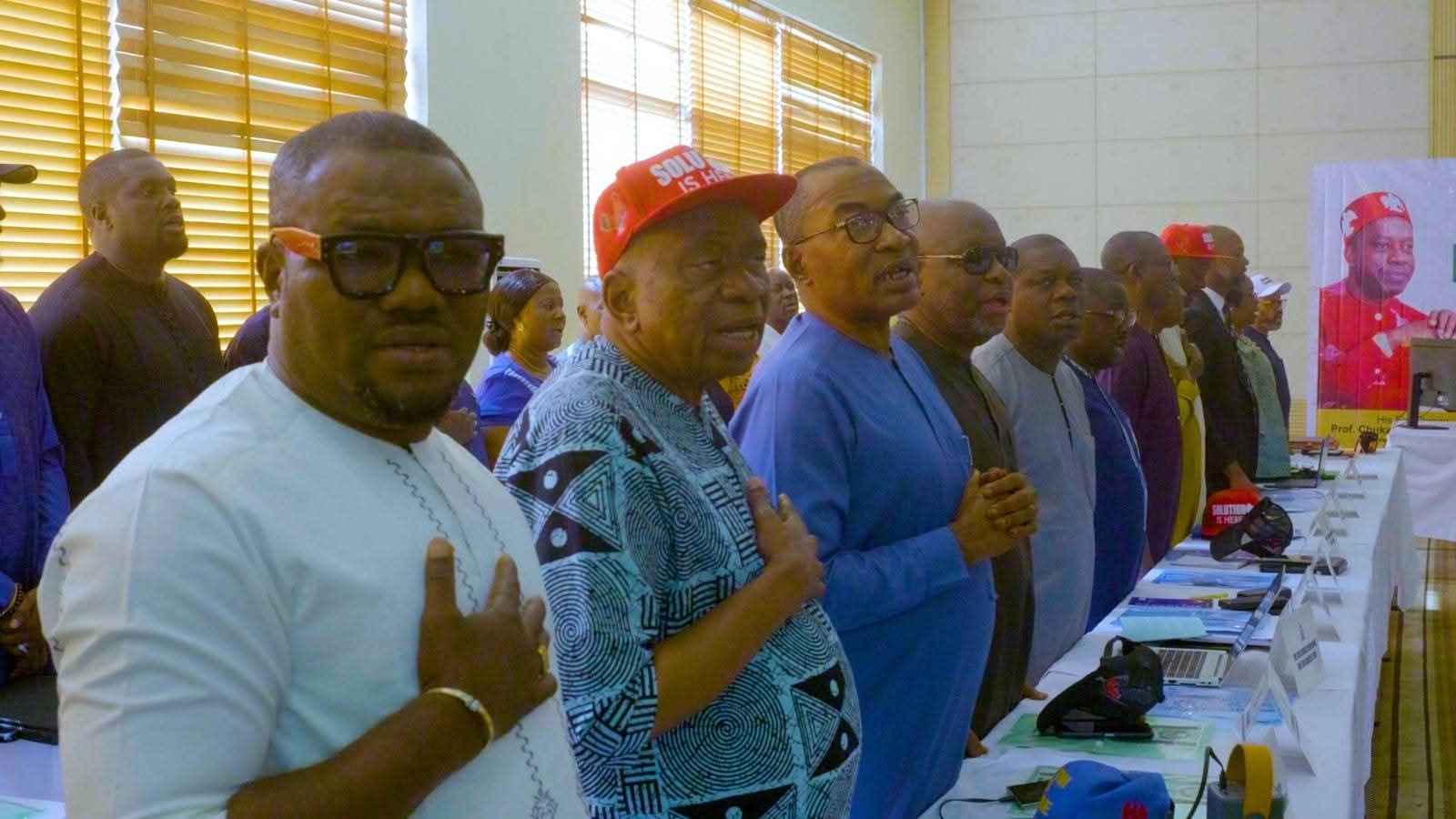
Anambra State Governor, Professor Chukwuma Soludo, has launched a new phase of governance aimed at accelerating economic growth and urban development under a policy framework tagged “Solution 2.0: Acceleration With Precision.”
The initiative was unveiled during the inauguration of the Anambra State Executive Council Retreat, where the governor charged cabinet members and permanent secretaries to adopt a results-oriented approach focused on delivering measurable improvements before the end of the administration’s tenure in 2030.
Soludo directed members of his administration to immediately prepare their valedictory speeches for March 2030 and work backward from the envisioned achievements to ensure the fulfillment of key policy commitments and development targets.
READ ALSO: Governor Soludo Commends Community Leaders for Prioritising Security
He said the retreat marked a transition from foundational governance reforms to rapid and targeted implementation across ministries, departments and agencies.
“Our mission remains to build a livable and prosperous smart megacity,” the governor said, noting that the administration’s strategy is designed to lay the foundation for Anambra’s long-term Vision 2070 development agenda.
According to Soludo, the framework draws inspiration from global technology and economic hubs and seeks to position Anambra as a leading center of sustainable economic prosperity in Africa.
The governor identified two major socio-economic shifts central to the policy direction: an enterprise-driven philosophy and “homeland consciousness.”
He said the enterprise-focused strategy would promote innovation, entrepreneurship and technology-driven growth by harnessing the commercial and creative potential of residents, while homeland consciousness would encourage citizens to invest and spend within the state to stimulate domestic economic expansion.
Administrative Procedures
Governor Soludo also warned against bureaucratic inefficiency in the public service, stressing that citizens judge governments by visible improvements in living standards rather than administrative procedures or official meetings.
He instructed members of the executive council to prioritise high-impact legacy projects capable of significantly improving the quality of life of residents instead of spreading resources across numerous low-impact initiatives.
The governor said the administration’s performance would be measured by whether a significant proportion of the population could attest to meaningful improvements in their living conditions by the end of the government’s tenure.
The retreat featured presentations on projects under the second phase of the administration and a review of the state’s five development pillars. Ministries, departments and agencies were directed to align their budgets, policies and institutional priorities with the administration’s strategic objectives.
Deputy Governor, Dr. Onyekachukwu Ibezim, members of the executive council and senior civil servants attended the event.