
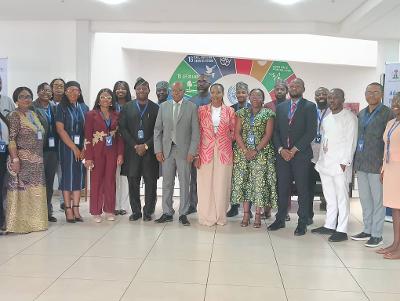
The United Nations Educational, Scientific and Cultural Organisation (UNESCO) has warned that the rapid development of neurotechnology could pose unprecedented threats to mental privacy, autonomy and freedom of thought unless ethical safeguards evolve alongside scientific innovation.
The UNESCO Representative to Nigeria, Dr Isaias Barreto da Rosa, gave the warning in Abuja at a stakeholders’ roundtable on the Ethics of Neurotechnology, urging scientists, policymakers, medical professionals and technology innovators to consider not only what the technology can do, but whether it should be done and under what conditions.
READ ALSO: UNESCO, Stakeholders Call for Action on Disability Inclusion
“Neurodata can be among the most sensitive forms of personal information. Neurotechnology therefore raises questions that go to the heart of human dignity,s” he said.
According to him, neurotechnology is creating extraordinary opportunities in healthcare and human development, including improved diagnosis and treatment, rehabilitation and greater independence for people living with disabilities.
“Neurotechnology, ladies and gentlemen, is opening extraordinary possibilities. For many, these technologies can mean better health, greater inclusion, and renewed opportunity. But the closer technology comes to the human brain, the more fundamental the ethical questions become”, he said.
The UNESCO representative said the ethical debate could no longer be treated as an issue for the future, given the speed at which neurotechnology is developing and its increasing application in society.
“These questions, cannot be addressed after the technology has already transformed our societies. Ethics must evolve alongside innovation, not struggle to catch up with it. The measure of scientific progress is not only what we are able to discover, but how wisely and fairly we use what we discover”, he said
Dr. Barreto da Rosa said UNESCO member states adopted the Recommendation on the Ethics of Neurotechnology in November 2025, providing a global normative framework for addressing the ethical challenges posed by the emerging field.
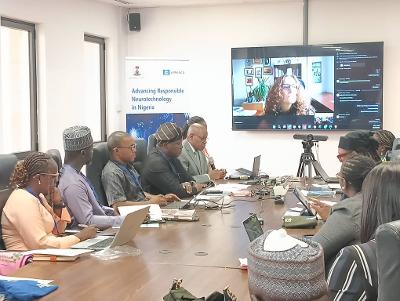
“The recommendation is built on UNESCO’s longstanding work on bioethics, science and emerging technologies, including its work on artificial intelligence. The principle, is simple: scientific progress must remain at the service of humanity, human rights, and the common good,” he said.
The National Project Focal Point in the Federal Ministry of Innovation, Science and Technology, Dr Adebayo Adeyemi, described the UNESCO initiative as a timely opportunity for Nigeria to translate global ethical principles into policies that reflect its own realities.
“What is expected from this two-day meeting is that we are to be able to put those recommendations in the perspective that represents Nigeria, a perspective that will be able to speak to our realities,” he said.
The Representative of the Ministry of Health, Ado Danladi, also expressed concern over the ethical implications of emerging neurotechnologies, particularly the collection and use of data generated from the human brain.
He said neurotechnology had significant potential in healthcare, including in the management of neurological conditions such as Parkinson’s disease and some mental health conditions.
The President of the Neuroscience Society of Nigeria, Professor. Angela Danborno, said Nigeria must ensure that scientific progress did not outpace ethical responsibility.
“Advances in neuroscience and opening new possibilities in diagnosis, treatment, rehabilitation, education and human-machine interaction. Technologies including brain-computer interfaces, neuroimaging, artificial intelligence and neuromodulation, hold enormous promise for improving human health and wellbeing”, she noted
She expressed hope that the Abuja consultation would strengthen collaboration between government, scientists, UNESCO, healthcare professionals and other stakeholders and lead to appropriate ethical frameworks for the responsible use of neurotechnology in Nigeria.
The Abuja meeting comes at a time when advances in neurotechnology are bringing science increasingly closer to the human brain, raising questions that extend beyond conventional data protection and medical ethics.
The emerging debate is about whether society can protect aspects of human identity that were once considered fundamentally private—thought, cognition, mental states and neural activity.
For UNESCO and Nigerian stakeholders, the task is therefore not to halt innovation, but to ensure that it develops within clear ethical boundaries.

