

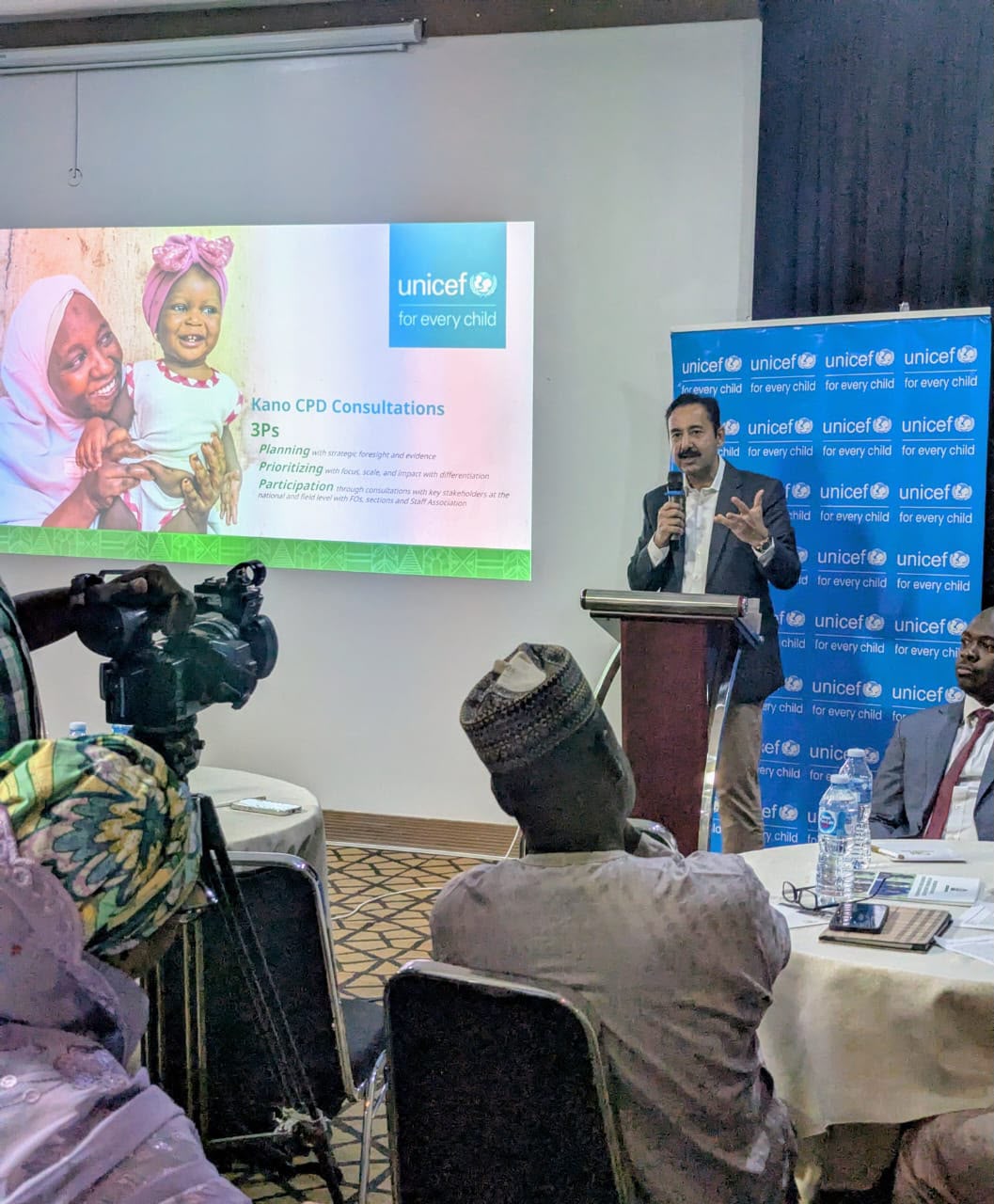
The United Nations Children’s Fund (UNICEF) and the governments of Kano, Jigawa and Katsina states have begun consultations to develop the 2028–2032 Federal Government of Nigeria/UNICEF Country Programme aimed at reducing child poverty and strengthening essential social services across the Northwest.
The two-day meeting, held at the UNICEF Kano Field Office, brought together senior government officials, development partners, civil society organisations and disability advocates to identify priority interventions that will guide UNICEF’s support to the three states over the next five years.
Speaking at the opening, Chief of UNICEF Kano Field Office, Shafeeq Ur-Rehman, said the new programme would be developed through close collaboration with state governments and other stakeholders rather than through predetermined priorities.
“We are here to listen, learn and co-create, not to present predetermined solutions. The programme must reflect the realities facing children today while remaining flexible enough to respond to future challenges,” he said.
Ur-Rehman noted that the programme is being designed against the backdrop of rapid population growth, urbanisation, climate change, economic pressures, technological advancement and insecurity, all of which continue to affect children’s well-being.
He said the consultations would identify key child rights challenges, examine the causes of deprivation and develop innovative, scalable and sustainable interventions to strengthen government systems.
According to him, addressing children’s needs requires a multisectoral approach that integrates education, healthcare, nutrition, child protection, social protection, water, sanitation and hygiene (WASH), climate resilience and governance.
Responding to questions from Voice of Nigeria, Ur-Rehman explained that the 2028–2032 programme would build on the current Country Programme, which ends in 2027.
“This is a continuation of the existing programme. Every five years, we review our progress, assess emerging challenges and build on previous achievements,” he said.
Delivering a goodwill message on behalf of the Kano State Government, the Acting Permanent Secretary of the Ministry of Planning and Budget commended UNICEF for adopting an inclusive and evidence-based approach to developing the new programme.
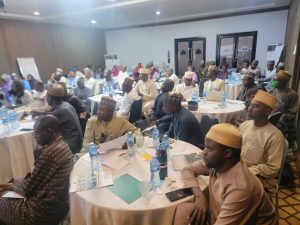
He acknowledged UNICEF’s longstanding support in healthcare, nutrition, education, WASH, child protection, social policy and emergency response, while noting that challenges such as child malnutrition, learning poverty, inadequate healthcare, poor access to safe water and sanitation, climate-related risks and socio-economic inequality persist.
“This consultation provides an opportunity to identify practical, innovative and sustainable solutions that respond to the realities of our states and communities,” he said.
The Acting Permanent Secretary reaffirmed Kano State’s commitment to strengthening its partnership with UNICEF through evidence-based planning, improved coordination and increased investment in social services.
The outcome of the consultation will inform the development of the 2028–2032 Federal Government of Nigeria/UNICEF Country Programme, which will guide interventions across Kano, Jigawa and Katsina states during the next programme cycle.

 and the governments of Kano, Jigawa and Katsina states have commenced consultations to develop the 2028–2032 Federal Government of Nigeria/UNICEF Country Programme, aimed at addressing child poverty and strengthening social services across the Northwest.)