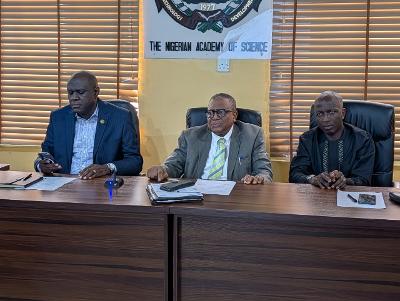
The Nigerian Academy of Sciences (NAS) has called for urgent, evidence-based action to address the growing health impacts of climate change.
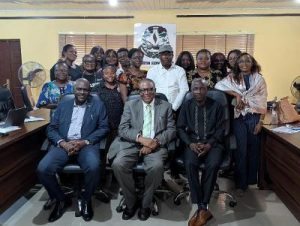
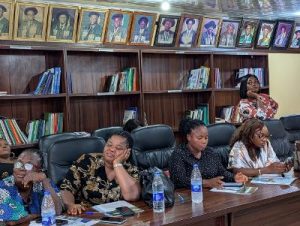
Speaking at a media roundtable held in Lagos, South-West Nigeria, with the theme “Climate Change, Health, and the Nigerian Reality,” the Academy’s Public Affairs Secretary, Professor Chinedum Babalola, said science must go beyond research institutions to influence public policy, business decisions, and everyday life.
She stressed that climate change is contributing to flooding, cholera outbreaks, heatwaves, food insecurity, and worsening air pollution, all of which pose serious threats to public health.
Quoting the World Health Organisation, Babalola described climate change as the greatest health threat of the 21st century, stating that Nigeria’s large population, inadequate infrastructure, and existing disease burden make the country vulnerable.
READ ALSO: Stakeholders push for stronger climate action in Nigeria
“One important point is that climate action cannot succeed without empowering communities. Scientific data generated by researchers must be translated into practical information that reaches the grassroots, and the media has a critical role in making that happen.
Together, scientists, policymakers, communities and the media can promote climate awareness and build a more resilient Nigeria,” she said.
The professor also highlighted that the roundtable aligns with the Sustainable Development Goals on good health, climate action, sustainable cities, and clean water while promoting environmental, social, and governance (ESG) principles.
Babalola urged journalists to play a leading role in helping Nigerians understand the link between climate change and health, saying accurate and impactful reporting is essential to driving public awareness and policy action.
While delivering a paper titled “Securing Our Climate Future for a Resilient Nigeria,” a former Deputy Vice-Chancellor (Academy and Research), University of Lagos, Professor Babajide Alo, said:
“Climate change is real, and its growing impact is evident across Nigeria, with the recent flooding in Lagos serving as a stark reminder of the country’s vulnerability”.
Professor Alo described climate change as one of the world’s greatest environmental challenges, driven largely by fossil fuel use and deforestation.
“The flooding we recently experienced is a clear indication that climate change is real,” he said, warning that rising temperatures, desertification, sea-level rise, food insecurity and diseases such as malaria and Lassa fever are threatening lives and livelihoods.
He called for greater investment in local communities, noting that less than 10 per cent of climate finance reaches the grassroots, and advocated state climate budgets, climate education and stronger collaboration.