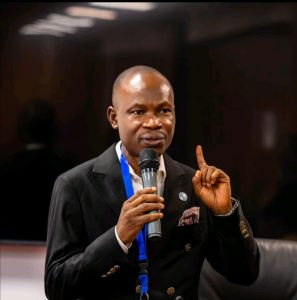
A communications strategist and Award winning international journalist, Fidelis Mbah, has urged women journalists to champion ethical electoral reporting, making accuracy, verification, balance and safety the bedrock of coverage of the 2027 general elections.
Mbah spoke during the Women in Media Development Initiative August Webinar, themed “Beyond the Ballot: Women in Media, Reporting Elections, Mobilising Communities and Staying Safe”, warning that the race to break news must never override the responsibility to report truth.
Cautioning journalists against complacency, he stressed that every election presents a new security and reporting environment requiring research.
“Every election is different from the previous election. So no two elections are the same, no two coverages are the same,” Mbah said.
He identified research as the first line of protection, urging journalists to understand the security history, community dynamics and attitude towards the media before deployment.
On responsible election reportage, Mbah, also the Deputy President, International Press Institute Nigeria, charged journalists to report verified facts, reflect all relevant sides and resist injecting personal opinions into reports.
“Your job is not to give your opinion. You’re a journalist. You’re a reporter. You’re meant to report events and not to give your personal opinion,” he said.
He warned journalists against announcing election results or presenting assumptions as facts, stressing that result declaration remains the responsibility of electoral authorities.
“Don’t go ahead to start saying, assuming, or using your assumptions to make decisions right from your live reporting,” Mbah said.
Mbah identified artificial intelligence-generated content, deepfakes, misinformation and disinformation as threats to election reporting in 2027.
“An average journalist should know how to verify information, whether it’s text, whether it’s video, or whether it’s photos,” he said, urging media organisations to strengthen fact-checking capacity ahead of the polls.
He urged reporters to maintain safety protocols, including emergency contacts, phone and power-bank battery life and sending a “proof of life” video to their offices upon arrival.
“You just do that, just a few seconds, send to your colleagues who are in the office so that they know that for any reason anything happens, they have some, you know, evidence to back up their claim that you were there,” he said.
On women’s participation, Mbah rejected excluding female journalists from election assignments because of security concerns, describing such exclusion as unfair and a denial of professional growth.
“Don’t deny your female journalist the opportunity to gain experience,” he said.
He advised media managers to conduct risk assessments and avoid deploying journalists to volatile frontline locations without adequate protection, training and security support.
Mbah encouraged media organisations to harness young journalists’ energy in digital and multimedia reporting.
“It’s always important that you allow them to bring that energy. Yes, positive energy. But there should be someone at the top who is always mentoring them,” he said.
He warned that digital urgency must never compromise professional standards.
“As much as you want to break the news, make sure it meets all the criteria set for breaking news,” Mbah said, stressing the need for verified facts, balanced views, proper fact-checking and accurate representation.
He said meaningful women’s inclusion requires equipping women to report confidently, safely and professionally.