
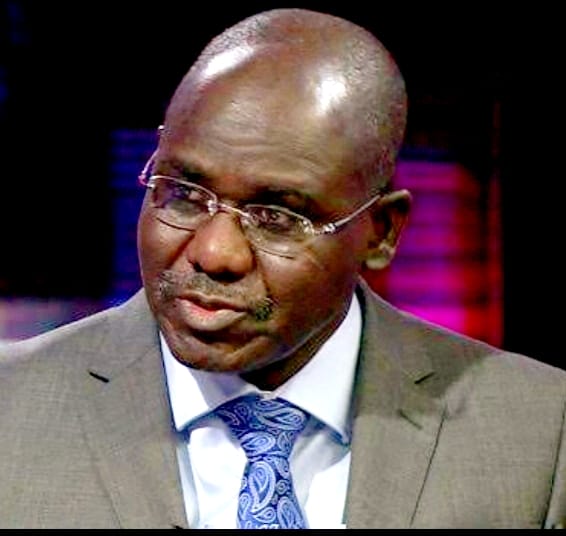
The Former Chief of Army Staff, Lieutenant General Tukur Buratai (Rtd), has warned that Nigeria’s insurgency and banditry crisis could spiral into direct attacks on ministers, senators, and state governors unless the government adopts a radically different security strategy.
General Buratai, who first raised the alarm in 2021 that Nigeria’s security challenges might persist for two decades without decisive action, said the recent killing of a senior military officer has now pushed the nation to a “dangerous threshold.”
“The capture, torture, and eventual killing of a senior military officer, Maj. Gen. Rabe Abubakar, is not merely a tragedy; it marks a dangerous threshold,” Buratai said in a statement obtained by Voice of Nigeria.

“When a general falls into the hands of non-state actors, it signals a serious erosion of tactical deterrence.
If this trend continues unchecked, the next targets may not be soldiers or civilians alone. They could include ministers, senators, and even state governors. No leader will be immune.”
The retired General, who led the Nigerian Army from 2015 to 2019, described the current security architecture as reactive and insufficient, criticising the continued payment of ransoms and negotiations with criminals.
Buratai’s Five-Point Emergency Proposal
1. Admit the limits of the current approach
Buratai called for a full-scale, coordinated military and intelligence offensive, noting that bandits and insurgents now operate with heavy weaponry and intelligence networks rivaling conventional forces.
He cited the success of the COVID-19 Task Force model as a blueprint for unified action.
2. Establish a National Emergency Command
Describing insecurity as a national emergency, he proposed a unified command reporting directly to the President, with a time-bound mandate to dismantle terrorist and bandit strongholds.
3. Go after financiers and informants
“Bandits do not survive on AK-47s alone,”
Buratai said, calling for the arrest and prosecution of corrupt middlemen, illegal miners, ransom negotiators, and local collaborators.
4. Governors must take ownership.
State governors, he argued, can no longer leave security entirely to the military.
He urged the strengthening of state policing initiatives, vetted vigilante groups, and community intelligence networks.
5. Protect the system, not just the leaders
While security for top officials should be upgraded, Buratai stressed that the broader criminal ecosystem enabling attacks must be dismantled.
Declaring himself a patriot with no political ambitions, Buratai concluded with a stark warning:
“If we do not radically change our approach today, the headlines of tomorrow may make today’s tragedy seem like only a warning.
The abduction of ministers or governors is not inevitable, but it could become a real possibility if we continue with business as usual.”
“Let the death of Maj. Gen. Rabe Abubakar be the last preventable sacrifice.”


, has warned that Nigeria’s insurgency and banditry crisis could spiral into direct attacks on ministers, senators, and state governors unless the government adopts a radically different security strategy.)