Africa Policy Research Institute (APRI) professor Nana Tanko has urged Nigeria to strengthen its Renewed Social Protection Architecture by placing families and communities at the centre, safeguarding social rights, redistributing care responsibilities, and measuring real outcomes.
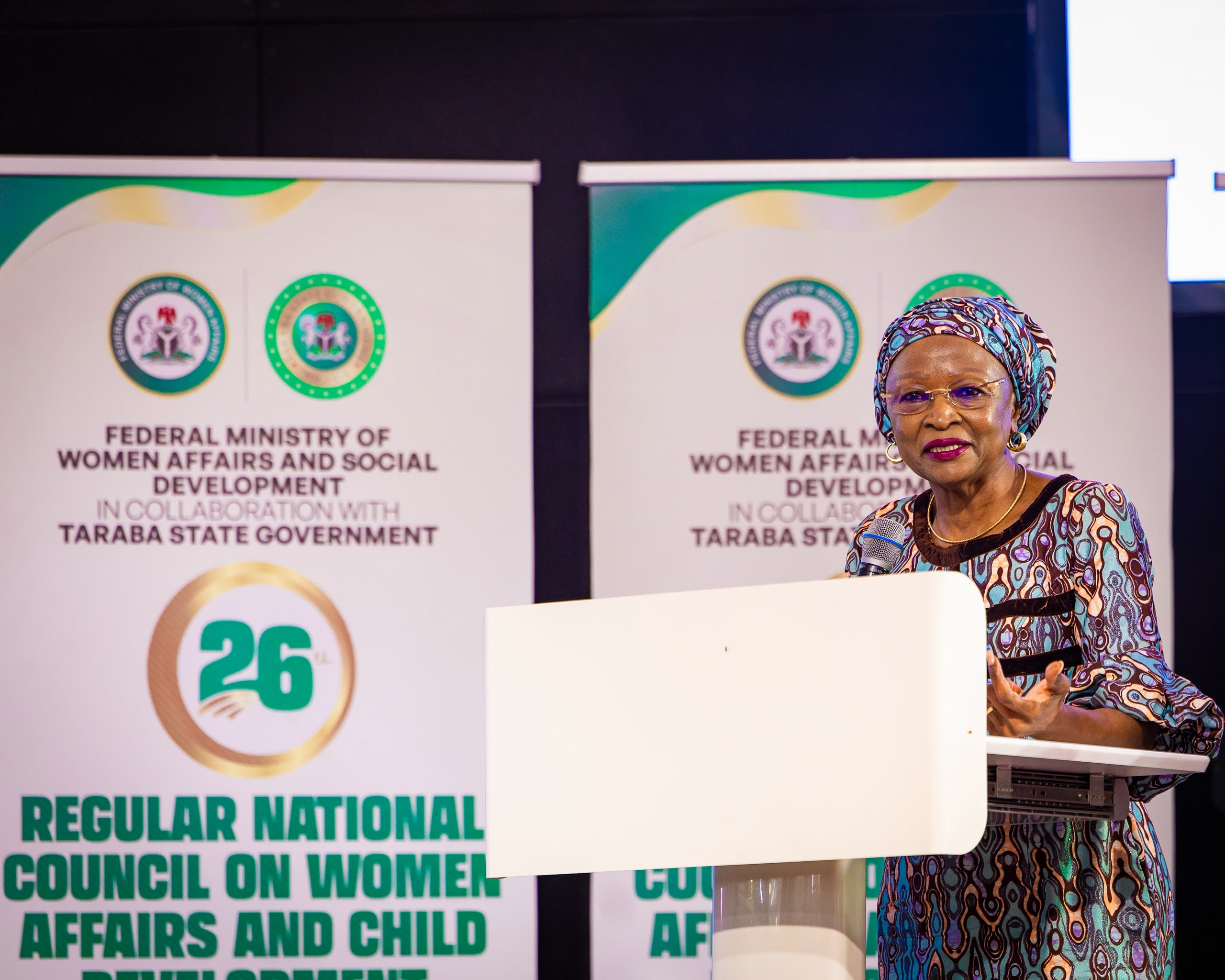
She made the call in a Keynote presentation at the 26th Regular National Council on Women Affairs and Child Development in Jalingo, Taraba State, on the theme “Strengthening Families and Advancing the Care Economy for Inclusive Development: Operationalising Nigeria’s Renewed Social Protection Architecture.”
Advocating an approach that builds on “existing Nigerian culture and traditions,” particularly family and community support systems, Tanko proposed combining informal mechanisms with formal social protection programmes and linking credible grassroots structures to a national guaranteed floor, while protecting individual rights and autonomy.
On the issue of gender and social transformation, she called for “Negotiation, complementarity and context-sensitive transformation,” while cautioning against assumptions about household relations.
“Women shouldn’t be treated as victims.” She stated
She further called for attention to community and institutional history, inclusion of all stakeholders, protection of non-negotiable rights and protection from violence, alongside dialogue and institutional change to distribute care.

Tanko identified institutional fragmentation as a major barrier to delivery, particularly where administrative, execution and service-delivery functions overlap. She advocated vertical integration across federal, state and local government structures, alongside horizontal integration across sectors, to ensure coordinated programme planning, implementation and monitoring.
Drawing lessons from integrated care systems in Uruguay, territorial care systems in Colombia and federal-subnational coordination in Brazil, she said these experiences could offer Nigeria benchmarks in terms of “quality, scale and institutional discipline”.
Tanko called for uniformity in databases, targeting, information management and payments to create a comprehensive social register, improve efficiency and reduce duplication and leakages. She recommended expanded digital infrastructure, a standardised and Dynamic National Social Register, a unified digital payment system, stronger monitoring, impact evaluation and continuous policy review.
She identified poverty, multidimensional deprivation, difficult targeting, gender inequality, fragile health systems, limited coverage and vulnerabilities among persons living with disabilities as key challenges. She also advocated improved targeting of the $3 billion Social Impact Interventions to ensure resources reach the poorest and most vulnerable Nigerians.
Her approach proposes economic graduation models, gender and social emergency inclusion and green economy integration to strengthen resilience and respond to emerging socio-economic and environmental shocks.
She placed social rights and transparency at the heart of implementation, recommending clearly defined legal entitlements with adequacy, predictability and State responsibility. Citizens, she said, should have clear information on benefits, eligibility rules, responsible institutions, financing reliability and avenues for seeking remedies.
A major recommendation is to measure “capability outcomes and not just transfers and enrolments,” while maintaining the four functions of the Revised Social Protection Policy 2021: Protective, Preventive, Promotive and Transformative.
On the care economy, Tanko recognised paid and unpaid work as essential to sustaining people and reproducing the labour force. She described care as productive infrastructure that “develops children, maintains health, enables labour-force participation, creates jobs and strengthens resilience.”
She proposed a family pathway linking households to relevant benefits and existing services, while cautioning that reliance on families “should not lead to the privatisation of social responsibility.”

For sustainable implementation, she called for legal and rights-based entitlements, life-cycle packages, integrated services, a professional workforce, inclusive and connected data, digital infrastructure, sustainable financing and public accountability.
Tanko’s proposed approach seeks to move social protection beyond isolated interventions towards an integrated system connecting families, communities, rights, care, services, data, financing and accountability, with implementation focused on tangible improvements in people’s capabilities and wellbeing.