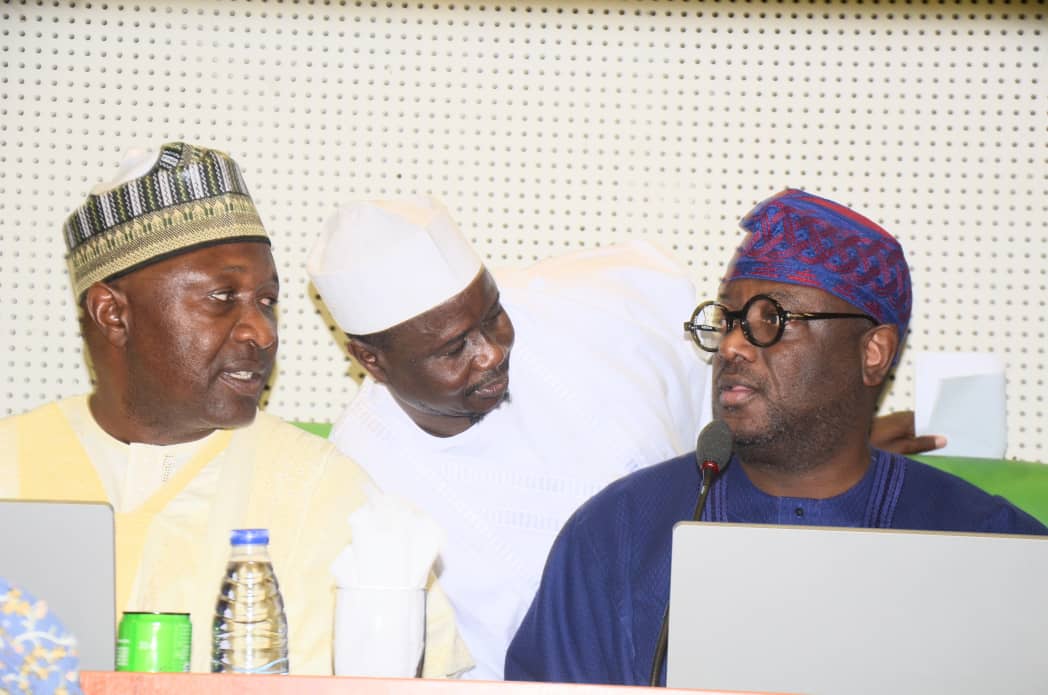
The House of Representatives has commenced consideration of four key military reform bills aimed at strengthening Nigeria’s security architecture, enhancing military administration, promoting food security, and improving the welfare of veterans.
The bills, which were the subject of a public hearing in Abuja, are designed as legislative responses to evolving security challenges confronting the country. They include;
- HB.1820, which seeks to establish an Armed Forces Farms and Ranches Scheme to support food security and military operations in conflict-prone agricultural communities;
- HB.1719, which focuses on gender representation in the Armed Forces; HB.1949, which proposes the repeal of the Armed Forces Act and the enactment of a new Nigerian Military Force Bill; and
- HB.1950, which seeks to establish a legal framework for the welfare and representation of military veterans.
Declaring the hearing open, Speaker of the House of Representatives, Mr. Tajudeen Abbas, said; “public hearings remain a vital component of the 10th Assembly’s Legislative Agenda, providing stakeholders with an opportunity to contribute to lawmaking and national development.”
Inclusive military institution
He noted that the bills aim to build a more resilient, inclusive and effective military institution in Nigeria.
Mr Abbas said; “Fellow Nigerians, we cannot pretend that our nation is at ease. From the relentless insurgency in the North-East, to the scourge of banditry and kidnapping in the North-West, the farmer-herder crises in the North-Central and the separatist agitations in the South-East – our Armed Forces are stretched, yet they remain our first and last line of defence.
“In addition, we face emerging threats: maritime piracy in the Gulf of Guinea, cyber warfare, and the nexus between organised crime and terrorism. It is against this backdrop that the 10th House of Representatives has resolved to strengthen the legal and institutional frameworks that govern our military. The bills before us today are part of that resolve.This Public Hearing is not a rubber stamp. It is a platform for robust, evidence-based engagement.”
He noted that the security challenges Nigeria faces today demand bold, fresh thinking as the old ways have not fully worked.
“We must be open to legislative innovations,” the Speaker said.
Mr. Abbas called on all stakeholders – serving and retired military personnel, civil society, gender experts, veterans, lawyers and ordinary citizens – to participate actively, share their memoranda, speak their truth, critique where necessary and propose solutions.
“Do not hold back because you think your voice does not matter. It does. Do not stay away because you fear your submission will be ignored. I give you my word – every memorandum will be read, every oral presentation will be noted, and all relevant contributions will be considered and, where applicable, incorporated into the final reports and bills. This is our legacy as the People’s Assembly,” he explained.
The Speaker assured the participants that the Committee, would conduct the proceedings with the utmost transparency and fairness.
“As we deliberate over the next two days, let us remember the men and women of our Armed Forces who are today in the trenches, in the forests and on the waters, risking their lives for our peace. Let us give them laws that support them. Let us give the nation a military that is fit for purpose in the 21st century,” he added.
Chairman of the House Committee on Defence, Mr. Babajimi Benson, said the two-day public hearing was convened to consider key legislative proposals aimed at strengthening Nigeria’s defence architecture, enhancing military professionalism, improving the welfare of service personnel and veterans, and positioning the Armed Forces to effectively address evolving security challenges.
He described the hearing as more than a legislative formality, noting that “it provides an opportunity for citizens, experts, institutions and other stakeholders to contribute directly to the lawmaking process.”
According to him, “stakeholder engagement promotes transparency, accountability and public confidence in the legislative process while ensuring that laws reflect the collective aspirations and realities of the people.”
Public participation
Mr. Benson stressed that public participation is particularly important in matters of defence and national security, as defence legislation impacts national sovereignty, military effectiveness, operational readiness and the safety of citizens.
He noted that as security threats continue to evolve, including terrorism, insurgency, cybercrime and transnational crime, Nigeria’s legal and institutional frameworks must also adapt to contemporary realities.
The lawmaker explained that “the bills under consideration address critical areas such as military education and professional development, joint operational effectiveness, healthcare support, strategic research, veterans’ welfare, military governance reforms, food security initiatives and greater inclusiveness within the Armed Forces.”
He urged stakeholders to participate actively in the deliberations through oral presentations and written memoranda, assuring them that all submissions would be carefully considered by the committee.
Mr. Benson also acknowledged the sacrifices of officers and men of the Armed Forces of Nigeria, commending their courage, professionalism and dedication in safeguarding the nation.
He said their service underscores the need for laws that provide the institutional support required for them to effectively discharge their constitutional responsibilities.
The committee chairman called on participants to approach the deliberations with patriotism, objectivity and a shared commitment to national security and development.
Stakeholders at the public hearing deliberated on the proposed bills and made recommendations for their improvement.