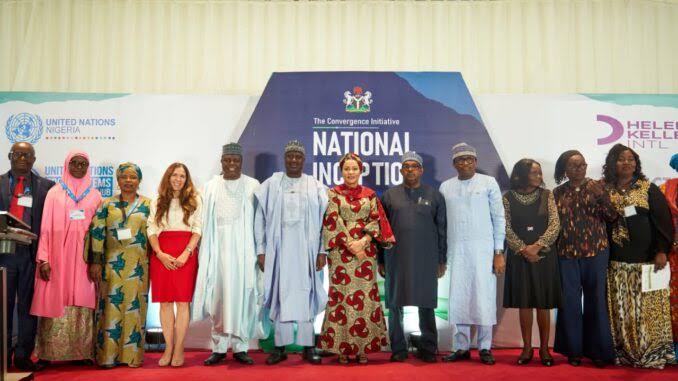
The Minister of State for Budget and Economic Planning, Dr Doris Uzoka-Anite, has reaffirmed Nigeria’s commitment to building inclusive, equitable and resilient food systems through evidence-based interventions and shared accountability.
She said the country had continued to record measurable progress towards developing food systems capable of delivering improved nutrition, environmental sustainability and better livelihoods.
READ ALSO:Nigeria Moves to Cut Food Waste, Promote Sustainable Future
Dr Uzoka-Anite stated this at the opening of the Nigeria Convergence Initiative Workshop, themed “Bringing Together Stakeholders to Advance the Alignment between Food Systems Transformation and Climate Action: Empowering National Efforts to Achieve the Sustainable Development Goals (SDGs) and Paris Climate Agreement Targets,” held in Abuja.
She said Nigeria was positioning itself to access climate finance through green bonds, carbon markets and other sustainable financing instruments.
According to the minister, the Renewed Hope Agenda places high priority on food security, poverty reduction and climate resilience.
She noted that initiatives such as the Special Agro-Industrial Processing Zones, the Green Imperative Project, and ongoing reforms in fertiliser distribution and agricultural input delivery were designed to increase productivity while reducing environmental degradation.
Dr Uzoka-Anite assured stakeholders that the Federal Ministry of Budget and Economic Planning would continue to provide policy direction and coordination for the convergence initiative.
She added that the outcomes of the workshop would be reflected in the successor National Development Plan and in Nigeria’s engagements with development partners on climate finance.
Speaking at the event, the Minister of State for Agriculture and Food Security, Senator Aliyu Sabi Abdullahi, expressed concern over the growing impact of climate change on agricultural production across the country.
He described climate change as one of the major drivers of food insecurity in Nigeria, noting that it disproportionately affects both smallholder and commercial farmers.
The minister disclosed that the ministry had introduced the National Farmers’ Soil Health Scheme and the National Soil Information System to enable farmers to assess the health status of their soil and adopt appropriate farming practices.
According to him, the initiative will provide location-specific fertiliser recommendations and support the implementation of the National Organic Agriculture Programme.
Also speaking, the Minister of Innovation, Science, and Technology, Dr Kingsley Tochukwu Udeh, SAN, stated that the ministry was working closely with other ministries, state governments, development partners, civil society organisations, and farmers’ groups to drive food systems transformation.
Represented by the Director-General of the Biotechnology Development Agency, Prof. Abdullahi Mustapha, the minister stressed that transforming food systems requires a collaborative approach across all sectors.
He urged stakeholders to convert research and innovation into practical solutions that improve nutrition, livelihoods and economic development.
He added that prioritising the commercialisation of scientific innovations would strengthen food security, create jobs and position Nigeria as a leader in innovation-driven development.
The Permanent Secretary of the Federal Ministry of Budget and Economic Planning, Dr Deborah O. N. Odoh, represented by the Director of Nutrition, Dr Clementina Okoro, called for stronger alignment between Nigeria’s food systems and climate action.
She described climate-resilient agriculture as critical to achieving the country’s economic growth objectives under the Renewed Hope Agenda, the Medium-Term National Development Plan (2026–2030), and Nigeria Agenda 2050.
Dr Okoro said that transforming the agri-food sector through climate-smart policies, increased private sector investment and coordinated action at all levels of government would strengthen food security, reduce food inflation, create jobs and build a more resilient economy.
She urged stakeholders to focus on practical and scalable solutions that could be incorporated into national planning and the 2026 budget cycle.
The Deputy Director of the United Nations Food Systems Coordination Hub, Ms Lara Blanco Rothe, commended the Federal Government, the UN system and development partners for advancing the integration of climate action and food systems transformation.
She noted that Nigeria had demonstrated leadership through its ambitious climate commitments, Food Systems Transformation Pathway and inclusive, country-led approach, adding that the country is the 22nd nation to join the Convergence Initiative.
Ms Rothe emphasised that addressing climate change and transforming food systems are inseparable in achieving sustainable development, resilience and improved livelihoods.
She reaffirmed the United Nations’ commitment to supporting Nigeria through stronger policy coordination, stakeholder collaboration and locally driven solutions that benefit women, young people and communities across the country.
Also speaking, the Chairman of the House of Representatives Committee on Nutrition and Food Security, Hon. Chike Okafor, called for urgent legislative action to align Nigeria’s food systems with climate change response strategies.
He warned that climate change had become a major threat to food security, agricultural productivity, livelihoods and national development.
Okafor said the National Assembly must strengthen legislative reforms, increase investment in climate-smart agriculture, enhance oversight and support constituency-based interventions to build resilient food systems.
He noted that with an estimated 25 million Nigerians projected to face acute food insecurity in 2026, integrating food systems into the country’s climate agenda remains essential to achieving sustainable development, protecting farmers and ensuring long-term food security.