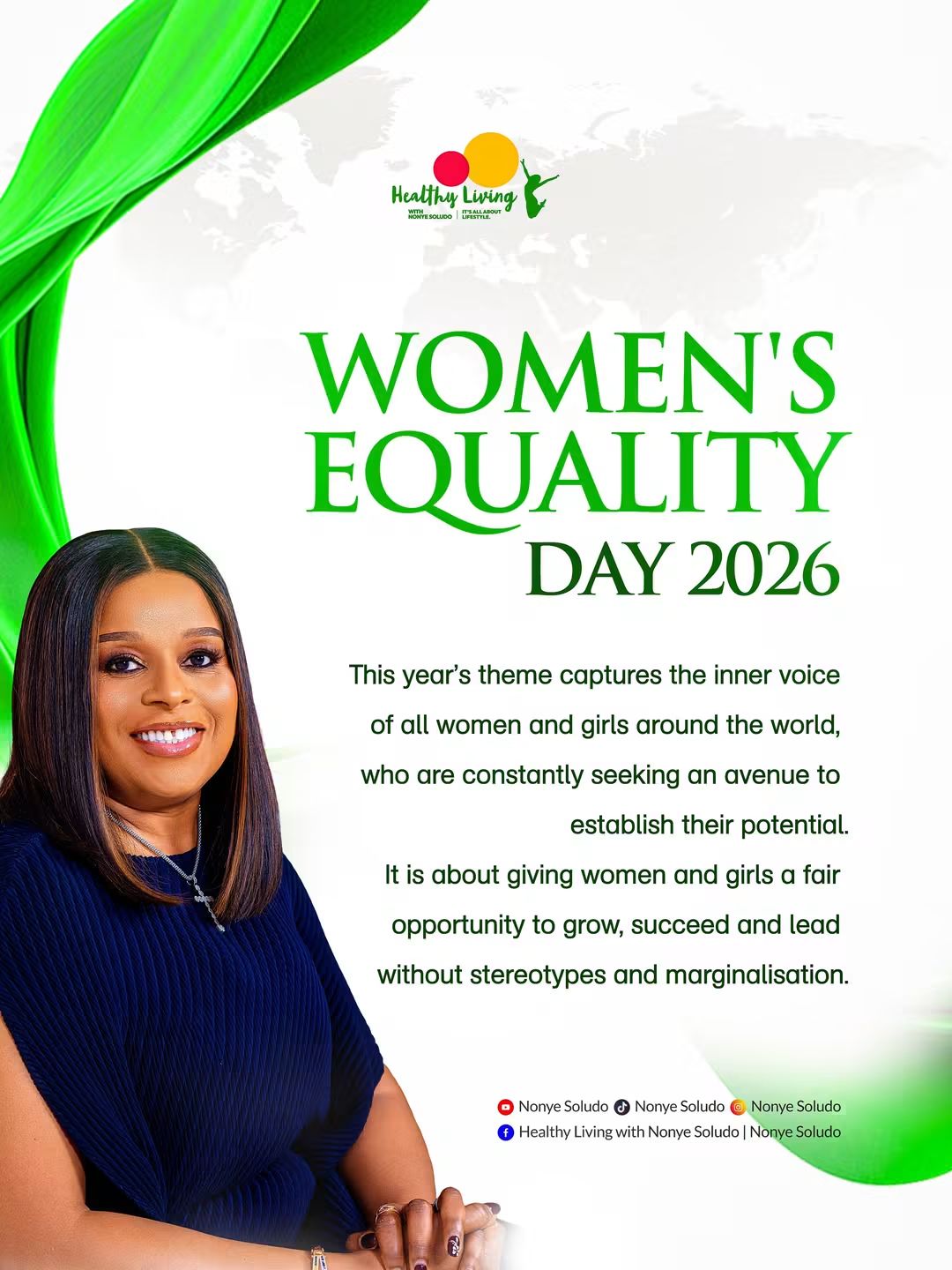
Anambra First Lady, Nonye Soludo, has called for sustained action to remove barriers limiting women and girls, stressing that equal opportunities are essential to inclusive development.
Soludo made the call in Awka on Wednesday in a statement marking Women’s Equality Day, observed annually on August 26.
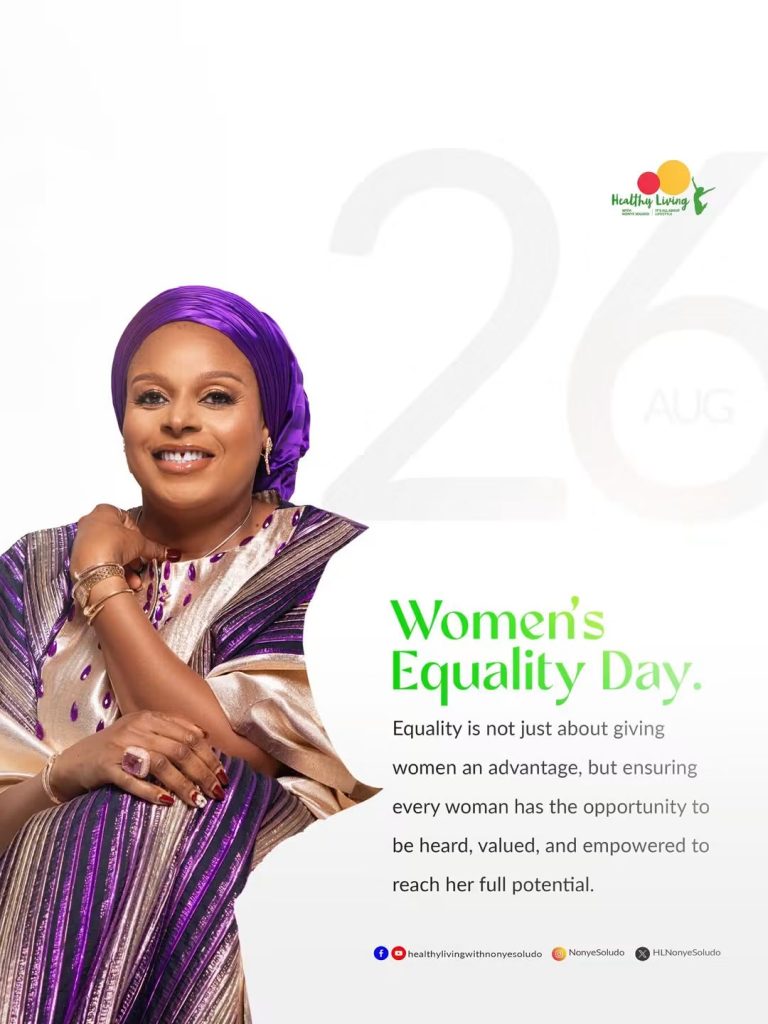
She stressed that gender equality was not about giving women an advantage but ensuring that every woman and girl had the opportunity to learn, lead, work, dream and thrive without limitations imposed by gender, culture, religion or other social barriers.
“Equality is not about giving women an advantage; it is about ensuring that every woman and girl has the opportunity to learn, lead, work, dream and thrive without limitations imposed by gender, culture, religion, or social impediment,” she said.
READ ALSO: Anambra First Lady Urges Greater Investment in Youth
According to the Anambra First Lady, empowering women strengthens families and communities while contributing to broader social development.
“When women are empowered, families are stronger, communities are healthier, and societies move forward,” she emphasised.
Soludo urged stakeholders to create an environment where girls could pursue their aspirations and women could participate fully in leadership and decision-making.
“Let’s continue to build a world where every girl can see possibility in her future and every woman can take her rightful place at the table,” she said.
The first lady also called for greater recognition of women’s contributions to families, communities and society, with emphasis on creating spaces where their voices were heard, contributions valued and potential fully realised.
“Cheers to the women who inspire, nurture, lead and transform our world. May we keep creating spaces where their voices are heard, their contributions valued and their potential fully realised,” Soludo said.
Women’s Equality Day originated in the United States and commemorates the adoption of the 19th Amendment in 1920, which prohibited the denial of the right to vote based on sex.
The observance was officially designated by the U.S. Congress in 1973 and has since evolved into a platform for highlighting women’s access to education, economic opportunities, leadership and participation in public life.
In Nigeria, the occasion provides an opportunity to renew attention to barriers affecting women and girls and strengthen their participation in economic, political and community development.
Soludo urged women to continue to inspire, lead and contribute to the development of their communities, while calling on society to ensure that women and girls could realise their aspirations without discrimination or other social impediments.