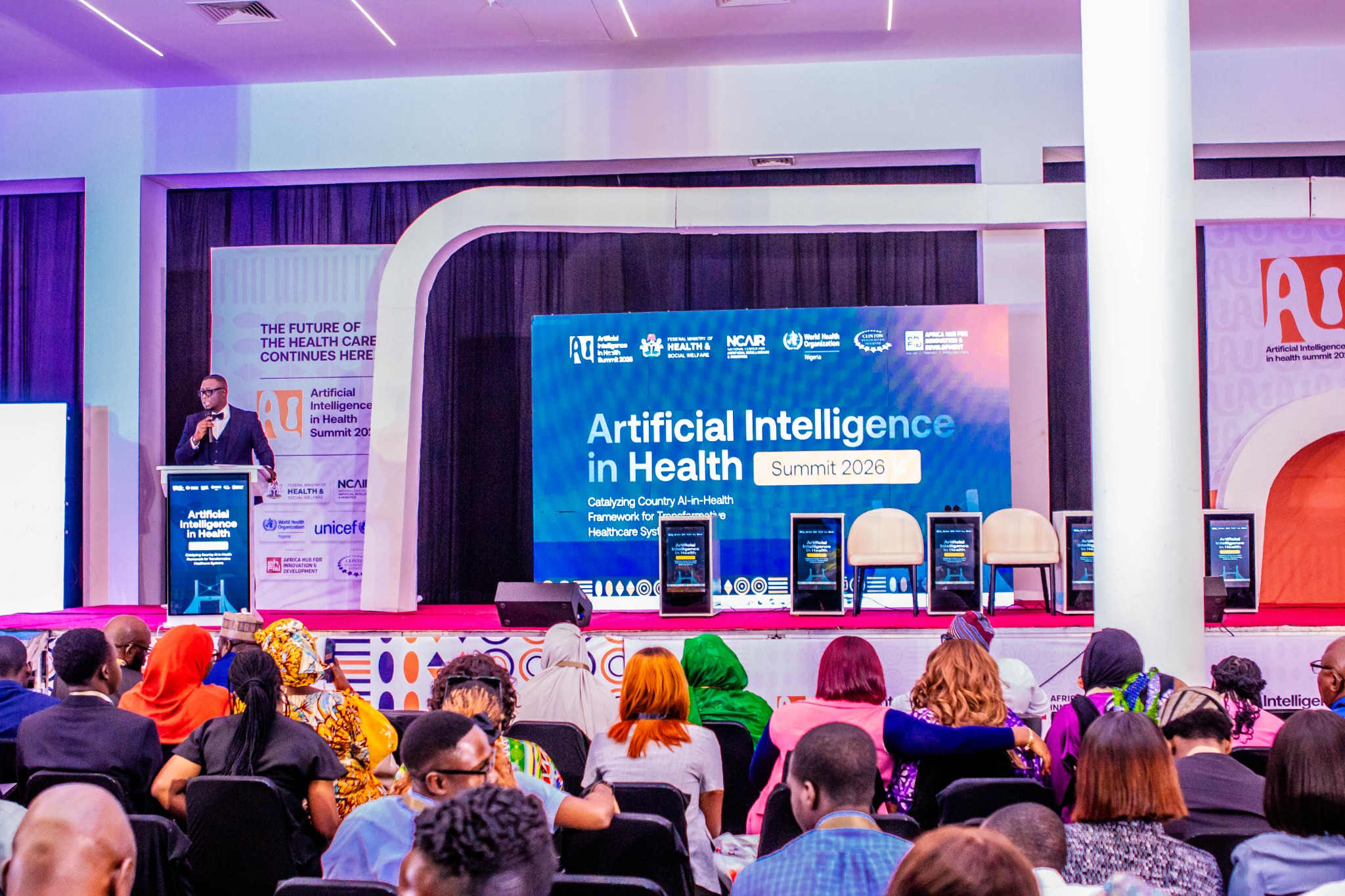
Experts in artificial intelligence and healthcare have called for stronger patient data protection, improved infrastructure and clearer accountability mechanisms as Nigeria increasingly explores the use of Artificial Intelligence (AI) in healthcare delivery.
The experts highlighted the opportunities and challenges associated with AI adoption during discussions on “Strengthening Health Systems Through AI-Enabled Service Delivery,” on the sidelines of the Artificial Intelligence in Health Summit held in Abuja.
This event served as part of the on-field experience for recipients of the 2026 UK Media Excellence for Emerging Technologies (UK MEET) Fellowship.
Read Also: VON staff selected For UK Emerging Technology Fellowship
They stressed that technological innovation must be supported by clinical evidence, professional oversight and adequate safeguards.
Speaking on the growing application of AI in Nigerian hospitals, a Professor of Medicine at Bayero University, Kano, Professor Musa Bobo Maiyaki, said emerging technologies were helping healthcare professionals address operational challenges and increasing patient workloads.
According to him, AI offers opportunities to improve access to medical information, support clinical decision-making and strengthen healthcare delivery, particularly in facilities experiencing shortages of medical personnel.
“AI has helped cover the operational gaps and high patient loads we experience at Aminu Kano Teaching Hospital that human resources alone struggle to handle at the moment,” he said.
Professor Maiyaki explained that AI-powered chatbots could provide healthcare professionals with access to standard treatment guidelines and assist in identifying possible diagnoses and further medical investigations.
“For now, when it comes to the richness of the literature that our healthcare providers and resident doctors can use, AI is definitely the way to go,” he stated.
He, however, emphasised that the benefits of AI technologies must be assessed and developed on a case-by-case basis within individual hospital departments.
Patient Data Privacy
Also speaking, Dr Michael Kateregga of the School of Public Health, Makerere University, Uganda, identified patient confidentiality and data security as major concerns surrounding the deployment of AI in healthcare.
He explained that patients could be reluctant to share sensitive medical information with AI systems because of concerns about unauthorised access and possible misuse.

According to Dr Kateregga, hospitals could reduce these risks by hosting AI models within their own digital infrastructure rather than relying entirely on external servers.
“Patient privacy and trust remain major challenges in the integration of artificial intelligence into healthcare. Many patients are reluctant to share sensitive medical information with AI systems because they are concerned about how their data will be stored, accessed and protected.”
He noted that such arrangements would allow healthcare institutions to maintain greater control over patient information while implementing security measures, including firewalls and restricted access.
Dr Kateregga further disclosed that developers in Uganda were working on specialised AI models capable of securely recording and storing conversations between patients and healthcare professionals.
“One way to address these concerns is to host AI models within the hospital rather than on external servers. This allows healthcare institutions to maintain control over patient information and introduce security measures that protect sensitive medical records from unauthorised access.”
He explained that keeping sensitive information within hospital-controlled systems could help strengthen confidentiality and public confidence in AI-assisted healthcare.
Responsibility
On accountability, UK-based Nigerian health-tech entrepreneur and founder of EO HealthHub Connect, Dr Ebiere Osusu, emphasised the need to establish clear responsibilities when AI-assisted medical decisions produce misleading results or contribute to patient harm.
Dr Osusu explained that responsibility could involve healthcare institutions, medical practitioners, technology developers or equipment manufacturers, depending on the circumstances.
“When an AI-assisted diagnosis produces a misleading result that affects a patient, responsibility depends on what actually went wrong. The hospital may have failed to train its staff or maintain equipment, the clinician may have misused the technology, or the manufacturer may have supplied a defective product.”
She noted that a hospital might fail to provide adequate staff training or maintain equipment, while a clinician could misuse an AI system or overlook important findings.
“Similarly, technology manufacturers and developers could face scrutiny where defective products or inadequate operating instructions contributed to adverse outcomes.”
Dr Osusu, however, cautioned that an unfavourable medical outcome did not automatically establish professional negligence.
She emphasised the importance of maintaining incident-reporting procedures, equipment maintenance records, audit trails and clearly designated safety responsibilities.
According to her, such documentation could help investigators establish what an AI system produced, what healthcare professionals observed and how the final clinical decision was reached.
She further stressed the need for Nigerian legal and regulatory experts to assess questions of liability based on the circumstances of individual cases.
Balancing Innovation with Patient Safety
The discussions highlighted the growing potential of AI to improve healthcare delivery in Nigeria, particularly through clinical decision support, access to medical knowledge and more efficient hospital operations.
However, the experts’ observations also revealed significant gaps between technological expectations, practical deployment and available evidence of patient benefits.
As Nigerian healthcare institutions explore AI-powered solutions, attention is increasingly shifting towards whether these technologies are being used safely, how their performance is evaluated and who takes responsibility when they fail.
The emerging consensus from the discussions points to the need for stronger regulatory oversight, improved digital infrastructure, better protection of patient information and continued clinical evaluation to ensure that AI innovation translates into safer and more effective healthcare services.