The Independent National Electoral Commission (INEC) has commenced the final phase of preparations for the 2027 General Election, with election materials in production, technology systems undergoing rigorous testing and security arrangements being strengthened as Nigeria enters the final 100-day countdown to the polls.
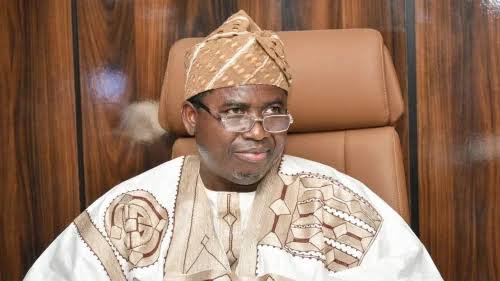
The Chairman of the Commission, Prof. Joash Amupitan, disclosed this on Tuesday at a World Press Conference and National Stakeholders’ Meeting marking 100 days to the first ballot, held at the Bola Ahmed Tinubu International Conference Centre, Abuja.
Prof. Amupitan said the Commission had moved decisively from planning into execution, noting that election materials were being produced, critical technology systems were undergoing quality assurance tests, the voter register was ready for public display and ad hoc personnel recruitment and training were progressing nationwide.
“As we begin this 100-day sprint to the 2027 General Election, we reassure the nation and the international community of our total commitment to neutrality, operational excellence, and the sacred integrity of the ballot box,” Amupitan assured Nigerians.
He described the milestone as more than a countdown, saying it marked the beginning of the final phase of preparations aimed at delivering an election that would serve as a global benchmark for transparency, integrity and peace.
The INEC Chairman recalled that since assuming office on October 23, 2025, the Commission had successfully conducted major off-cycle elections, including the Anambra, Ekiti and Osun Governorship Elections, the FCT Area Council Polls and several federal and state bye-elections.
According to him, reports from local and international observers indicated that the elections met accepted standards of electoral integrity while also serving as testing grounds for major operational reforms, including early deployment of personnel and materials, agile logistics and intelligence-led security arrangements.
Prof. Amupitan said the Commission had already completed nine of the 14 statutory milestones contained in the Revised Timetable and Schedule of Activities for the 2027 General Election issued on February 26, 2026.
On funding, he acknowledged the timely release of statutory allocations by the Nigerian Government, saying the resources had enabled the Commission to meet international vendor obligations, finance election technology production and upgrade critical infrastructure.
He, however, appealed for the prompt release of the outstanding funds required for the successful execution of remaining activities.
On voter registration, the INEC Chairman disclosed that the three phases of the Continuous Voter Registration exercise added 10,772,421 new voters, bringing the National Register of Voters to 103 million.
He announced that the voter register would be displayed for public scrutiny from October 9 to 15, 2026, while distribution of Phase One Permanent Voter Cards (PVCs) to local government centres would commence on October 9.
Prof. Amupitan also revealed that 18 of the 22 registered political parties submitted 36 presidential and vice-presidential candidates, while the final list of National Assembly candidates had already been published. The final list of governorship and State Houses of Assembly candidates is scheduled for publication on October 10.
On procurement and logistics, he said production was at an advanced stage for 57,000 new Bimodal Voter Accreditation System (BVAS) devices, while the procurement process for ballot papers and result sheets was nearing completion.
The Chairman further disclosed that INEC had renewed agreements with the National Union of Road Transport Workers (NURTW), the Road Transport Employers Association of Nigeria (RTEAN) and the Maritime Workers Union of Nigeria (MWUN) to mobilise more than 100,000 vehicles and 4,000 boats for election operations nationwide.
According to him, sensitive election materials will be moved from Central Bank of Nigeria vaults to local government areas 72 hours before polling day and distributed to all 8,838 Registration Area Centres before 4:00 p.m. on the eve of the elections to ensure timely opening of polling units nationwide.
On election technology, Prof. Amupitan said a nationwide stress-testing exercise for BVAS devices had been scheduled for October 23 to 28, while a mock accreditation exercise would be conducted in November.
He also disclosed that the Commission had established an Artificial Intelligence Division within its ICT Department to strengthen election management and safeguard critical digital infrastructure under strict human oversight.
On election security, the Chairman said INEC, working through the Inter-Agency Consultative Committee on Election Security (ICCES), would undertake joint training for thousands of Electoral Security Personnel ahead of the polls.
He added that joint monitoring and undercover surveillance teams involving the Economic and Financial Crimes Commission (EFCC), Independent Corrupt Practices and Other Related Offences Commission (ICPC) and Nigerian Financial Intelligence Unit (NFIU) would be deployed to combat vote-buying and other electoral offences.
The Commission, he said, would engage 707,384 ad hoc personnel for each election day, amounting to 1,414,768 engagements across the two election dates of January 16 and February 6, 2027.
Warning against the dangers of misinformation and emerging technologies, Prof. Amupitan said artificial intelligence tools, voice cloning and deepfake videos had increased the risk of election-related disinformation.
“In national elections, it is far more important to be right than to be first,” the INEC Chairman advised.
He urged media organisations to establish fact-checking desks, verify election-related information with INEC before publication and avoid reporting unverified election results.
The Chairman also announced that the Commission’s Media Accreditation Portal would become operational before the end of October and urged journalists and media organisations intending to cover the elections to apply early.
In his goodwill message, Assistant Inspector-General of Police Alyonu Francis Idu, who represented the Inspector-General of Police, said security agencies were conducting clearance operations in Kogi, Niger, Benue and Taraba States to stabilise identified flashpoints ahead of the elections.
“We must use legitimate authority, not power, to regulate the conduct of the election,” Idu stressed.
The Chairman of the Inter-Party Advisory Council (IPAC), Dr. Yusuf Dantalle, congratulated INEC on the conduct of the recent Osun Governorship Election and pledged the support of political parties towards the successful conduct of the 2027 General Election.
“Nigeria belongs to all of us. Today you are in INEC, tomorrow you’ll also be out,” Dantalle cautioned.
“This election will come and go, but Nigeria will remain,” the IPAC Chairman emphasised.
The Chairman of the Senate Committee on Electoral Matters, Senator Simon Lalong, reaffirmed the National Assembly’s commitment to strengthening Nigeria’s electoral framework, while the Chairman of the House Committee on Electoral Matters, Hon. Adebayo Balogun, called for strict enforcement of constitutional and electoral provisions.
Also speaking, the European Union Ambassador to Nigeria and ECOWAS, Gautier Mignot, described INEC’s responsibility as enormous and pledged the EU’s continued support for Nigeria’s democratic process, including the deployment of an expert electoral mission to observe the elections.
Delivering the vote of thanks, the Secretary to the Commission, Mrs. Rose Oriaran-Anthony, said stakeholders’ recommendations would be incorporated into the Commission’s operational plans ahead of the polls.
“The 2027 General Election will be owned by all Nigerians, not just conducted by the Commission,” Oriaran-Anthony stated.