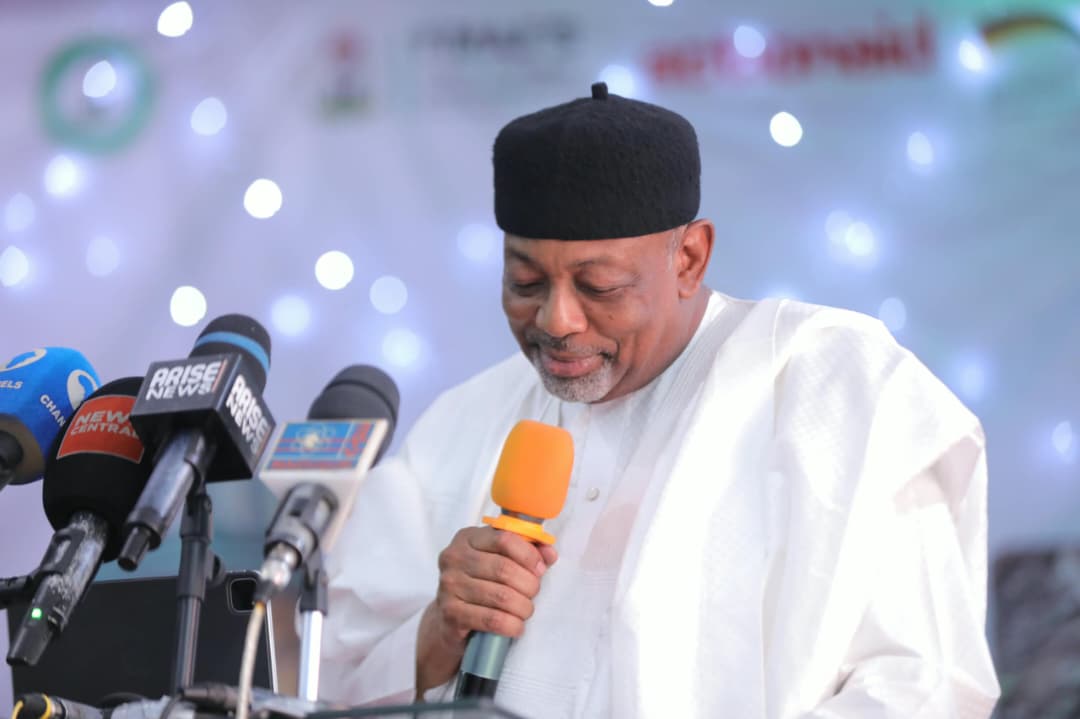
The Minister of Agriculture and Food Security, Senator Abubakar Kyari, has called on states to translate the Kampala Comprehensive Africa Agriculture Development Programme (CAADP) Declaration into practical results that will improve farmers’ lives and strengthen food security.
Sen. Kyari made the call in Maiduguri while speaking at the Community of Practice meeting on the domestication of the Kampala CAADP Declaration, Strategy and Action Plan 2026–2035.
He said the presence of commissioners responsible for agriculture, livestock, fisheries, health, environment, commerce and rural development demonstrated the integrated nature of Nigeria’s agri-food system and the coordination required to achieve food security and improved nutrition.
Read Also: Minister Pledges to Stabilise Prices of Agricultural Equipment – Voice of Nigeria
The Minister commended Borno State Governor, Professor Babagana Umara Zulum, for sustaining attention to agricultural transformation and maintaining a strong partnership with the Federal Government.
He said the partnership between the federal and state governments was essential to achieving Nigeria’s food security objectives.
According to him, President Bola Ahmed Tinubu has placed food security at the centre of the national agenda, with the responsibility of government to increase production, improve affordability, strengthen rural economies and build a more resilient food system.
Kyari said the country had recorded reductions of up to 50 per cent in the prices of some essential food commodities, alongside increased food supply, investment in rural infrastructure and support for smallholder farmers.
The Minister explained that the Kampala framework, adopted as part of Africa’s new agricultural development strategy, provides a broader agri-food systems approach covering sustainable production, investment and financing, food and nutrition security, trade, inclusion, resilience and governance.
He said Nigeria had developed and validated a 10-year National Agri-Food Systems Strategy and Action Plan as the vehicle for domesticating the continental commitments.
Kyari stressed that alignment between the federal and state governments must translate into compatible policies, reliable data, complementary investments and clear responsibilities for implementation.
“We need one coherent agri-food system in which national direction and state-level execution reinforce one another,” he said.
He also highlighted federal initiatives in agricultural inputs, mechanisation, irrigation, improved seeds, research and agro-industrial processing, saying the government was working to create a more sustainable agricultural ecosystem.
The Minister disclosed that early procurement under the Transnational Fertiliser Initiative had helped secure fertiliser supplies for 2026 and generated N61.58 billion in savings.
He said Nigeria was also on course to deliver a 1.1 million metric-tonne fertiliser programme this year.
On mechanisation, Kyari said the Federal Government had unveiled the National Agricultural Mechanisation Policy and National Agricultural Mechanisation Investment Strategy to move the country from fragmented equipment interventions towards a sustainable mechanisation ecosystem.

He said the initiatives included plans for a tractor assembly facility capable of producing between 2,000 and 4,000 tractors annually.
In his remarks, the Borno State Deputy Governor Usman Kadafur, who represented Governor Zulum, said agriculture remained central to Africa’s food, employment, economic development, culture and stability.
He said the continent possessed enormous agricultural potential but continued to face serious food insecurity, stressing that the real challenge was to transform agricultural declarations into tangible results for ordinary people.
The Deputy Governor said the success of the Kampala Declaration would ultimately be measured in farming communities where farmers could access improved seeds, water, machinery, knowledge, finance, storage facilities, markets and fair returns for their labour.
He said Borno’s experience demonstrated the importance of rebuilding agricultural production despite insecurity, displacement, climate pressures and limited resources.
He described the state’s agricultural recovery efforts as part of a broader attempt to ensure that Borno would be known not only for the challenges it had faced but also for restored farms, recovering communities, opportunities for young people and improved livelihoods.
The Deputy Governor commended the Federal Ministry of Agriculture and Food Security for its efforts to increase local production, strengthen agricultural value chains, improve access to inputs and reduce dependence on food imports.
Also speaking, the Borno State Commissioner for Agriculture, Engineer Bawu Musami, said restoring agricultural production was essential to restoring hope and creating sustainable economic opportunities for the people.
He said the state government had continued to prioritise agriculture, irrigation, mechanisation and climate-smart approaches as pathways to food security and economic recovery.
Musami highlighted that investment in productive agriculture meant more than increased harvests, as it could provide income for families, opportunities for young people, renewed confidence in communities and further support Borno’s recovery.
He further stated that the state was determined to build agriculture under difficult conditions and transform the challenges created by insecurity, displacement and climate pressures into opportunities for growth and shared prosperity.
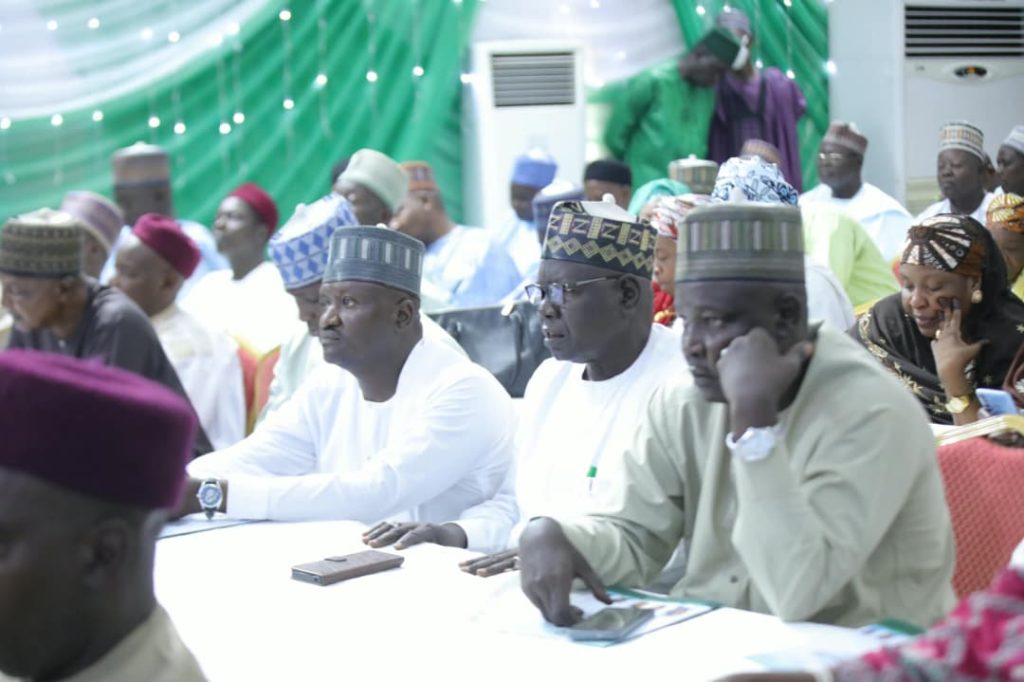
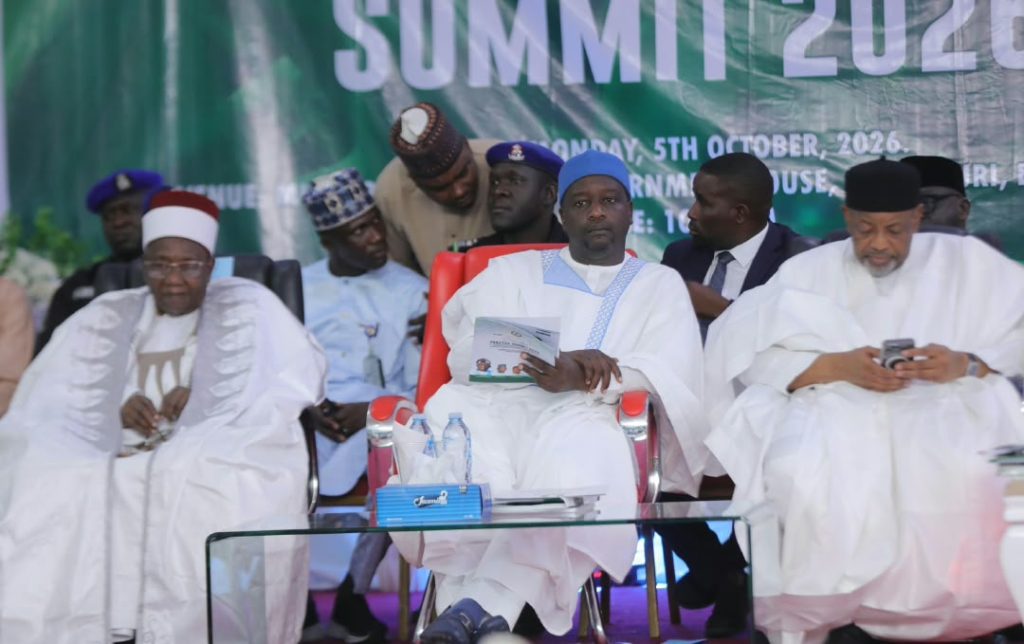
The meeting brought together federal and state commissioners, development partners, traditional leaders, researchers, civil society organisations and other stakeholders in the agricultural sector.
Development partners represented at the event included the German Government, the Food and Agriculture Organisation (FAO), ActionAid and AGRA, among others.