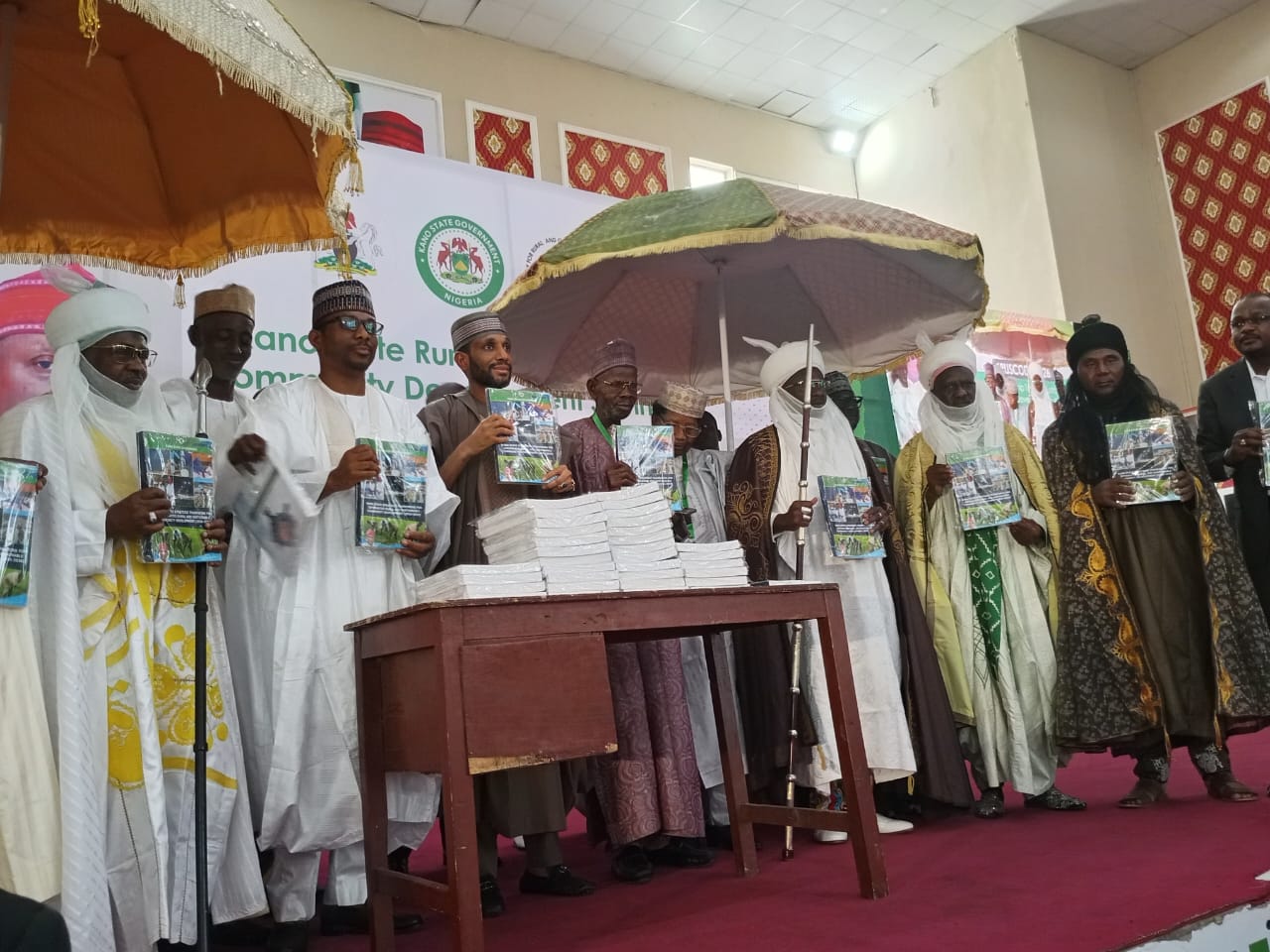
The Kano State Government has launched a five-year Strategic Framework for Integrated Rural and Sustainable Community Development (2026–2030) aimed at transforming rural communities, reducing poverty by 40 percent, and accelerating economic growth across the state.
The blueprint was unveiled at the Kano State Rural and Sustainable Community Development Summit held at the Government House, Kano, under the theme, “Pathways for Partnership Towards Sustainable Rural and Community Development in Kano.”
Speaking at the event, Governor Abba Kabir Yusuf, represented by his deputy, Murtala Sule Garo, reaffirmed his administration’s commitment to inclusive development, describing rural communities as the backbone of Kano’s economy.
He said the state’s prosperity is closely linked to the strength of its rural communities where agriculture, commerce and small-scale businesses provide livelihoods for millions of people.
“The administration of His Excellency, Abba Kabir Yusuf, is determined to ensure that no community is left behind. Our policies are anchored on fairness, accountability, transparency and responsive leadership that places the welfare of the people at the heart of governance,” the governor said.
Yusuf acknowledged the persistent challenges facing rural communities, including poor infrastructure, inadequate healthcare and education, unemployment, climate-related threats, insecurity, and limited access to water and sanitation.
He called for stronger collaboration among governments, development partners, traditional institutions, civil society organisations and the private sector to deliver practical and lasting solutions.
“No single institution possesses all the resources or expertise required to address these challenges alone. It is through shared responsibility that we can expand opportunities, improve public services and create stronger local economies,” he added.
The Secretary to the State Government, Alhaji Umar Farouk Ibrahim, described rural communities as vital to food security and economic prosperity, stressing the need for sustained investment to unlock their full potential.
Extensive Research
The Commissioner for Rural and Community Development, Abdulkadir Abdussalam, said the newly unveiled framework is the first comprehensive rural development plan covering all 44 local government areas and 484 wards in Kano State.
According to him, the blueprint was developed following extensive field research involving more than 300 communities and over 9,000 households across 36 rural local government areas.
“For the first time in the history of our dear state, all 44 local government areas and 484 wards have one plan, one direction and one pathway,” Abdussalam said.
He disclosed that the government aims to reduce rural poverty by 40 percent by the year 2030 through strategic investments in healthcare, education, agriculture, rural roads, water supply, sanitation, social protection, climate resilience and governance.
The commissioner explained that implementation of the framework would begin with institutional strengthening in 2026, followed by quick-impact projects in 2027, expansion of infrastructure in 2028 and 2029, and full consolidation by 2030.
He added that funding would come from state and local government allocations, federal interventions, donor agencies, development partners and community contributions, without resorting to borrowing.
“Rural transformation is not optional. It is the foundation of future stability and prosperity,” Abdussalam said.
Also speaking, the Emir of Kano, Muhammadu Sanusi II, represented by the Emir of Karaye, Alhaji Muhammad Mahraz, urged the government to prioritise implementation over policy formulation.
He identified agriculture, education, healthcare, youth empowerment and infrastructure as key drivers of sustainable rural development.
“The challenge is implementation. Plans without financial commitment and the timely release of funds will remain on paper. We need practical action that will improve the lives of our rural people,” the Emir said.
The Managing Director of the Rural Electrification Agency (REA), Abba Aliyu, commended the Kano State Government for the initiative, noting that reliable electricity remains a key driver of rural industrialisation, job creation and economic development.
The summit brought together government officials, lawmakers, development partners, traditional rulers, academics, civil society organisations and private sector stakeholders to chart a new course for sustainable rural development in Kano State.