The House of Representatives has commenced moves to repeal the Statistics Act No. 9 of 2007 and replace it with a new Statistics Bill, 2025, aimed at strengthening Nigeria’s statistical system for the digital age.
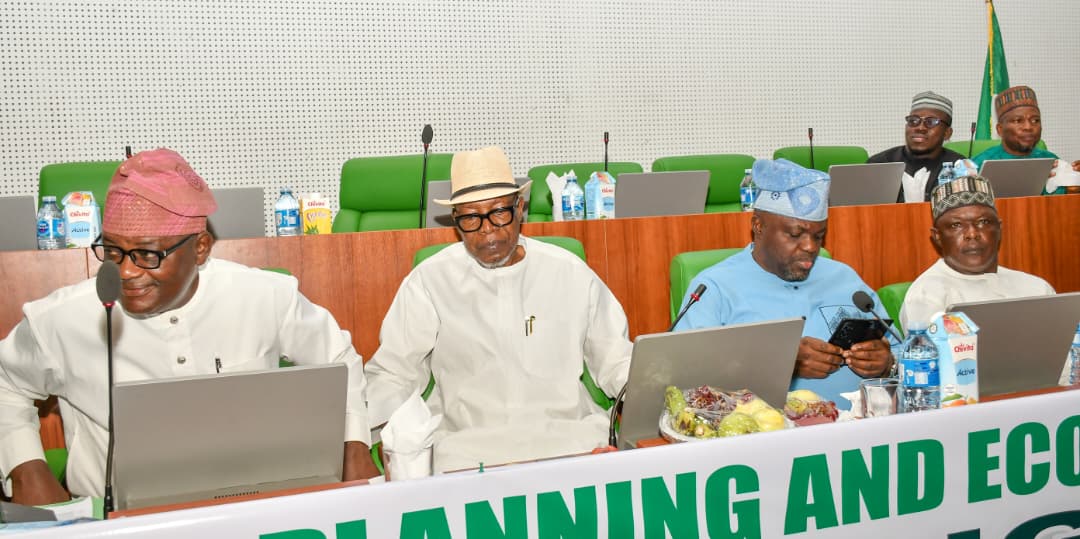
As part of the legislative process, the House on Tuesday held a public hearing in Abuja on the proposed legislation titled: “A Bill for an Act to Repeal the Statistics Act No. 9, 2007 and Enact the Statistics Bill, 2025.”
The Speaker of the House, Mr. Tajudeen Abbas who declared the hearing open, noted that the objective of the hearing is to establish an improved funding mechanism and to strengthen the Bureau to promote global competitiveness in statistical development across all levels of government.
He said that the Public Hearing represents another significant step in the House collective effort to reinforce the institutional foundations of governance, economic planning, accountability, and sustainable development in Nigeria.
” Recall that eighteen years ago, this nation passed the Statistics Act of 2007. At the time, it was a progressive piece of legislation. But let us be candid: the year 2007 belongs to a completely different technological and economic era.
It was a time when cloud computing was in its infancy, big data was merely a buzzword, artificial intelligence was confined to science fiction, and the gig economy did not even exist.
Today, we live in a fast-evolving digital age where data is generated at a velocity, veracity, volume, and variety never seen before.“
” The Statistics Bill, 2025 is not a minor amendment; it is a complete structural overhaul. We are here to repeal the outdated 2007 framework and enact a modern, globally competitive Bureau of Statistics and a Statistical System capable of meeting the demands of the 21st century.”
” As the People’s Parliament, the House of Representatives operates on a simple truth: laws should never be written in ivory towers.
We are deeply committed to enacting legislation that responds to the realities of our time and positions our nation to compete effectively in an increasingly data-driven global community.”
” It is in pursuit of this objective that the Statistics Bill, 2025 has been brought before the National Assembly. The Bill has progressed steadily through the legislative process—from first reading to second reading—and we have now arrived at this vital stage of a public hearing”. Mr. Abbas said.
He pointed out that it is universally acknowledged that no nation can achieve meaningful development without reliable, timely, and credible statistical data.
” Statistics constitute the absolute foundation upon which governments formulate policies, allocate resources, measure progress, monitor implementation, and evaluate outcomes. In the absence of dependable data, governance becomes speculative rather than evidence-based.”
” As Nigeria aggressively pursues economic transformation, social inclusion, industrial growth, digital innovation, and the Sustainable Development Goals (SDGs), the demand for accurate and accessible statistical information has become more critical than ever.
Government institutions, private investors, researchers, development partners, and citizens alike depend entirely on credible data to make informed choices.”
” The Statistics Bill, 2025 therefore seeks to modernize our statistical architecture by enhancing the efficiency, relevance, responsiveness, and effectiveness of official statistics in Nigeria.
It aims to strengthen coordination among statistical agencies; create a unified, consistent, and actionable view of data across disparate systems; and produce high-frequency, highly granular official statistics while drastically reducing public costs and survey fatigue.
Furthermore, it will improve data quality assurance mechanisms, promote digital data collection and dissemination systems, and establish sustainable funding arrangements for the Bureau”. He said.
The speaker said that to plan without accurate data is to build a house on quicksand.
” For Nigeria to achieve its goal of becoming a $1 trillion economy, every policy decision, budget allocation, and infrastructural investment must be guided by data that is accurate, timely, and beyond reproach.
Delivering on this mandate is impossible without giving the National Bureau of Statistics timely and adequate resources, which highlights why the sustainable funding provisions in this Bill are so critical”. He stressed.
He noted that the legislative initiative reflects global best practices and aligns with the emerging realities of the digital age, where data has become one of the most valuable assets for national development.
” Nations that effectively generate, manage, and utilize data are better positioned to address developmental challenges, attract foreign direct investment, improve public service delivery, and strengthen democratic accountability”, the Speaker said.
The speaker also said that one of the hallmarks of a vibrant democracy is public participation in the lawmaking process.
” The National Assembly recognizes that legislation is most effective when it reflects the collective wisdom, insights, and practical experiences of those who will be affected by it.”
” This Public Hearing provides an invaluable platform for you to critically examine the provisions of this Bill, identify areas requiring improvement, and make recommendations that will enrich the final text.
Your contributions will help ensure that the law adequately addresses existing lacunae while anticipating future challenges in the management of official statistics.”
” As we deliberate today, I encourage all participants to approach the discussions with objectivity, patriotism, and a shared commitment to the national interest.
I adjure you all to critically appraise this text and make constructive contributions that will refine it from a good piece of writing into a bulletproof legal framework, a framework that guarantees data privacy while promoting accessibility, credibility, and integrity across the entire Nigerian Statistical System.
We need a system that inspires absolute trust, whether an investor looks at our numbers in Abuja, London, or New York.
We need a framework that aggressively eliminates the duplication of data efforts across government institutions, saving taxpayers billions of Naira. This is the core purpose of this hearing.”
” Let me assure all stakeholders that the National Assembly remains firmly committed to transparency, inclusiveness, and evidence-based legislation. Every submission and recommendation made during this hearing will receive careful, systematic consideration in accordance with our legislative process.”
” The future of effective governance in Nigeria depends substantially on the quality of information available to policymakers. By strengthening our statistical system today, we are laying a solid foundation for better governance, improved economic management, enhanced public trust, and sustainable national development tomorrow”. He added.
The chairman of the committee on National Planning and Economic Development Mr. Adegboyega Nasiru Isiaka said that governments can only plan effectively when they understand the realities confronting their citizens.
He also noted that investors can only commit resources when they have confidence in available economic data.
“While NBS have done a lot within the limit imposed by the existing law which had been in use since 2007; the House of Representatives have found the need for a review that takes into account the requirements of 21st Century, characterised by big data, artificial intelligence, machine learning, geospatial technologies, real-time information systems, and rapidly evolving data ecosystems.
This bill started its journey in the House of Representatives when it passed the First and Second Reading on 22″ July, 2025 and 10‘ December 2025 respectively, and thereafter referred to our committee”. He said.
He stressed that every successful nation is built on a foundation of reliable information.
” Development partners can only support national priorities when there are credible indicators to measure progress. Indeed, it is now said data has become the currency of sustainable development in the modern world, and statistics the compass that guides national development”. He said.
In his submission, the Statistician-General of the Federation and Chief Executive Officer, National Bureau of Statistics (NBS) Mr. Adeyemi Adeniran said that as the Nigerian economy becomes more digital and interconnected, laws and institutions must evolve to keep pace.
He added that the House recognition of the need to modernise Nigeria’s statistical legal framework reflects a clear appreciation of the growing importance of quality data in governance, economic planning and national development.
Stakeholders at the hearing examined the proposed reforms and their potential impact on data generation, management, and policy formulation in the country.