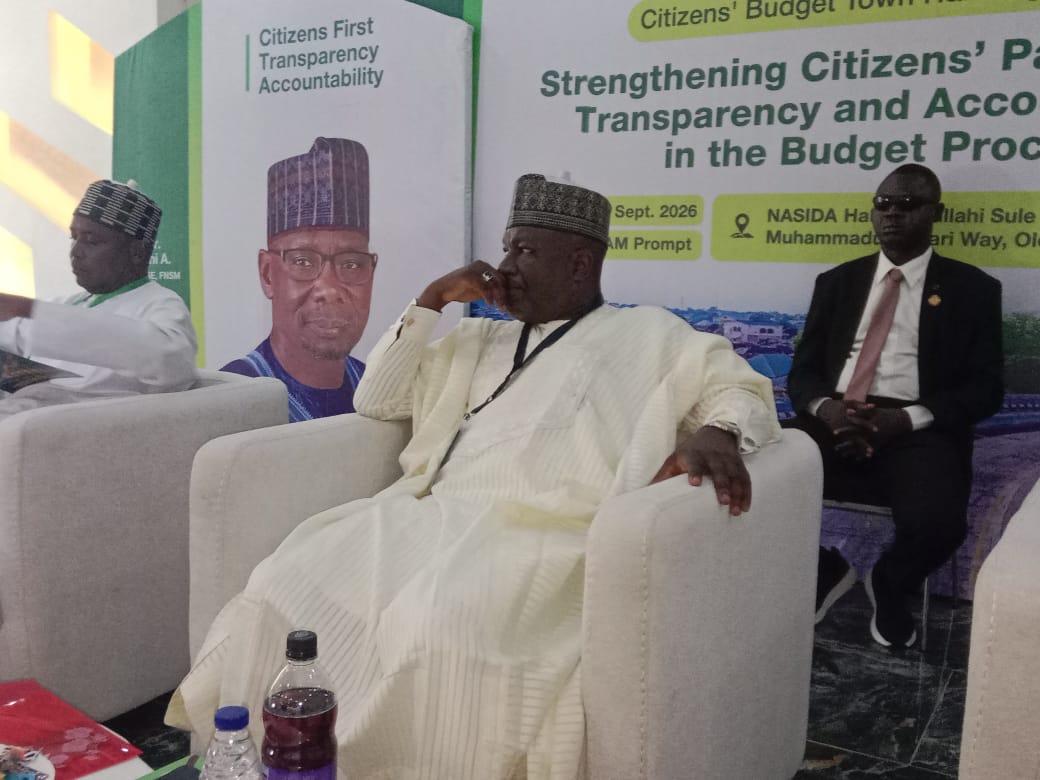
The Nasarawa State Government has commenced its 2026 Citizens’ Budget Town Hall Consultation in Lafia, with the Ministry of Budget and Economic Planning calling on citizens and stakeholders across the state to actively participate in determining development priorities.
The consultation, with the theme “Strengthening Citizens’ Participation, Transparency, and Accountability in the Budget Process,” brought together representatives of the 13 Local Government Areas, civil society organisations, community-based organisations, faith-based groups, women and youth organisations, farmers, people living with disabilities, the media and other stakeholders.
Declaring the consultation open, the Commissioner for Budget and Economic Planning, Hon. Ahmed Yakubu Mohammed, said the exercise was more than a routine government programme, describing it as a demonstration of the administration’s commitment to citizen participation, transparency, accountability and inclusive governance.
According to him, a budget is not merely a collection of figures but a reflection of the needs of the people, including roads, schools, healthcare facilities, agricultural support, water supply and opportunities for young people.
Projects and Interventions
He said the Citizens’ Budget Engagement had helped move the state’s budgeting process away from a purely top-down approach by allowing citizens to identify projects and interventions required in their communities.
The Commissioner disclosed that several projects suggested by citizens during the 2025 Citizens’ Engagement had either been implemented or were ongoing, including rural road construction and rehabilitation, potable water projects, agricultural interventions, educational infrastructure and healthcare facilities.
Mohammed said the experience demonstrated that when citizens provide credible information about the challenges confronting their communities, the government is better positioned to plan, prioritise and allocate resources.
He assured participants that all submissions made during the consultation would be reviewed and considered within the limits of available resources, government policies and the overall development priorities of the state.
He also encouraged civil society organisations, the media and other stakeholders to continue providing constructive criticism, stressing that factual criticism could assist the government in identifying areas requiring improvement.
“The budget is ultimately about the people. The government may prepare it, the legislature may approve it, and the ministries, departments and agencies may implement it, but its ultimate purpose is to improve the lives of the people,” the Commissioner said.
He subsequently declared the 2026 Citizens’ Budget Town Hall Consultation officially open.
Meanwhile, the Permanent Secretary of the Ministry, Isa Abdul Osama, said the consultation was organised in line with Section 3.1 of the Nasarawa State Fiscal Responsibility Law and the World Bank’s SABER requirement on citizen participation in budget preparation.
Osama explained that the process was designed to enable citizens to tell the government directly what they need rather than having the government prepare the budget without adequate grassroots input.
He said, “Budget is no longer a government secret. Budget is your money,” stressing that the budget was ultimately designed for the citizens of Nasarawa State.
Osama urged participants to speak freely about challenges affecting their communities, particularly roads, primary healthcare centres, water supply, schools, teachers and youth empowerment.
Also, the Director of Budget in the Ministry, Mr Atala Akolo Peters, said this year’s consultation would adopt a different methodology from previous editions.
Sectoral Groups
He explained that participants would be divided into sectoral groups covering areas such as education, health, agriculture, youth empowerment, women’s empowerment, employment and economic development, security, water and the environment.
According to him, the sectoral groups would discuss specific challenges and identify practical interventions required from government before nominating representatives to present their recommendations during the plenary session.
Peters said the approach was intended to ensure that the views of citizens were properly captured and translated into realistic budget priorities.
He noted that while the state had previously conducted consultations across the three senatorial zones, the 2026 exercise was being held at a central location because of prevailing circumstances.
He urged participants to make constructive contributions that could help address challenges confronting the state rather than aggravating them.