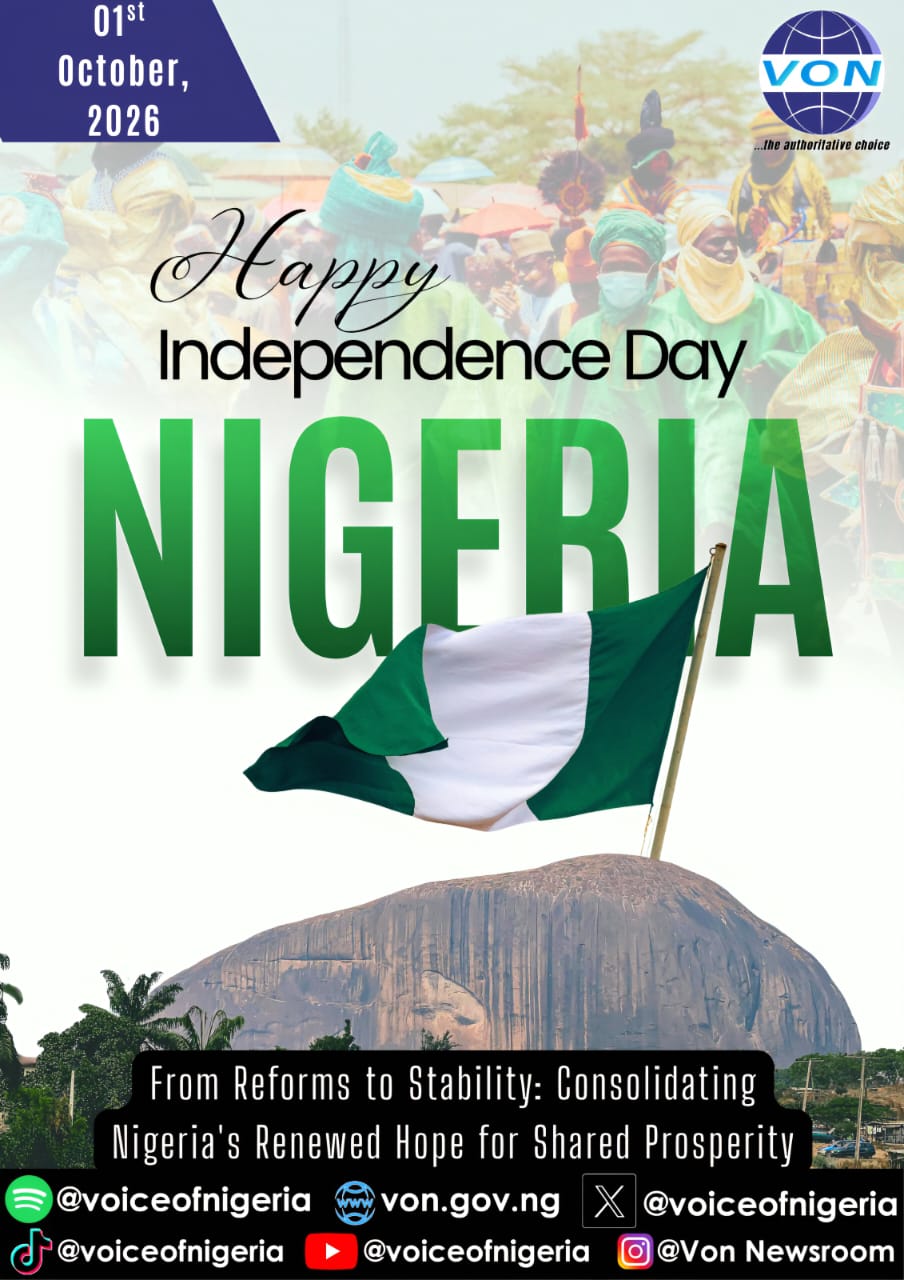
Nigeria’s 66th Independence Anniversary offers not only an occasion to celebrate nationhood, but also an opportunity to reflect on the country’s journey in translating freedom, democracy and sovereignty into meaningful progress for its people.
From independence in 1960 to more than two decades of uninterrupted democratic rule, Nigeria has demonstrated resilience, preserved its unity through difficult periods and continued to strengthen the institutions and ideals of democratic governance.
Over the decades, the country has recorded notable milestones in infrastructure, telecommunications, financial services, education, healthcare, entrepreneurship and citizens’ political participation.
Nigeria has also maintained its strategic influence in Africa through contributions to peace, diplomacy, culture and economic development. Yet, these achievements exist alongside persistent challenges, including insecurity, unemployment, poverty, infrastructure deficits and pressure on household incomes, which have shaped public expectations of democracy.
Central to the dividends of democracy is the ability of government to improve the quality of life of the people. Democratic governance has allowed citizens to elect their leaders, participate in public affairs and demand accountability. Since 1999, successive elections and transfers of political power have deepened Nigeria’s democratic experience. The enduring task, however, is to ensure that political participation translates more effectively into responsive leadership, stronger institutions and improved public services.
READ ALSO: Stakeholders Seek Bold Reforms to Strengthen Nigeria’s Democracy
In the Fourth Republic, infrastructure development has become one of the most visible areas of democratic progress. Investments in roads, including the Lagos-Calabar Coastal Highway and other legacy projects, alongside bridges, rail transportation and airport upgrades, are expanding connectivity, supporting commerce and opening economic opportunities across states. These interventions demonstrate infrastructure’s role as a catalyst for broader national development.
Nigeria has also recorded steady progress in power and digital connectivity. Reforms in electricity generation, transmission and distribution, investments in the national grid, renewable and off-grid energy, metering and decentralisation under the Electricity Act 2023 are supporting efforts to improve power supply. At the same time, Project BRIDGE, which targets about 90,000 kilometres of fibre-optic infrastructure nationwide, alongside wider broadband and digital infrastructure, is expanding connectivity, driving innovation and strengthening the digital economy.
Education and healthcare remain equally critical measures of democratic progress. In education, the Nigerian Education Loan Fund, NELFUND, instituted by the Bola-Ahmed Tinubu administration, had processed over 1.659 million applications and disbursed about ₦355.9 billion in institutional fees and student upkeep as of September 2026, while the $552 million HOPE-EDU programme is expanding access to basic education and improving foundational learning.
In healthcare, more than 3,000 Primary Healthcare Centres have been revitalised, alongside maternal healthcare interventions, training for frontline health workers and the National Health Fellows Programme across all 774 Local Government Areas. Despite these gains, out-of-school children, shortages of skilled personnel and unequal access to quality services underline the need for sustained investment in human capital.
Security remains one of the most demanding tests of democratic governance. For about 17 years, Nigeria has grappled with terrorism, banditry, kidnapping, communal conflicts and other threats. The country’s response is increasingly driven by intelligence-led operations, stronger inter-agency collaboration, improved technology and international partnerships. Although the threats persist, these measures have reflected a more coordinated effort to protect lives and property, secure communities and create an environment in which development can thrive.
Economic reform has also remained fundamental to Nigeria’s quest for sustainable development. In the current reform phase, the removal of the petrol subsidy and liberalisation of the foreign exchange market were introduced to reduce fiscal vulnerabilities and improve economic stability.
While the reforms have strengthened aspects of the country’s fiscal and foreign exchange position, they have also imposed adjustment costs on households. Transparency, accountability and prudent management of public resources therefore remain essential, alongside stronger social protection, job creation and inclusive growth, to ensure that economic reform translates into tangible benefits for citizens.
As Nigeria reflects on sixty-six years of nationhood, the task is to consolidate democratic gains while addressing the gaps that limit their impact. This, therefore, requires stronger institutions, responsible management of public resources, sustained investment in security, education, healthcare and infrastructure, and policies that promote productivity and create opportunities for young Nigerians.
Consequently, citizen engagement and accountability must also be deepened, while citizens uphold the responsibilities of democratic citizenship.
Nigeria is therefore a nation with achievements to celebrate, challenges to overcome and enormous possibilities yet to be realised.