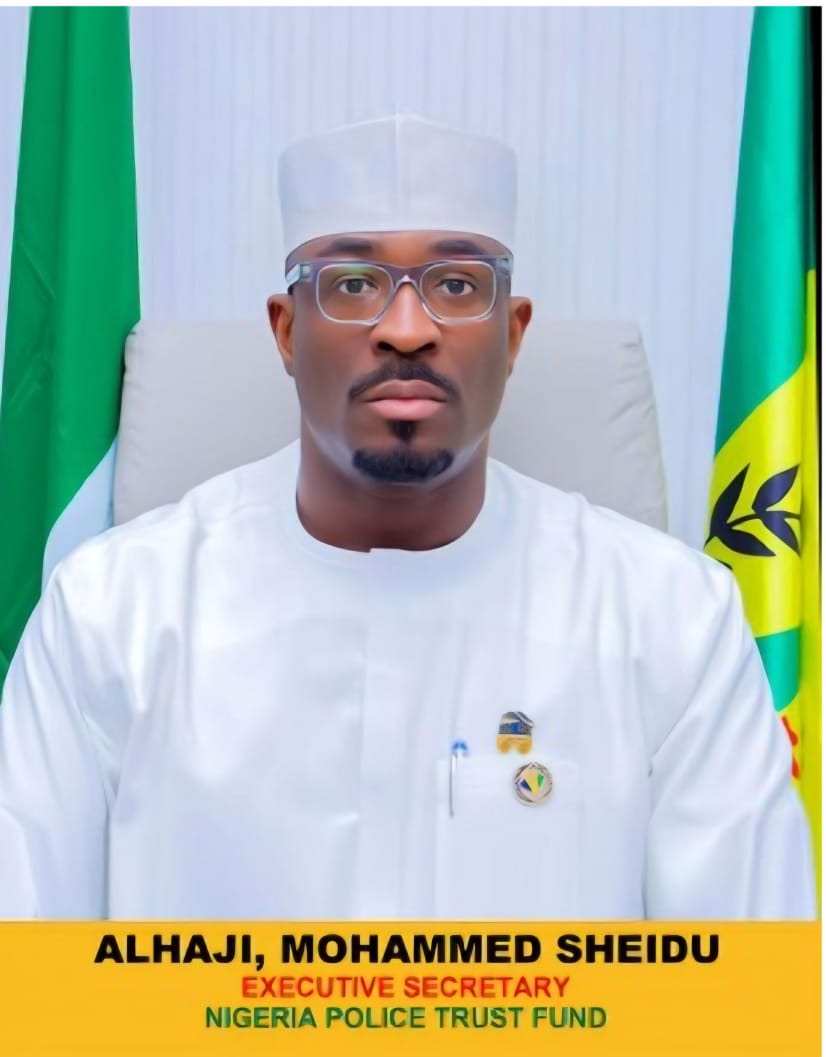
The Nigerian Police Trust Fund (NPTF) has called for stronger collaboration among government institutions, the private sector, development partners, civil society and the general public to build a more effective and trusted police force capable of confronting Nigeria’s evolving security challenges.
The Executive Secretary of the NPTF, Mohammed Sheidu, made the call at the Fund’s Stakeholders Engagement Forum in Abuja, where he said sustainable policing required sustainable financing and strategic partnerships.
Sheidu said the Fund, established to support the training, welfare, equipment and infrastructural needs of the Nigeria Police Force, had made significant investments since commencing operations in 2020.
“Thousands of police officers have benefited from training, capacity development, while investments have been made in police infrastructure, operational vehicles, equipment, health care support, and other critical facilities,” he said.
READ ALSO: NPTF Commissions Smart Police Headquarters in Ebonyi State
However, he noted that the achievements represented only a foundation for the larger task ahead, stressing that the Fund’s next phase would focus on accountability, partnerships and strategic policing.
According to him, modern policing requirements could not be addressed by government alone.
“We require stronger collaborations with public institutions, private sector, development partners, and civil society, and I would really say the public and general public as a whole,” Sheidu said.
Critical Projects
He also emphasised the importance of predictable and sustainable funding, saying the availability and timing of resources directly affected the pace of critical projects.
“This is why our next phase places greater emphasis on strengthening our statutory funding, diversifying our resources, and developing credible long-term partnerships,” he said.
Sheidu said the NPTF’s 2026–2030 strategic plan would prioritise police training and capacity development, smart police stations, technology-driven policing, operational vehicles and equipment, housing and welfare, as well as medical and emergency response facilities.
He stressed that the Fund would increasingly measure its interventions by outcomes rather than simply counting projects delivered.
“It is not enough to count the number of vehicles supplied, facilities constructed, or officers trained. We must ask whether these investments are improving the police response, strengthening operational capacity, capability, supporting the welfare of officers, and ultimately contributing to safer communities,” he said.
Sheidu urged participants to focus on what could be achieved collectively, stressing that the ultimate measure of the Fund’s interventions should be their contribution to more effective policing and safer communities.
“Together, through accountability, partnership, and strategic investment, we can contribute towards building a safer and more secure Nigeria,” he said.
Collective Approach
The NPTF Board Chairman, retired Deputy Inspector-General of Police, Zannah Muhammed Ibrahim, similarly called for a collective approach to addressing Nigeria’s security challenges.
He said the presence of stakeholders at the forum demonstrated a shared understanding that national security was a collective responsibility.
“The security of Nigeria is a collective responsibility and that the development of a modern and capable and trusted police institution requires the partnership of all sectors of our society,” Ibrahim said.
The board chairman warned that the changing nature of crime required Nigeria to rethink its approach to policing,, noting that criminal networks were becoming increasingly sophisticated while technology was transforming the character of crime.
He identified cybercrime, terrorism, organised crime, kidnapping, trafficking and financial crimes among threats that increasingly crossed geographical and institutional boundaries.
“We must move from a policing model that is predominantly reactive to one that is intelligently led, technology enabled, professionally accountable, community orientated and strategically coordinated,” Ibrahim said.
He said the NPTF had a critical role in supporting the police through operational vehicles and equipment, infrastructure, training, human capital development, modern technology and communication capabilities.
The stakeholders’ forum provided a platform for the NPTF to present its strategic direction for 2026–2030 and seek concrete partnerships capable of translating investments in policing into measurable improvements in security.