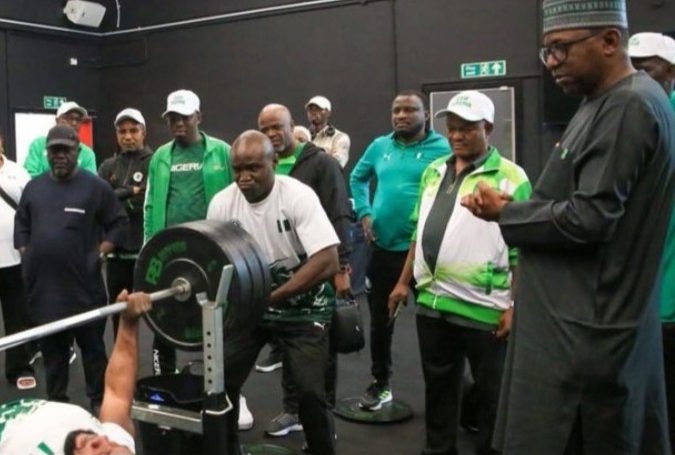
Athletics has once again emerged as Nigeria’s biggest medal prospect at the 2026 Commonwealth Games in Scotland, as officials expressed confidence that recent reforms in sports administration will translate to podium finishes.
Beyond the performances expected from athletes, the Glasgow Games also represents one of the first major international tests of the athlete-centred reforms.
These reforms are being championed by the National Sports Commission (NSC) under chairman, Shehu Dikko, and Director-General, Bukola Olopade.
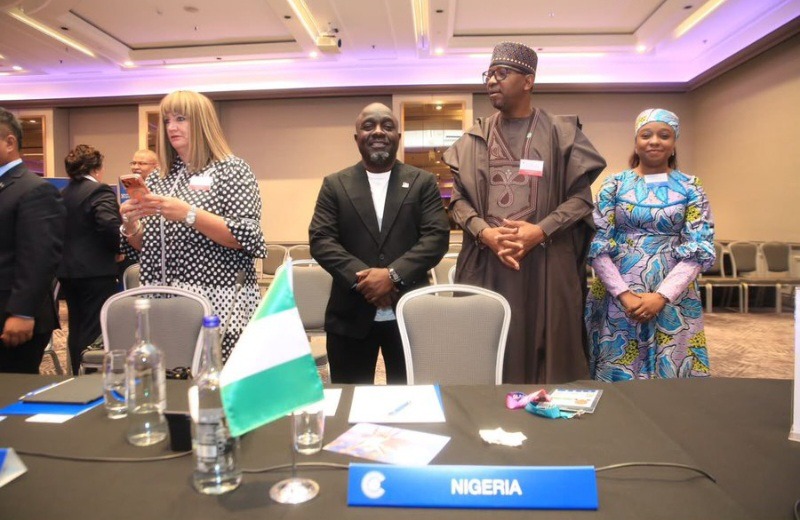
Team Nigeria’s participation marks the country’s 20th appearance at the Commonwealth Games, exactly 76 years after its debut at Auckland 1950.
Nigeria’s participation is seen by sports administrators as an opportunity to demonstrate the impact of improved planning, athlete welfare and high-performance preparation.
Dikko and Olopade are leading the Nigerian delegation in Glasgow alongside senior officials, with the commission maintaining that better preparation and welfare remain central to the renewed vision for elite sports development.
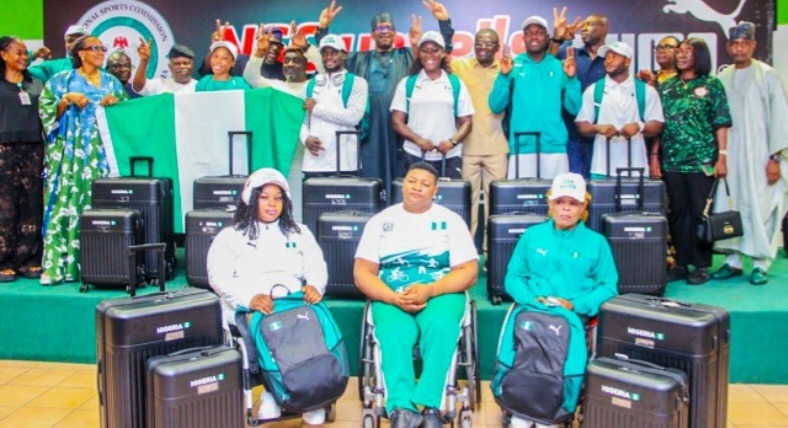
Analysts say their presence underscores the importance the Federal Government attaches to repositioning Nigerian sports through institutional reforms and improved support for athletes.
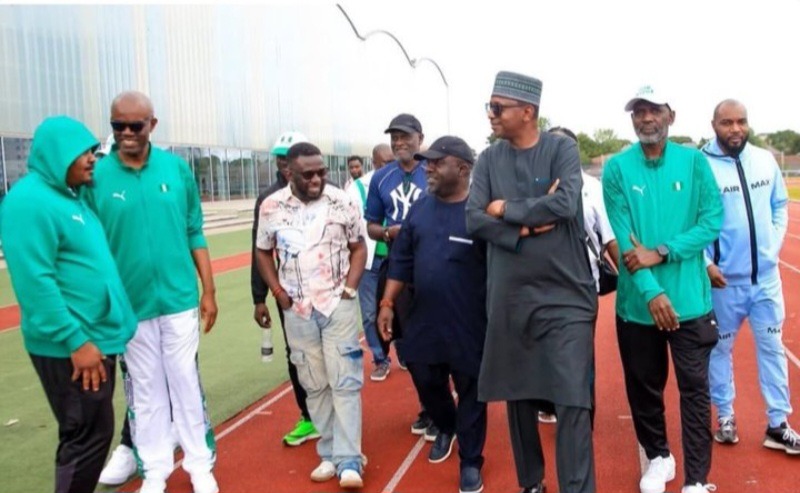
The approach has received positive feedback from several federations, particularly athletics, where athletes underwent structured camping programmes before arriving in Scotland.
For the Athletics Federation of Nigeria (AFN), the improved collaboration with the NSC has contributed to one of Nigeria’s strongest athletics squads in years. President, Tonobok Okowa, believes the quality and depth of the team justify the federation’s ambitious target of seven gold medals.
“The number of top Nigerian athletes participating at the Games is encouraging,”AFN boss Okowa said. This is an excellent spirit and it signals a new commitment to representing the country at international competitions.”
Leading Nigeria’s medal charge is women’s 100 metres hurdles world record holder Tobi Amusan, alongside sprint stars Kanyinsola Ajayi and Favour Ashe.
Also, Olympic 400 metre finalist Samuel Ogazi, shot put specialist Chukwuebuka Enekwechi and javelin thrower Chinecherem Nnamdi.
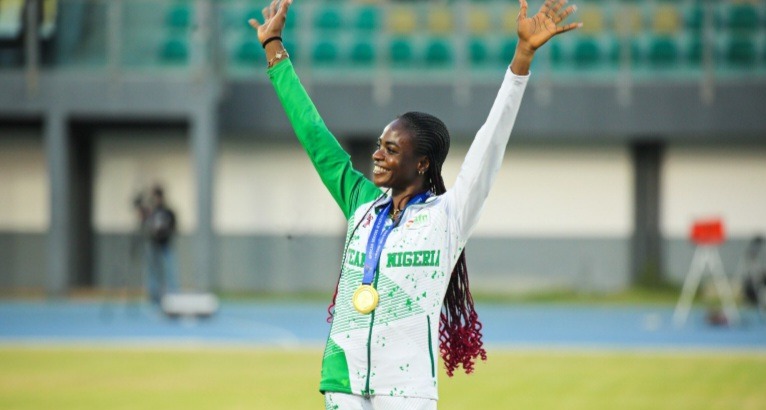
Others include Rosemary Chukwuma, Nathaniel Ezekiel, Temitope Adeshina, Ruth Usoro, Prestina Ochonogor, Patience George-Okon, Alaba Akintola, Udodi Onwuzurike, Jessica Orji, Obiageri Amaechi and Chidera Ezeakor.
Making his debut for Nigeria is decathlete Jami Schlueter, who recently switched allegiance from England, while teenage sensation Miracle Ezechukwu adds youthful promise to the squad.
Athletics events will run from July 27th – 1st August, at Scotstoun Stadium, where Nigeria will compete in more than 20 track and field events.Perhaps the event generating the greatest expectation is the men’s 4×100 metres relay.
Nigeria arrives with one of its deepest sprint pools in years, strengthened further by Favour Ashe’s victory at the British Fast Track Athletics Association (BFTAA) Open in Lee Valley shortly before the Games.
Ashe won the men’s 100 metres in 10.06 seconds to provide Team Nigeria with additional confidence ahead of the Games.
The relay pool comprises Israel Sunday Okon, Fakorede Adekalu, Kanyinsola Ajayi, Favour Ashe, Alaba Akintola, Udodi Onwuzurike and Chidera Ezeakor, giving coaches several combinations capable of challenging for gold.
Nigeria’s relay history supports such optimism, as the country won silver at the 1997 World Championships in Athens after setting a national record of 37.94 seconds and added another podium finish with bronze at the 1999 World Championships in Seville.
Nigeria was later upgraded to Olympic silver from Beijing 2008 following Jamaica’s disqualification. At the Commonwealth Games, the men’s relay team won bronze at Glasgow 2014 and Gold Coast 2018, before securing silver at Birmingham 2022, Nigeria’s best-ever finish in the event.
The challenge in Glasgow 2026 is to convert that consistency into a first Commonwealth Games relay gold medal.
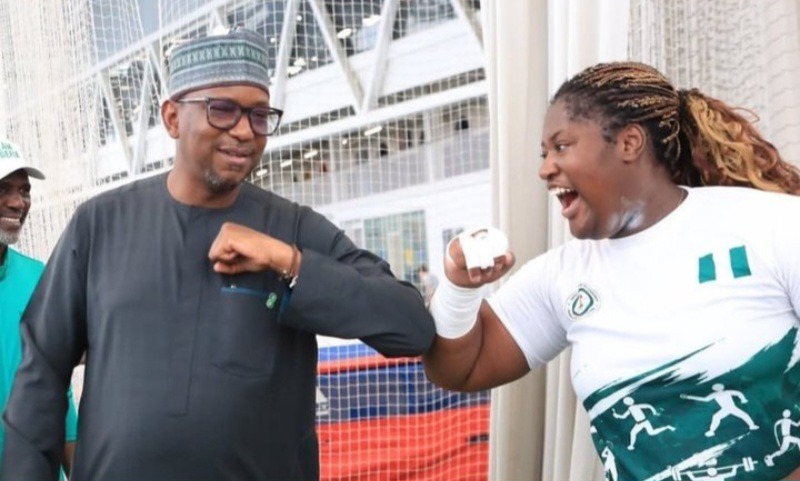
Beyond medals, the Games are also expected to provide an important assessment of the NSC’s renewed emphasis on athlete welfare, timely preparations and effective coordination among sports federations.
Officials believe that sustained investment in athletes, better technical support and stronger collaboration between the commission and federations are essential to restoring Nigeria’s position among the world’s leading sporting nations.
The Glasgow Games therefore represent more than another international competition. For Dikko and Olopade, they offer an opportunity to demonstrate that ongoing reforms can produce measurable results on the field of play.
For the athletes, they provide another platform to build on Nigeria’s rich Commonwealth Games tradition. For millions of Nigerians, they offer renewed hope that a new generation of stars can add fresh chapters to a sporting legacy that stretches back more than seven decades.
If Team Nigeria sustains its recent performances, improved preparations, and high confidence, Glasgow 2026 could mark an early milestone.