

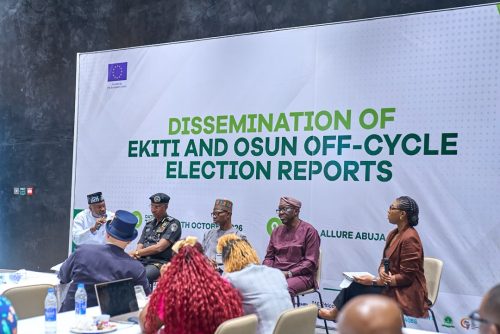
Electoral stakeholders have called on the Independent National Electoral Commission (INEC) to strengthen electoral safeguards, protect ballot secrecy and curb vote buying to ensure credible elections in Nigeria in 2027.
The call was made in Abuja during the presentation of election observation reports on the Ekiti and Osun States governorship elections and a dialogue on priority recommendations for INEC, security agencies and political parties.
The reports identified vote buying, voter apathy, weak enforcement of electoral laws, inadequate sanctions for offenders and hate speech during campaigns as major challenges requiring urgent attention.
READ ALSO: 2027 Elections: INEC Deploys 5,720 BVAS Machines in Anambra
Former INEC Technical Adviser, Professor Bolade Eyinla, urged the commission to ensure that voters cast their ballots privately, prevent the public display of marked ballot papers and improve the timely transmission of results at the ward level.
He also called for better electoral data, clear guidelines on downloadable Permanent Voter Cards (PVCs), transparent result validation and audits of the Bimodal Voter Accreditation System (BVAS).
He stressed the need to address biometric accreditation challenges that could disenfranchise eligible voters.
Security
On security, Eyinla urged security agencies to strengthen intelligence gathering to prevent electoral offences, identify potential threats and protect journalists from attacks during elections.
Chief Executive Officer of the Centre for Media and Society (CEMESO), Dr Akin Akingbulu, said election observation covered the entire electoral cycle, including pre-election preparations, election-day activities and post-election assessments.

He said more than 1,400 accredited citizen observers monitored the two governorship elections, with 598 deployed across Ekiti State’s 16 local government areas for the June 20 poll and 823 across Osun State’s 30 local government areas for the August 15 election.
Akingbulu said the observers assessed election administration, media coverage, women’s participation, inclusion of persons with disabilities, political conduct and security arrangements.
He added that the findings were intended to identify gaps and improve the electoral process, rather than accuse electoral institutions of wrongdoing.
The Deputy Inspector-General of Police in charge of Training and Development, Isiyaku Mohammed, highlighted the importance of intelligence gathering and rapid response in addressing election-related security threats.
He assured Nigerians that the police, working with other security agencies, were prepared to tackle threats to free and fair elections.
Similarly, Chairman of the Inter-Party Advisory Council (IPAC), Yusuf Dantalle, raised concerns about alleged intimidation of smaller parties by more influential political parties, vote buying and threats against voters.
The event was organised by the European Union Support to Democratic Governance in Nigeria (EU-SDGN), in collaboration with the Kukah Centre, CEMESO and other partners, to strengthen electoral accountability and inform preparations for the 2027 general elections.

 to strengthen electoral safeguards................)