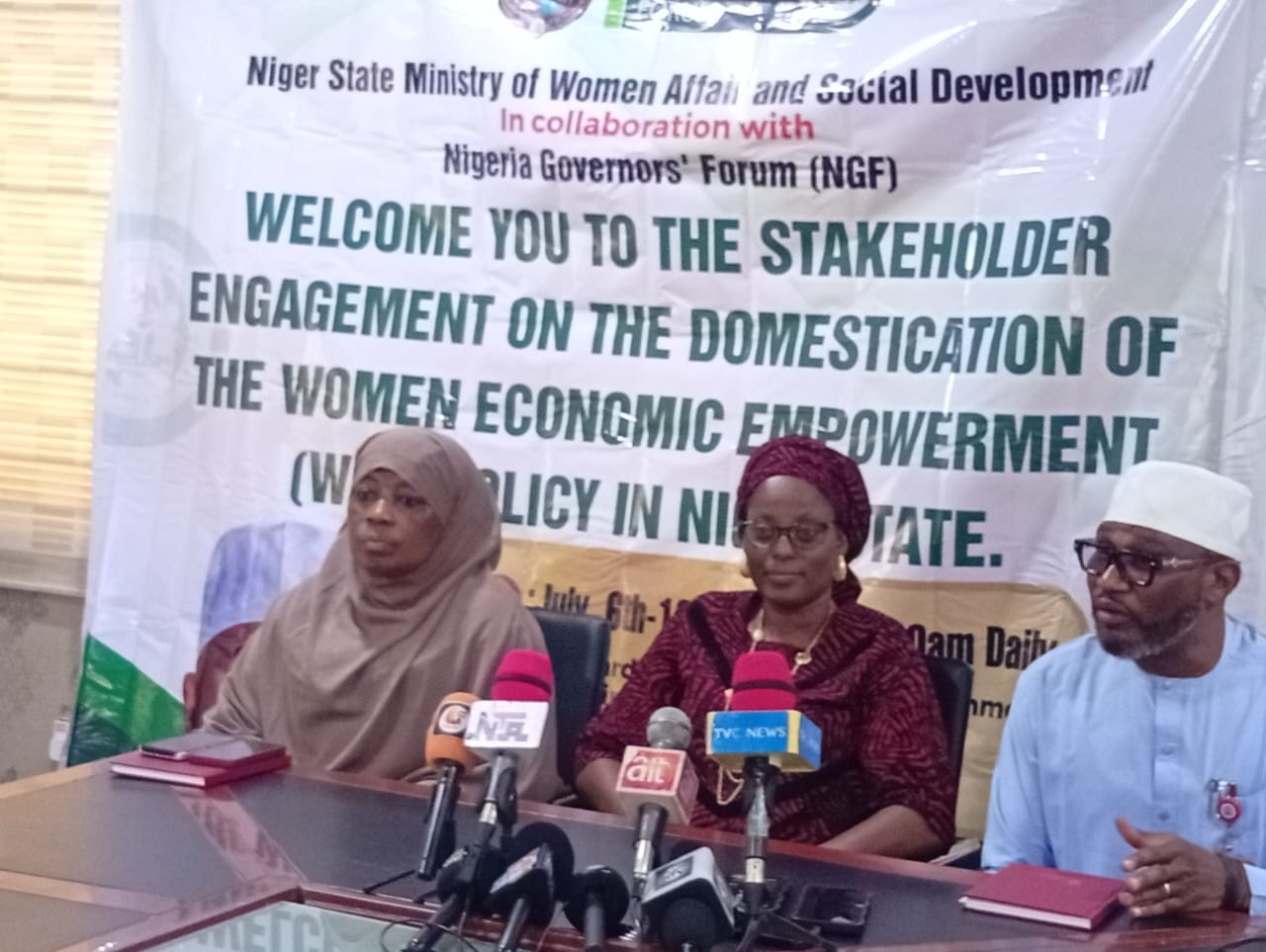
The Niger State Government, North Central Nigeria, has commenced the process of domesticating the National Women Economic Empowerment (WEE) Policy as part of efforts to promote women’s economic inclusion, create more opportunities and improve their livelihoods across the state.
The Commissioner for Women Affairs and Social Development, Hadiza Idris Kuta, announced this during a stakeholders’ engagement on the domestication of the policy.
The meeting brought together representatives of government ministries, development partners and other key stakeholders to discuss strategies for developing and implementing the policy in Niger State.
“The Women Economic Empowerment Policy is designed to address the major challenges facing women in Nigeria, including limited access to credit, land ownership, agricultural inputs, quality education, digital skills and other economic opportunities,” the commissioner said.
She explained that the National WEE Policy, championed by the Nigeria Governors’ Forum for adoption by states, is built on five key pillars: Agriculture, Education, Entrepreneurship, Labour Market and Emerging Industries.
“The policy is also supported by digital access, financial inclusion, social protection and good governance to improve women’s participation in the economy and enhance their overall well-being,” she added.
According to the commissioner, Niger State is among the 15 states that have indicated their readiness to begin the assessment process for the domestication of the policy.
“To support this process, a technical team from the Nigeria Governors’ Forum, led by Professor Funmi Banjo, is in the state to provide technical support and engage stakeholders. The team will work with the state’s inter-ministerial committee to ensure the policy reflects the needs and realities of women in Niger State,” she said.
She noted that the delegation had consulted with key Ministries, Departments and Agencies, including the Ministries of Justice, Education, Agriculture, Information and Women Affairs, as well as the Information Technology and Digital Economy Agency, to gather relevant information and identify priority areas for the policy.
Describing the technical support as a significant step forward, Hajiya Hadiza Idris Kuta said, “This initiative will help us develop a comprehensive Women Economic Empowerment Policy for Niger State. It will strengthen access to development programmes that support women and provide a clear roadmap to move women from subsistence farming and small-scale trading into more productive and sustainable businesses capable of increasing household incomes and reducing poverty.”
Stakeholders at the meeting also discussed practical strategies to ensure the policy is properly developed, domesticated and effectively implemented to improve the socio-economic status of women across the state.
The next phase of the initiative will focus on developing the Niger State Women Economic Empowerment Policy, preparing an implementation roadmap and establishing a monitoring and evaluation framework to ensure its sustainability and long-term success.
The domestication of the policy is expected to create more economic opportunities for women, promote financial inclusion and accelerate inclusive development across Niger State.