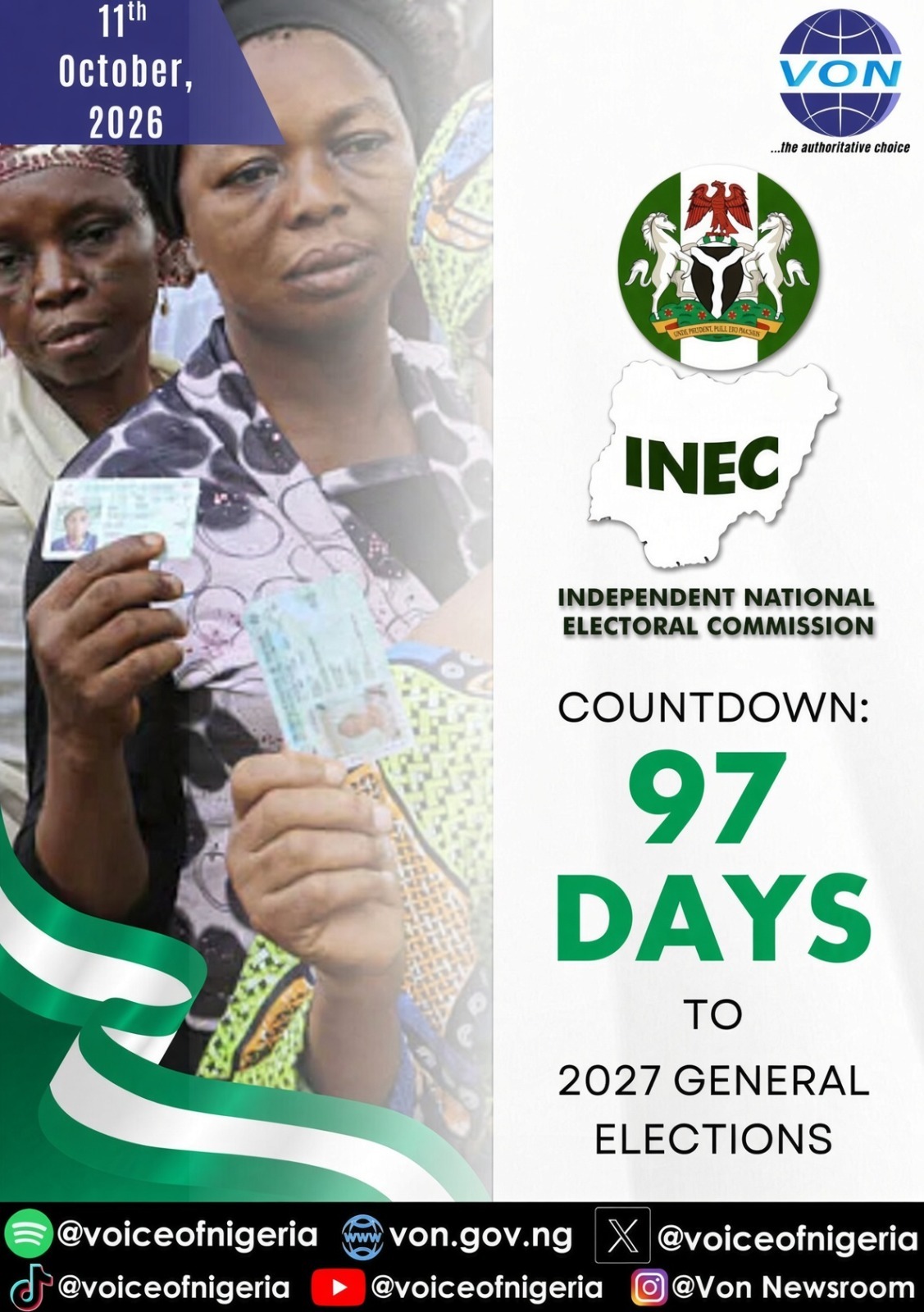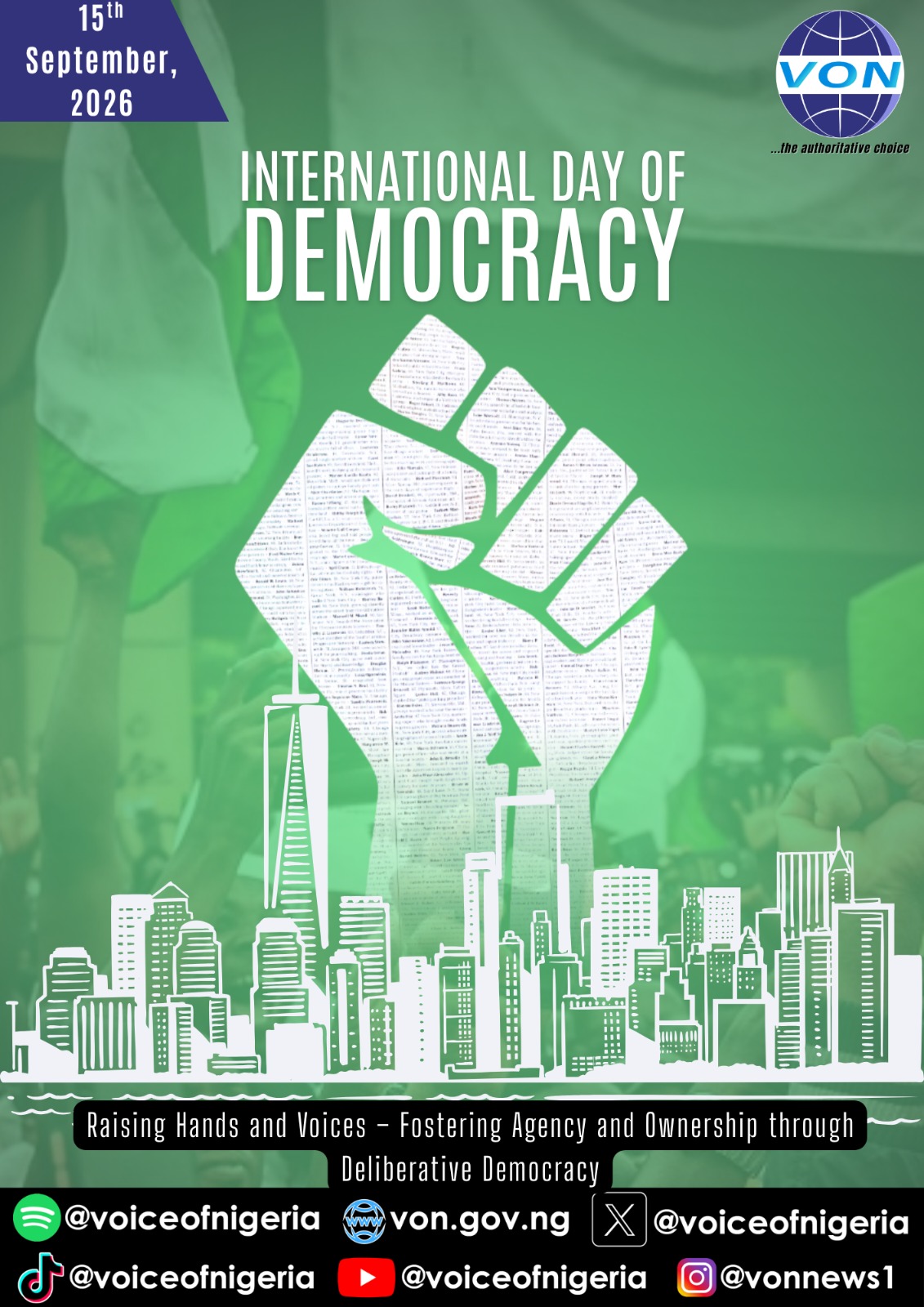
As Nigeria prepares for the 2027 General Elections, the International Day of Democracy, observed every September 15, provides an opportunity to reflect on the country’s democratic journey and consider what more needs to be done to strengthen democratic governance.
This year’s commemoration is particularly significant, as the United Nations continues to emphasise deliberative democratic processes that bring people from different backgrounds and perspectives together to contribute to decision-making, strengthen trust and build more peaceful, inclusive and resilient societies.
For Nigeria, this provides an important context for reflection. The country has sustained its longest uninterrupted period of democratic governance since the return to civilian rule in 1999. Yet, this journey has not been without challenges. Consolidating democracy therefore requires the continued commitment of institutions, political actors and citizens. Central to that effort is the conduct of credible elections.
As Nigeria looks towards 2027, credible elections remain fundamental to the country’s democratic development. This places an enormous responsibility on the Independent National Electoral Commission, INEC, the institution constitutionally mandated to organise elections.
In preparation for the polls, INEC has commenced several activities, including the release of the election timetable and updates to its digital and physical infrastructure aimed at improving electoral procedures.
Equally important is the integrity of the voters’ register. INEC therefore provided eligible Nigerians who had attained voting age, changed their location or needed to update their records with the opportunity to participate in the recently concluded Continuous Voters’ Registration exercise.
The exercise was aimed at ensuring that eligible citizens are properly captured in the register and helping to guard against multiple registration, impersonation and other forms of electoral malpractice. But a credible voters’ register is only one part of the equation.
Effective elections also require careful planning, proper training of personnel, timely delivery of electoral materials and transparency throughout the voting and collation processes. These are areas INEC must continue to strengthen as preparations for 2027 progress.
To test its readiness, INEC is expected to conduct a mock accreditation exercise across the country in November 2026. The exercise will assess the hardware, software and personnel required for the accreditation process and help identify and address possible challenges ahead of the general elections.
Technology, meanwhile, has become an increasingly important part of the electoral process. When properly deployed, it can strengthen transparency, improve voter accreditation and reduce opportunities for malpractice.
This informed INEC’s deployment of the Bimodal Voter Accreditation System, BVAS, in the Ekiti and Osun governorship elections, with the system expected to be used again in the 2027 General Elections.
The BVAS was introduced to replace earlier accreditation methods, including the former Smart Card Readers. Its deployment in recent elections has provided further experience in using technology to improve the electoral process, while election observer groups, including Yiaga Africa and the Kimpact Development Initiative, have documented benefits associated with its use.
However, technology alone cannot guarantee credible elections. INEC must ensure that personnel operating the systems are properly trained and competent. There must also be clear and timely communication with voters and other stakeholders. This is essential to building confidence in the electoral process. That is why effective stakeholder engagement must remain a priority. INEC must continue to engage political parties, civil society organisations, the media and other stakeholders.
Timely dissemination of accurate information is particularly important because misinformation and disinformation can create confusion, heighten tensions and undermine confidence in the electoral process.
Political parties, for their part, have an equally important responsibility. They must comply with electoral laws, strengthen their internal democratic processes and ensure that campaigns focus on issues and policies rather than ethnicity, religion, hate speech or personal attacks.
Candidates and their supporters must also understand that political competition is part of democracy, but violence is not. They must reject intimidation, threats and acts of violence and ensure that political disagreements are addressed through lawful and democratic means. Citizens, too, have a crucial role to play. They must participate peacefully, respect divergent opinions and hold elected representatives accountable. They must also reject vote buying and other practices that undermine the integrity of elections.
Responsible citizenship extends beyond the polling station. Citizens must be cautious about consuming and sharing unverified information, particularly on social media, where false reports can spread rapidly, create unnecessary tension and undermine public confidence.
At the same time, democracy must protect the right to speak and be heard. Citizens must be free to express their views and criticise government policies within the law. That freedom, however, should be exercised responsibly, without inciting violence or deliberately spreading false information. For these rights and freedoms to be protected, the role of security agencies is equally important. They must remain professional and impartial in providing security during political activities and elections.
Political actors, on their part, must discourage their supporters from engaging in violence or any conduct capable of disrupting the democratic process. Beyond protecting the process, democracy must also ensure that everyone has a meaningful opportunity to participate.
The participation of women, young people, persons with disabilities and other groups is essential to ensuring that the democratic process reflects the diversity of the Nigerian population. Young Nigerians, in particular, should be encouraged to participate meaningfully rather than being mobilised merely for campaigns or political violence.
Ultimately, strengthening Nigeria’s democracy is a shared responsibility. As the 2027 elections draw closer, all stakeholders must recognise the role they have to play in ensuring that the democratic process reflects the will and aspirations of the people.
The International Day of Democracy should therefore be more than an annual commemoration. It should serve as a reminder that democratic consolidation requires continuous effort and that the quality of Nigeria’s democracy depends on the strength of its institutions, the conduct of its political actors and the responsibility of its citizens.
As the country approaches the 2027 General Elections, the task is clear: all stakeholders must work together to ensure that the electoral process is credible, peaceful, inclusive and transparent, and that it ultimately reflects the choice of the Nigerian people.