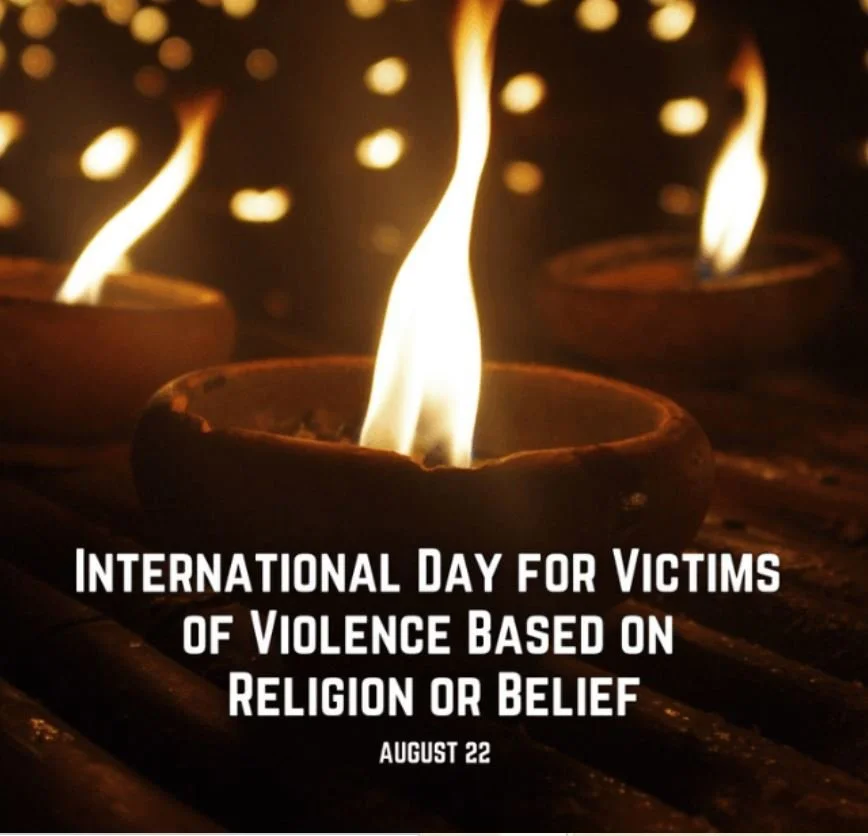
Religion should inspire hope, peace, and compassion. Yet, millions of people around the world continue to face persecution, violence, and even death because of their faith or belief.
The 2026 Annual Report of the U.S. Commission on International Religious Freedom, which assessed conditions in 2025, says religious freedom remains under serious threat globally, with governments and non-state actors responsible for repression, discrimination, harassment and violence against religious communities. Nigeria is among the countries the Commission identifies as facing severe religious-freedom challenges.
It is against this background that the United Nations designated August 22 as the International Day Commemorating the Victims of Acts of Violence Based on Religion or Belief.
Observed since 2019, the Day remembers those killed, injured, displaced, or traumatised because of their faith, while reaffirming that no one should be persecuted or attacked because of what they believe
The observance follows the International Day of Remembrance and Tribute to the Victims of Terrorism, marked on August 21, reinforcing the global call to protect human life and confront violence in all its forms.
For Nigeria, the commemoration is particularly significant.
A country of diverse faiths, Nigeria has millions of Christians and Muslims, alongside adherents of traditional beliefs. For generations, communities of different faiths have lived and worked together peacefully. But terrorism, communal conflicts, banditry, hate speech, and other forms of insecurity have sometimes exploited religious differences to deepen divisions.
The scale of the challenge is reflected in the latest research by the Observatory for Religious Freedom in Africa. Its 2026 assessment recorded 79,323 deaths from terror-related violence in Nigeria between October 2019 and September 2025, including 42,033 civilians.
The consequences extend beyond the loss of lives. Families are displaced, schools and businesses disrupted, farms and places of worship destroyed, while fear and mistrust weaken the social fabric.
From all indications, religion is not always the root cause of such attacks. Poverty, unemployment, political rivalry, ethnic tensions, land disputes, criminality, and misinformation can combine with religious differences to fuel violence.
To address these challenges, the Nigerian government has continued to respond through security operations, interfaith dialogue, and community engagement.
The Nigeria Inter-Religious Council provides a platform for Christian and Muslim leaders to promote peaceful coexistence, dialogue, and understanding, as well as address issues capable of creating religious tensions.
In addition, the government has continued to engage religious and traditional leaders in peacebuilding, countering violent extremism and strengthening national cohesion.
President Bola Ahmed Tinubu has, on several occasions, called for religious tolerance, dialogue, and peaceful coexistence, while security agencies continue operations against terrorists, bandits, and other violent criminal groups.
However, lasting peace requires more than security operations and official pronouncements.
Many Nigerians believe religious leaders must do more to reject hate speech and the manipulation of religion. Communities, on their part, also need effective early-warning systems to identify and prevent conflicts before they escalate.
Young Nigerians, who are particularly vulnerable to misinformation and extremist narratives, must be equipped with education, critical-thinking skills, and responsible social-media habits to help them resist intolerance, misinformation and extremism.
Ultimately, preventing violence requires a collective effort involving government, religious, and traditional leaders, communities, civil society, and the younger generation.
Above all, perpetrators must be held accountable, regardless of their religion, ethnicity, political affiliation, or social status, while victims and survivors receive justice and support.
As Nigeria and the rest of the world remember victims of violence based on religion or belief, the occasion must be more than a remembrance of lives lost.
It must renew our commitment to protecting human life, defending freedom of religion and belief, promoting tolerance, and building communities where diversity is a source of strength rather than division.
Victims must be remembered. Survivors must be supported. Perpetrators must be held accountable.
The question is not only how many lives have we lost, but what are we doing today to ensure that others do not become victims tomorrow?